The Price of Gold
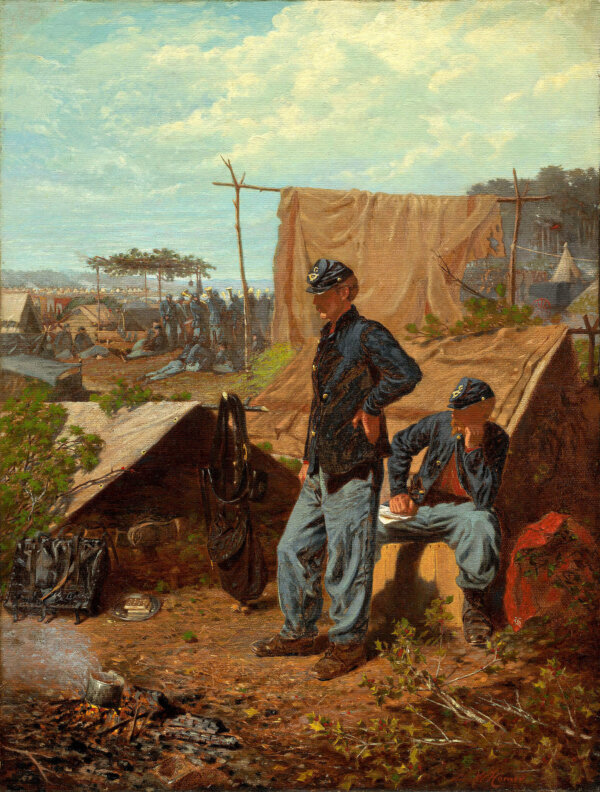
Wordsworth was dead. A bullet through the heart dropped him to his knees. While both his hands stretched out to my brother and me who’d ducked for cover with our pistols behind a large rock and fired away at the bandits, Wordsworth said, “Remember me,” then fell forward, twisting as he collapsed. He struck the hard earth dead.
My brother and I fought off the bandits who trampled all over our campfire breakfast when they ambushed us. They probably thought they could get some food and water out of the attack. Living on that land could make daily bread scarce if not entirely absent from one’s diet. Perhaps three boys with a meager spread must have seemed like kings at feast when the bandits came upon us. But it’s likely the thieves intended to also find among our things: gold. The ground was said to be pregnant with it. All one had to do was help deliver the treasure, to draw it forth like a newborn child ready for light and air, to be weighed, measured, and handled by all who could benefit from its presence. However, words don’t always make what they claim. Most of the ground around there, if pregnant with gold, seemed fit for hard labor. The gold diggers and the earth suffered immensely, many times without any gold to show for the effort. Our parents would often say, “that which is valuable comes at a price.” Is any man’s breath worth gold? What of a man’s soul? The price of our campsite proved to be Wordsworth’s life.
Once the bandits fled, Titus, my younger brother, kept watch in case the fools tried again to mount an assault. I dug a grave for Wordworth. The morning sun rose quickly, spreading its fire-blanket over the sky. I broke from grave-digging to sip water from my canteen, but I also threw together a small lean-to, using my blanket, some twine, and a stick, so Wordsworth’s body wouldn’t have to go to the grave clothed in stench from the sun expediting his decay. Titus said it was a delicacy unwarranted. He and Wordsworth didn’t get along so well. Wordsworth and I got along well enough, but I was more readily available for Wordsworth’s requests — what Titus called demands; and I let Wordsworth’s little lies go on without snatching them up and gutting them. Like catching a fish too small to eat, even when it seems that’s all the kinds of fish there are in the water. Titus, on the other hand, often told Wordworth to do his own bidding, and he was a quick draw when it came to putting sights on one of Wordsworth’s fictions.
But when I finished the lean-to and took some water to Titus, he thanked me and also cut his eyes at Wordsworth and pursed his lips as if to condemn the man for being killed. Maybe it’s a morbid thought, but Wordsworth probably could have stayed alive had he kept behind the large rock with us and devised a plan of counter-attack, rather than rushing out astride the silly steed called Rash, only to be gunned down. And being gunned down so quickly when violence started, he was no help to us throughout the mayhem.
I went back to digging the grave for Wordsworth. I wasn’t far down but had increased the circumference of the grave when my spade turned over gold. I knelt and put forth my fingers, coaxing out the small gilded clods to cradle them in my palms.
“We have gold,” I said.
Wordsworth sat up, “Let me see.” And he was at me, staring at the gold in my hands as if I’d presented it to him as a gift for his pleasure.
“Careful,” Titus said, “careful,” as he joined us in witnessing the discovery.
Our imaginary game of gold-diggers and bandits ended, Wordsworth snatched up the spade and tore into the earth. Titus told Wordsworth to go easy, but Wordsworth ignored him. Wordsworth ignored most people, especially adults. He usually said he didn’t know he was being spoken to. A second admonition from Titus earned him a piercing rejoinder from Wordsworth that belittled my brother for being shorter than him. Wordsworth was taller than me at the time, but not by much; plus, we’d both passed through the archway into early manhood, and our bodies were lean, sinewy. My frame was more muscular than Wordsworth’s frame, but Wordsworth liked to talk as though the opposite were true. Another small fish I let off the hook. Not quite grown out of that childish stage of slight roundess, Titus, as sure of himself and tough as he was, could be cut to the bone by such a comment. I should have spoken up for my brother.
“That has nothing to do with it,” Titus said. Wordsworth hefted the spade into his right hand and pulled back his arm as if he were King Saul ready to let fly a javelin at David’s head.
“You get in here and do it,” Wordsworth said.
“I will,” Titus said.
“No you won’t,” Wordsworth said. He went back to butchering the ground Titus reached for the spade, and Wordsworth grabbed it with both hands, holding it horizontal between them, and punched it into Titus’ chest. The handle skimmed up my brother’s chest, catching him right in the throat. Titus stumbled backwards. He pressed his hands over his throat as he cried, too stung to let loose what I’m sure was a river’s worth of curse words.
“Hey,” I said to Wordsworth as I moved to my brother.
“It’s his fault,” Wordsworth said.
“How’s that?,” I said. Wordsworth ignored me, too, perhaps tempting me to try my brother’s tactic and suffer the same consequence. “How’s that,” I said. I watched Wordsworth lighten his digging. He took my brother’s advice but used it as if it was his own idea. “Let’s go,” I said to my brother, who still grimaced but had stopped crying.
“You found it,” Titus said, “Wordsworth just played dead the whole time.”
“Like you did anything,” Wordsworth said.
“I was going along with your big moment,” Titus said.
“We both were,” I said. Wordsworth left off digging. He approached the large rock that Titus and I had used as cover during our imaginary game. Wordsworth hoisted the spade up over his head like an ax. Twice he rapt it atop the large rock, the second strike much harder than the first. Moses hitting the rock for water a forbidden second time. The spade handle snapped, with the spade end flipping over in the air like a winged dove. The handle portion Wordsworth tossed out away from himself, and we heard it crash on the ground somewhere out of our sight.
“You broke our spade,” Titus said.
“Cry about it,” Wordsworth said, and he strode off in the direction of his home. Still, something compelled me to ask him where he was going. “What do you care?,” he said.
But I did care. I didn’t know how to parse it out then. Now, though, sitting in my chambers, weighing the arguments presented earlier today in a case, I know that I cared about Wordsworth. He seemed better than me the way titans are better than mortals, and I wanted his approval. I also cared about how he mistreated my brother. I failed to reconcile the two thoughts. It never occurred to me how often the ancient heroes challenged their demigods. Hector against Achilles. Or, perhaps it did, and the outcomes for those men seemed the only possible outcome for me should I have more passionately contested Wordworth’s behavior and lies. I cared about my brother’s courage when it came to anything, especially when it came to Wordsworth. And though I understood Wordsworth, I also lacked the keen perception of him that Titus had, which caused me to ignore my brother’s advice to collect what gold we could before running home to tell our parents and get their help because when we all returned we found the site cleaned out of its gold. My parents chose to not ask his parents about it. Too many times they’d seen how Wordsworth could turn his parents any direction he needed because he knew his mom and dad were zealous defenders of their own. When word came around that Wordsworth’s family found gold on their own property, my family knew what happened. Titus let the experience forge in his mind a resolve so absolute that it often shows up, though often veiled, in his newspaper articles and poems, the theme of Justice being a crucial one to my brother. It seems I allowed the experience to do the same to me, only my tendency to ponder more and say less has found its place in the practice of the Law, where Justice seems always the theme being either discussed or ignored or twisted. But we both took up arms and joined the Union to do our part during the Civil War. Titus loved the east so much, he stayed. He once told me in a letter that he felt he owed it to Lincoln. I heard that Wordsworth also fought for the Union. There’s no escaping the fact that some of the same people who participate in a good cause are the same people you’d like to see with a noose around their neck. But after the fight when we were kids and the stealing of the gold, Wordsworth never played with us again. Titus might have hanged him and shot him had he shown his face after that betrayal.
Were Titus in my courtroom today he might still take a crack at Wordsworth, who plays the role of Defense Attorney. His refrain for his client is similar to the one he used against me and Titus all those years ago when he broke our spade and stole the gold we would have shared with him. “Who cares about my client?,” Wordworth says. I doubt he cares. But that is not for me to decide. He shows nearly zero deference for me as the Judge. He is the last one to rise when I enter the courtroom, and he rises slowly. However, his trial took place over forty years ago on that hard ground where we discovered gold and our friendship got buried. I don’t have to let Wordsworth’s pride, still evident in everything about him, outstrip the truth from this trial even though that means I rule in favor of his client, for truth has a price far exceeding that of gold and gilded conceits.


Related Posts