Piercing the Soul of Modernity: The Life of a Reclusive Genius
Writing the biography of most great men tends to be a difficult undertaking, for reasons as varied as the uniqueness of each such man. When exploring the life of a man who did much to self-publicize his greatness, the task at hand is to penetrate the veil of self-aggrandizement and discover the man himself, under the invented image. For those about whom little is known, it may sometimes mean creating the man ex nihilo, based on what is usually fantastical, almost mythological, basis. And then, there are great men like Kubrick, arguably the greatest director and screenwriter of the last century, whose personality, motives and work elude any obvious explanations and definitions, notwithstanding the incredible amount of documentary evidence, created by him and others, about him and his life.
Somehow, despite being in the spotlight, having close intellectual relationships and correspondence with some of the most significant authors, directors and actors of the last century, and having been married three times and leaving behind two children, until the end of his life (and beyond), Kubrick was treated as an enigma, a reclusive figure visiting civilization on rare occasions, randomly bringing with himself a cinematic masterpiece, somewhere from the wilderness.
Kolker’s and Abrams’ new book does a laudable job in attempting to grapple with the difficult and sophisticated life and works of the reclusive genius. The book, though lengthy, is eminently readable and draws on Kubrick’s extensive archive, interviews with family members and people who worked with him, and it is without a doubt, the most comprehensive work on the subject currently available.
Kubrick was a man who defied both the odds and society’s expectations. Though coming from a middle-to-upper class New York Jewish family, and the son of a doctor, Kubrick did very poorly at school and steadfastly refused to follow in his father’s footsteps. He never obtained higher education and remained antagonistic towards formal education for the rest of his life. Instead, he utilized his family’s library to great effect, reading voraciously in his youth. This was a habit that would stay with him until the end of his life. We learn that Kubrick’s reading was both extensive and varied, to include fairy tales, myths, military history and most classical and contemporary literature. His lifelong affinity, however, was towards the works of Kafka and Hesse, which he read for additional inspiration before making some of his films. For example, when developing the script for the Shining, he forced himself to re-read the Steppenwolf by Hesse, from which he received abundant inspiration for what was a deeply psychological film.
Not having received any formal higher education, and being largely self-taught via his personal reading, Kubrick sought to transform his favorite hobby-photography- into a job, which he achieved by means of hard work and some evening classes in the subject.
He became a successful photographer, though his fascination with film never left him and, through favorable circumstances and contacts, he found a way to get into the film industry. Yet again, Kubrick did not seek to obtain any formal qualifications but, rather, studied the techniques of contemporary filmmakers and experimented with documentaries. He left his job as a photographer at the Look magazine and spent many hours observing other directors and asking them technical questions, before he went on to produce his own films to great success.
Kubrick’s personal life, however, suffered during the early stages of his career, for, his first wife, Toba, who thought she had married a shy and unaccomplished boy, could not cope with her changed husband, who was now a confident, ambitious man. Kubrick’s second marriage, to Ruth, was unsuccessful for the opposite reason- Ruth too was ambitious, and wanted to be more or less a co-director, if not the main one, both in their relationship and their professional life.
It was the marriage to his third wife, the German actress and painter, Christiane, which coincided with and to an extent, enabled, Kubrick’s successful career. It was a marriage that lasted some 40 years, and appears to have been a very happy one.
Given Kubrick’s societally defiant and risk-taking beginnings, and initially turbulent life, it must come as no surprise that he did not mind taking creative risks, even if they eventuated in scandals and censorship. Dr Strangelove, released at the height of the Cold War, was at first seen as anti-American and even as an example of communist subversion. Paths of Glory, which portrayed the French military in a dismal light, was banned in France and Spain, and it took more than a decade for the film to be shown in those countries. A Clockwork Orange was banned in England due to there being copycat crimes inspired by the film, and the British’s government’s gleeful keenness to blame all youth violence on the film. As a result, Kubrick made the difficult decision to agree that the film would not be shown again in England whilst he lived.
In addition to dabbling in controversy, Kubrick acquired the reputation of a perfectionist and a stickler for detail, who, however, was constantly open to improvisation and revision, allowing his actors to improvise as they saw fit, after which Kubrick would re-write the script in accordance with the improvisation. Kubrick’s films were also very much a family affair, and he encouraged his daughters to participate in the filmmaking process.
In the latter half of his career, Kubrick had settled well into his life as a family man and a father, and when not on the film set, he would assist with all kinds of duties at home, including doing the dishes. He was rather strict with his daughters, subjecting any prospective boyfriends to brutal questioning. As a consequence, despite the love they had for their father, they sought to escape his control and influence, which they achieved, eventually, through marriage.
As a visionary director and scriptwriter, Kubrick produced few films, virtually all of which, however, are undoubted masterpieces and currently recognized as such. Few directors have been able to embrace modernity, only to then become so profoundly disappointed with it so as to become the harshest critics of its inherent contradictions. Kubrick’s is a “style of bold images, and narratives concerning the despair and fall of damaged men”. That is, damaged by modernity, with its obsession with technological progress and the liberation of man from humanity itself.
Constantly looking for new ideas, Kubrick read widely, waiting for the muse’s command. Some projects remained unfulfilled; others would only be brought into existence much later.
For example, almost from the very beginning, Kubrick wanted to make a film about Napoleon. He read extensively about him and his age, wrote and re-wrote his ideas, and even asked Anthony Burgess, the author of A Clockwork Orange and also an accomplished composer in his own right, to work on the music for that future film. Much of the material that was supposed to be used for Napoleon ended up in Barry Lyndon, ultimately leading Kubrick to abandon Napoleon as an active project, feeling that though he still wished to produce it, he had nonetheless achieved much of what he had intended in Barry Lyndon.
The most significant project which festered in his mind for most of his life, was the idea of a film based on Schnitzler’s Traumnovelle, which he found very difficult to realize. He engaged in regular correspondence with writers, directors and other people whose opinion he cherished, frantically fishing for ideas.
That great dream became a reality at the end of his life, with Eyes Wide Shut, starring Cruise and Kidman. Kubrick’s last film is a masterpiece, piercing straight through the heart of modernity for, through it, he “detected the currents and undercurrents of the culture, counterpointing the monstrous with the quotidian; love and its destructive potentials; domesticity and the demonic”.
In addition to finding fulfilment in Eyes Wide Shut which he called his best film ever, before his death, Kubrick also had a less grandiose, but equally important personal success with which he was delighted. Throughout his long career, he had been smeared in the media as an eccentric recluse who was almost mad, among other even less pleasant examples of libel. In late August 1998, Punch, a now defunct publication, wrote that Kubrick was insane, expecting he would do nothing about it. Out of the blue, Kubrick decided to take legal action (intimating he had to, for his reputation, as he now had grandchildren) and won.
Though he died without seeing the formal screening of Eyes Wide Shut, he had seen the final version, and was said to have been delighted with it. Thus, Kubrick’s legacy was protected and enhanced for posterity.
Kubrick’s life was unusual, as were his films, masterpieces from the first to the last, in their own unique ways. His devotion to his work took a heavy toll on his health and may have been responsible for his death at the age of seventy and it was even suggested that “Stanley died from a Japanese disease called karoshi… Karoshi is when you work ten, twelve, fifteen hours a day, seven days a week, and all of a sudden, one day, bingo, you’re gone”.
Kubrick, despite the many difficulties that befell him, fought on and was vindicated, and received some recognition while he was alive, though likely far less that what he deserved. Despite this, like all good art, his films will outlive him by many decades and even centuries. And we, who have come after him, and are still to come, will be all the richer for it.
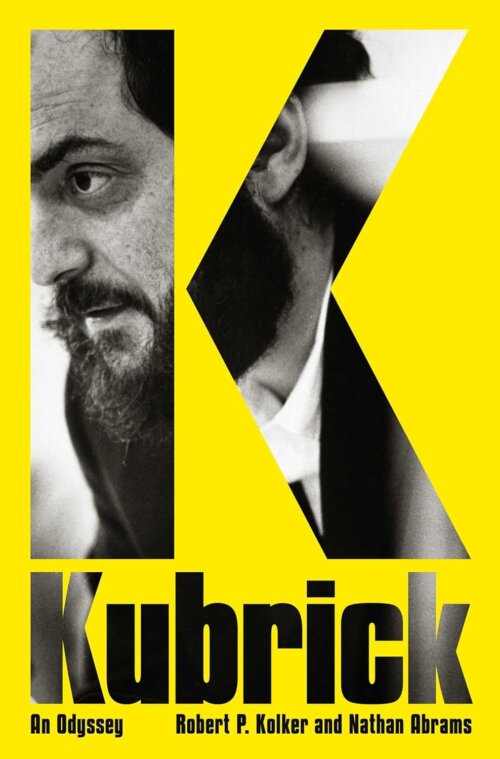
Kubrick: An Odyssey
By Robert P. Kolker and Nathan Abrams
London: Faber & Faber, 2024; 656pp


Related Posts