Power, Politics, and Memory
Machiavelli was right that a core aspect of political power was premised on our conceptualized of past heroes. More than offering a vision of realpolitik, as commonly presented, Machiavelli’s real political legacy was his implicit elaboration on the use of memory and politics. In reaching back into the past, whether Livy or Moses, Machiavelli articulated how we should remember ancient heroes and what their example portends to contemporary political society.
No politician after Machiavelli understood the twin pillars of sacred memory and political potency as did Abraham Lincoln. When Lincoln spoke of the “mystic chords of memory” and the “brave men” and “honored dead” who fought on the battlefields of the Civil War, who was already engaged in memorialization of the soldiers fighting the war and how we should remember them—the living and the dead. Lincoln’s ability to memorialize “our fathers” with the “brave men” and “honored dead” who preserved the Union, linked the cause of the Union with the cause of the Founding Fathers and the patriot generation who achieved independence. This, of course, provided political power to Lincoln and the Republicans who could claim to be carrying on the unfinished revolution of “all men are created equal” while putting down the treacherous secession of the Confederacy.
American politics has long been one of memory and how power has been achieved or maintained based upon memory. There are significant moments in American history that have been memorialized for the purpose of political power: the American Revolution, the Civil War, and World War II are the three most obvious. Though this be a simplification, until the passage of the Civil Rights Act of 1964 and the subsequent inclusion of the Civil Rights movement as another significant moment in American history worthy of moral memory, these three moments were generally understood in American memory as follows:
(1) The American Revolution was universally regarded as a heroic age; the Founding Fathers and patriots who fought the war were revered as heroes. The patriots were moral heroes to emulate.
(2) The Civil War was universally regarded as a tragic event; the cause of the Union was understood to be just and moral, right. The Confederacy, though wrong, fought with honor and bravery and in being readmitted back into the Union the Confederates could be conceptualized as American patriots fighting for their family, their homes, and embodying bravery and tenacity. Thus, both Union and Confederate soldiers were moral heroes to emulate. (This memorialization, of course, ended up neglecting the perspective of black Americans and southern Unionists, and ended up permitting a grand mythology to be constructed that is now known as The Lost Cause.)
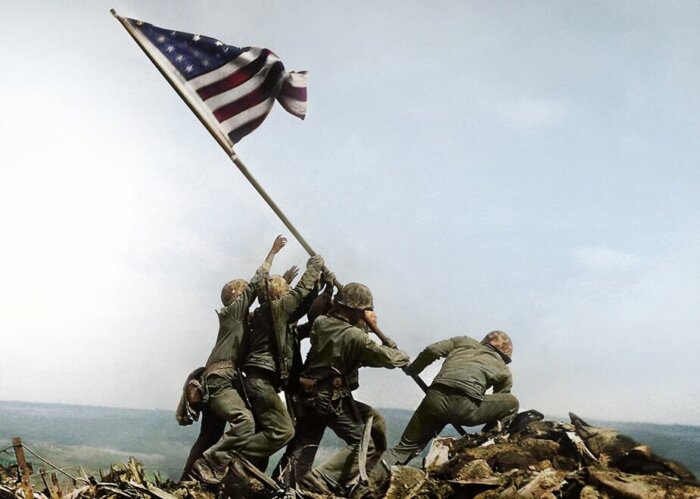
(3) World War II was America’s finest hour; the greatest generation who survived the Great Depression then helped to set free a captive humanity suffering under Nazi and Japanese brutality was worthy of the highest respect, honor, and veneration. World War II is more important to the American psyche than even the Revolution and Civil War, the event that truly gave birth to the United States we know. The men and women who fought, died, and served in the war were moral heroes to emulate.
For politicians, north and south, east and west, the appeal to these events and the memories they conjured in voters were regularly used for political purposes and the attainment, and preservation, of power. We still encounter this reality today: vote for me because I’m saving the spirit of 1776; vote for me because I’m saving the Union preserved by Lincoln; vote for me because I’m saving the sacrifices of D-Day; vote for me because I’m running on the legacy of those heroes and “honored dead” that inspire the mystic chords of memory in those of us living in the twenty-first century.
However, this sacred memory of American history has wilted. Specifically, the American Revolution and the Founding Fathers and patriots who achieved independence are no longer universal heroes. There is much criticism of them; even as men like Washington and Jefferson retain a degree of high praise and place of prominence in American society, it comes with the critique of frequently pointing out their own shortcomings and hypocrisies that stands alongside their societal contributions and heroism.
The Civil War is no longer considered a tragic event where the Confederacy can be honored as having fought bravely and heroically (which, admittedly, ignores all the other reasons for the Confederacy’s existence). This is because of the inclusion of the newly sacralized memory of the Civil Rights movement and its martyred prophet, Martin Luther King Jr. The Union cause was right and just, but the Confederacy was neither noble nor heroic because of the fact that slavery was the leading cause of secession—something that all southern secession documents do openly acknowledge and those who deliberately ignore this fact due so out of indoctrination to the Lost Cause Mythology. The previous century’s memorialization of the Confederacy is now problematic—why are we honoring traitors, men who rejected the constitutional government of the founding generation, and soldiers who fought for the defense of slavery? To the extent that the Union cause was good and just, its memory is now geared more toward the unfinished revolution of racial reconstruction and not the battlefield heroism of blue vs. grey.
While World War II generally remains the “Good War” in American memory, the universal acknowledgement of the war as America’s finest hour is starting to tip toward critical skepticism. This is especially true among younger Americans, mostly alienated young men, who conceptualize the Allied victory in the war as a victory for globalist democracy and capitalism—a proto-Neoliberalism and Neoconservatism that has since bankrupted America, ruined its borders, and now perpetuates itself through “forever wars.” Although the older generation of Americans who are the children of veterans who fought the greatest and most terrible war the world has ever known may not like to admit it—one need only visit TikTok or Twitter to see the growing backlash against the Allied victory. Even in places like Britain, neofascist and racist revisionism lionizes Oswald Mosley and denigrates Winston Churchill. True, one can say that Twitter is not a legitimate place to conduct a poll on whether “the good guys” won the war, but Twitter polls where such a large number of voters will say “No” is an alarming trend that cannot be ignored. Likewise, the regularity of viral videos on TikTok romanticizing Nazism and the SS should be concerning or at least known to us.
Politics exists because of memory. Politics advances because of memory. Power is entrenched because of memory. Power is challenged because of memory. A healthy society can weave new narratives and create new memories in the service of the politics of enfranchisement and enhanced liberty. We need not fear this universal operation of politics, but we must remain vigilant in how memory is wielded and crafted in the service of politics and power. 2025 will be very revealing in this regard, as competing appeals to the past and American memory is serving the building of a new politics and powerbase for the present and future.


Related Posts