Socrates’ Search
When Alice sat at the Hatter’s table, she was greeted with a riddle: “Why is a raven like a writing desk?” Surprised by the unusual query, she began pondering. Her rumination prompted probing questions, which ushered the young girl into a dazzling exchange with the talkative March Hare. They spoke of watches and time, songs, and three little sisters living in a well. It was a mad tea party, after all. Then, Alice gave up. “What’s the answer?” she asked. “I haven’t got the slightest ideas,” replied the Hatter. Despite this defeatist declaration, the new acquaintances continued chatting, swept by the spontaneous flow of conversation.
We don’t often meet eccentric hatters or babbling rabbits, but we experience wonder like Alice. We gaze at a flower and contemplate its origins. We reminisce about past conversations and ponder their implicit meaning. A curious question sparks conjectures.
Wonder represents curiosity in what we don’t know. Cultivating this interest in the unknown defines a prolific, open mind. For ancient philosophers like Plato, the mind’s expansion was the business of philosophy. Philosophy, his teacher Socrates famously remarked, begins in wonder. Beloved by Plato, the frugal Athenian earned a reputation as a relentless seeker, speaker, and wonderer.
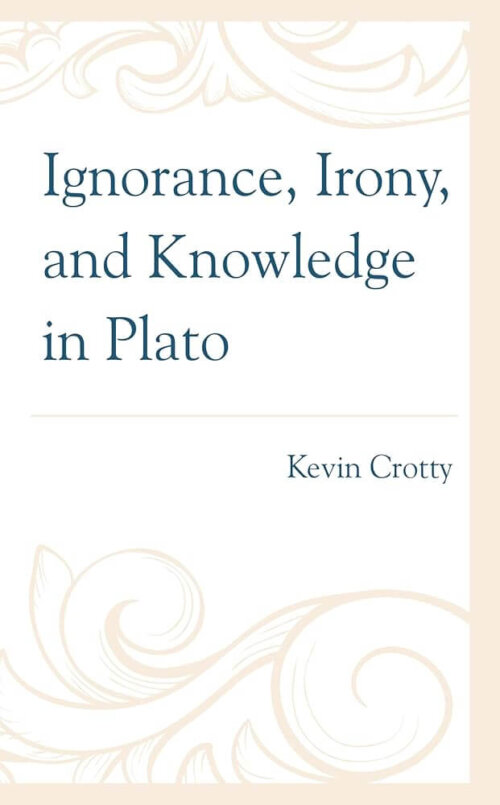
As Kevin Crotty suggests in Ignorance, Irony, and Knowledge in Plato, wonder could also be described as an admission of ignorance. If we entertain whatever unknown captures our attention, we are pleading ignorant about it, consciously or not. Socrates, at least as Plato portrayed him, is perhaps the most memorable paragon of honest ignorance. This ignorance is most evident in Plato’s aporetic dialogues, like the Euthyphro, which end in a vexing puzzlement before a question explored but unsatisfactorily addressed. The Socrates of later Plato, however, is arguably all but humble. In the Republic, for example, he outlines prescriptions to renew Athenian education. Elsewhere, he embodies admirable confidence in his arguments for the eternal universality of the Forms, whose apprehension, Plato suggests, is necessary (and maybe sufficient) to live the best life possible.
How can we reconcile Socrates’ apparent self-assurance with his uncompromising commitment to “knowing that he doesn’t know”? Is Plato’s ideal object of philosophical aspiration steadfast certainty about immutable truths or honesty about one’s partial understanding? Is a soul consistently governed by rational maturity and epistemic confidence more desirable than one constantly self-aware of its ignorance and thus never fully confident? Is ignorance simply the absence of knowledge? Are the two mutually exclusive?
In Ignorance, Irony, and Knowledge in Plato, Crotty expounds these questions extensively. He situates his inquiries in a burgeoning body of research on ignorance that spans psychology, sociology, literary studies, and other adjacent disciplines. In philosophy, ignorance in Plato has inspired several waves of scholarship, the most recent of which is epitomized in a thought-provoking conversation between Christine Korsgaard and Jonathan Lear. Korsgaard sees in Socrates consistent, unflappable poise and command. She doesn’t suggest that Socrates’ claims are unequivocally true or even that Plato means them to represent the truth. But, in Crotty’s view, she does see a “genuinely impressive self-possession” in Socrates’ behavior that depicts the “steady, unswerving governance” of a soul guided by reason.
In contrast, Lear identifies irony as Socrates’ most noteworthy trait. Socrates is ironic because, in Crotty’s formulation, “he continues to live justly, wisely, temperately, courageously, all the while doubting the common acceptance of these virtues.” Socrates “knows” without knowing. His heroic character is not rational, self-governing confidence, but the conscious, courageous openness to existential disruptions and their integration in his life.
This tension between the stable certainty of rational self-constitution and the malleable irony of self-awareness grounds Crotty’s studies of key dialogues like the Charmenides, the Phaedo, the Theaetetus, and the Apology. Throughout his thorough analyses, Crotty favors Lear’s emphasis on irony as Socrates’ defining trait and, therefore, as the guideline for the Socratic project each of us is meant to undertake. Whereas Lear focuses on irony as the implicit discrepancy between concepts and deeds, Crotty first directs our attention to ignorance.
There are many noteworthy, original ideas in this concise and pleasantly readable study, including a discussion of the “origins of Socratic ignorance” in Socrates’ youth as portrayed in the Phaedo (chapter 1), a treatment of technical expertise as a concern with the pragmatically useful coupled with the regular interrogation of the nature of the human and the ignorance that accompanies it (chapters 5 and 6), and a summary of modern conceptions of knowledge in relation to Plato’s own (chapter 8).
Two additional notions are particularly worth expounding. The first concerns knowledge (episteme). Influential Plato scholars have long understood the Greek’s claims about the Forms and the immortal soul (to name two) as pointing to truths one needs to possess, much like one would have the truth that “Kathmandu is in Nepal” after its discovery (my example). The discovery of this “knowledge” remedies and thus dissolves one’s ignorance. On this reading, ignorance is the mutually exclusive, privative opposite of knowledge. When we don’t know something, we’re ignorant about it. When we know something, we’re not ignorant about it. In this paradigm, Socrates becomes the paragon of someone who possesses philosophical truth and the ineluctable conviction it affords.
For Crotty, this widely accepted view fails to appreciate the intricacy of Plato’s insights. Crotty reminds us that, for Plato, “knowledge that did not lead to further inquiry was not knowledge.” With any knowledge acquired about, say, what the Forms are, there should come new awareness about one’s lack of knowledge: “unless knowledge opens up some new prospect and points to further things to be ignorant about, it is not knowledge.”
To resolve the conundrum between knowledge and inquiry as concomitantly desirable objects of philosophy, Crotty re-interprets Plato’s suggestions about knowledge and ignorance. Knowledge (in its best and highest form) is neither the absence of ignorance nor the cognitive possession of a proposition. Rather, knowledge “is better understood as a cooperation or dialogue between a mind capable of knowledge and an intelligible world capable of being known. Knowledge is a contact—as much affective and erotic as it is cognitive—with reality.” In this rich and elegant reading of episteme, Crotty suggests that, for Plato, the best knowledge is one that unfolds existentially, in the entirety of our being, as we seek to commune with a world that invites communion. Even the Forms, eternal and unambivalent in principle, are hypotheses “intended to resolve [Socrates’ intellectual] crisis, and still [bear] the traces of that crisis.” It’s the process of hypothesizing that affords confirmation of their veracity.
The knowledge that springs from this process “flashes forth like a fire when it is kindled,” as Plato wrote in the Seventh Letter. It burns, excites, and stirs our body, spirit, and mind. Its experience, however, is neither permanent nor unshakeable. As the non-cognitive glimpse of eternal truths, it comes with enough uncertainty to warrant humble ignorance. Ignorance, then, is not a simple absence of knowledge. It becomes the “awareness of one’s ignorance.” This awareness, paradoxically, presupposes some knowledge, but it must remain intact once that knowledge is acquired.
Crotty’s second related insight concerns dialogue. Dialogue is the process that (ideally) affords intimations of knowledge while reinforcing our awareness of our ignorance. The knowledge it fosters is experiential, dynamic, and embodied. Here ignorance meets irony. Crotty follows Lear in suggesting that Socrates’ character is ironic because, despite his confessions of ignorance about courage and wisdom, his deeds and decisions embody those very virtues. Dialogue facilitates this ironic embodiment by using ignorance to fuel the morally edifying enactment of virtue: wisdom “consists in the knowledge of one’s ignorance inasmuch as this knowledge informs one’s actions and finds its most natural expression in philosophical dialogue.”
Dialogical practice represents a “commitment to the logos” in all its riveting manifestations. This collaborative inquiry prevents us from “falling into the trap” of thinking we know when we don’t. It safeguards us against dogma, which, for Plato, sounds the death of a life worth living. The Socratic project is partly an attempt to render ignorance apparent before one’s consciousness. When, like Socrates (or Alice), we become conscious of our ignorance, we are faced with a choice that will define the depth of our engagement with and embodiment of wisdom: do we accept it and seek a remedy through truthful conversations, or do we remain ignorant and inert? Dialogue “is what makes self-aware ignorance virtuous.” Self-aware ignorance that doesn’t induce dialogue, Crotty alerts us, “reflects moral torpor or intellectual despair.” Without dialogue, even the best kind of ignorance cannot flourish.
From Socrates’ example as an interlocutor who invites fellow humans into deeper, more fruitful ignorance, Crotty extrapolates two ideal conditions for dialogue to best unfold. First, “participants in a true dialogue meet on a shared level of ignorance-aware-of-itself.” Second, the participants share a “commitment to a joint enterprise of finding the truth.” Crotty’s insights help us to fully appreciate Plato’s project, not only as a philosophical program but also as a literary and aesthetic endeavor. Both setting and action in the Platonic dialogues are part of the “argument”: they reflect the ironic relationships interlocutors must undergo to embody a fruitful harmony between knowledge and ignorance. Plato’s masterful use of conversation as a philosophical heuristic reveals that the live and lively search for truth is more significant than its eventual discovery, for it is a discovery in itself.
Crotty’s fresh and stimulating proposals are limited by an incomplete analysis of pertinent Greek terms. For instance, in some translations of the Sophist we read that “thinking that one knows a thing when one does not know it” is a “kind of ignorance” we must call “stupidity.” The Greek for “ignorance” is ἄγνοια (agnoia), which elsewhere Plato juxtaposes to the episteme that concerns Crotty. The word for “stupidity” is ἀμαθία (amathia). Crotty mentions amathia in passing (page 52) to entertain the plausibility of the conventional reading of knowledge as the simple absence of ignorance. There, however, he translates it as “ignorance.” The two terms could be translated interchangeably as “ignorance” in different contexts. Amathia, however, can also connote one’s incapacity or unwillingness to learn, which is somewhat different from both the conventional reading of ignorance as an absence of cognitive knowledge and Crotty’s reading of ignorance as awareness of one’s ignorance. To my best knowledge, the differences and parallels between amathia and agnoia are never discussed explicitly. A more thorough examination would enrich the book’s proposed amendments to our understanding of Plato’s epistemology.
Minor issues aside, Ignorance, Irony, and Knowledge in Plato is an excellent book for philosophers and philosophically-minded readers alike. Crotty clarifies dimensions of Plato that for too long have been eclipsed by technical analyses fixated on syllogistic deconstruction. His explorations present Plato in the full majesty of his philosophical, literary, and artistic genius. The dialogues come to life in their dramatic splendor, wherein the constitution of virtue becomes a communal, cooperative process. The reductive commitment to philosophical knowledge as a static “cognitive mastery of essences” makes way for an organic, processual knowing whose flourishing depends continuously on the humble and morally edifying admission of ignorance.
I admire Crotty’s ability to render lucid and accessible the monumental theme that defines his first-rate study. I commend its timely significance as well. In the Preface, Crotty notes his intention to elucidate the vital importance of ignorance as a value worth cultivating:
Technological developments not only threaten to overwhelm us with new information, but also to confuse the public with unnervingly effective disinformation, unprecedented not only in its volume, but also in its vividness and specious plausibility. In such a time, ignorance—that is, Socratic ignorance; awareness of one’s ignorance—will need to emerge as an important value: it will be urgent not to think you know when in fact you don’t.
We may question Crotty’s conclusions about Plato—indeed, Crotty himself would say we should—but one thing is clear: the world sorely needs honest ignorance. It needs healthy dialogue, renewed pledges to fellowship, and “a new conception of what it means to be a human being.”
Ignorance, Irony, and Knowledge in Plato
By Kevin Crotty
London, UK: Lexington Books, 2023: 248pp


Related Posts