The Cold Wind of the North
Within both academic and lay or popular discussions, Christians often take a seemingly simplistic view of the early medieval period, pitting noble, Christian, Anglo-Saxons and Franks at war with cruel and vicious Viking barbarians. In a paradoxically similar fashion, our new contemporary secular culture—especially in works like Michael Hirst’s Vikings and Robert Eggers’ The Northman—depicts Christians in Britain and the European continent as being inept cowards bullied around by strong and noble pagan Vikings.
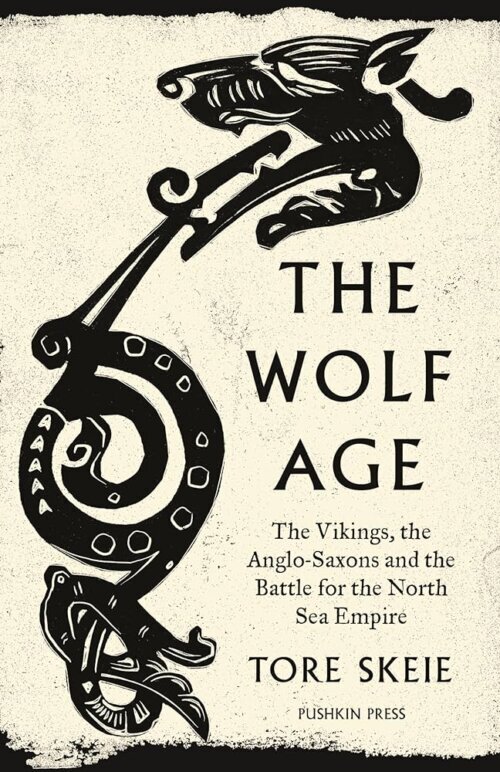
Dispelling popular misunderstandings of Vikings, Norwegian medievalist Tore Skeie’s recently translated The Wolf Age provides a sober assessment of the sophisticated “game of thrones” realpolitik of Viking Age. In The Wolf Age, Skeie masterfully corrects misconceptions both about the allegedly mindless pagan Vikings and the allegedly noble and devoutly Christian peoples of continental Europe and the North Atlantic with which they clashed. The Wolf Age further happily avoids the political correctness of other more recent works on Vikings such as Neil Price’s Children of Ash and Elm. The Wolf Age is, ultimately, an entertaining work depicting the life and times of several of the most important Viking as well as Anglo-Saxon leaders, such as Harold Bluetooth, Sweyn Forkbeard, Aethelred (the unready), Cnut the Great, and Olaf Haraldsson.
Skeie opens his work with the brutal death of Snorri Sturluson in Iceland in 1241. Snorri was a Christian Scandinavian who recorded Norse sagas and who looked to the earlier tales for political inspiration of how to wage war and navigate the shifting world of his own high medieval period. Betrayed—wittingly or unwittingly—by a priest in his service, Snorri ended up dying by the harsh life he both lived and studied in the lives of his Norse forefathers. Snorri Sturluson’s life and death form a touchstone for the rest of the book: the world of the early medieval North Atlantic was a tangled thicket of heroics and cowardice as well as petty feuds and money-making schemes. In a twenty-first century world inundated with works on the Italian Niccolò Machiavelli, Skeie’s book shows that the men and women of the North engaged into their own realpolitik game of thrones.
Throughout The Wolf Age, Skeie presents a sophisticated portrait of King Aethelred and the Anglo-Saxons, revealing the Christian peoples in England as operating from complex moral motives, combining both genuine faith and harsh violence. Skeie begins his discussion with the appearance of a comet in the skies over England in August of 975, which some perceived as an ominous sign of the end of the world. Edgar the Peaceful (843-875) had died and left his kingdom to Edward, the elder of his sons who were born to two different women. Anglo-Saxon rule was precarious at this time. It had been forged in the earlier struggle against the Vikings and had borrowed stylings from the Christian kingdoms of the continent—especially Charlemagne—as well as residual trappings of the Roman Empire. This is one of Skeie’s key points: rather than simply attempting to maintain a Christian kingdom in the face of pagan onslaught, the Anglo-Saxons were in the business of forging an empire. This empire, further, was built upon the taxation of silver, and this silver—as much as heroics and personal loyalty—was the cement that held together, not only the Anglo-Saxon Kingdom, but much of the world of the North Atlantic—including and especially the Vikings. The desire for imperial rule tugged against the reality that much of Northern Europe was still a fragmented landscape of warlords and petty kingdoms. As Skeie notes, the Anglo-Saxon kingdom, rather than being a clearly united Christianity entity, was a patchwork of various Germanic tribes with conflicting ambitions. The young King Edward was known for his hot temper and eventually died at the hands of a group of thanes from his younger brother’s household. His younger brother, the more even-tempered Aethelred, who later assumed the crown, was tested in the summer of 979, when a group of Vikings landed near Wessex. This raiding party began a process of yearly renewal of the Viking raids that had afflicted England nearly two centuries earlier. Aethelred’s first approach to the Viking attacks was conciliatory. After an elderly earldorman from Wessex named Byrthnoth fought to the death against a group of Danes, Aethelred gathered his witan or group of counselors and decided to buy off the Vikings.
This new wave of Viking attacks were to be different than the previous assaults. The Anglo-Saxon kings were not the only ones with imperial ambitions. Across the North Sea, the Norse peoples had ambitions of empire all their own. Skeie provides the example of Harald Bluetooth who was a Christian Viking who attempted to tie Denmark to continental Christian Europe. Harald Bluetooth—whose name comes from his rotten tooth—spent his life expanding the kingdom of his father, Gorm the Old. Harald Bluetooth was a Christian, and he extended an empire that included the Baltic, parts of Sweden and Norway, and Normandy as well as his own native Denmark. He extended a system of dominion over kings and jarls and building bridges and forts throughout his land as well as castles—including the famous Aggersborg Viking castle. As Skeie notes, Harold Bluetooth was constantly at war and did not rest on his laurels until he grew old. Bluetooth died from a wound inflicted by rebels, and Skeie notes that such a fate was common: those Vikings who expanded an empire often fell prey to those who had once served them. In the case of Harold, the uprising was led by Sweyn Forkbeard, Harold’s own son. Harold’s life is a turning point in Viking history from pagan to Christian; it further casts light on the reality of Viking political life: Harold was a savage raider and warlord, but he also was the builder of empire.
If anything, Sweyn Forkbeard was more aggressive than Harold and he learned from his father’s mistakes, engaging in constant warfare and not resting on his laurels. Eyeing Great Britain, Sweyn began a series of raids over the course of several years upon Aethelred’s England. In order to fight the Vikings, Aethelred made alliances with those who served Sweyn, including Olaf Tryggvason, who were given silver to serve the Anglo-Saxon king. Olaf Tryggvason was a Christian but was “re-baptized” in what has been called a “confirmation baptism” as part of his swearing of allegiance to Aethelred. Christianity in the world of the North Atlantic was an active and sincere faith for many, but it also was a political tool even for those who believers. As part of the arrangement, Olaf Tryggavson received Anglo-Saxon priests as part of his retinue. Skeie importantly notes how the Norse people relied upon trade in addition to raiding. At this time, the Dane’s seized control of the wool trade, and Sweyn Forkbeard’s warlords ruled the seas, shaking down merchants or transporting wool themselves.
While some twenty-first century figures romanticize the Viking Age, Skeie notes that the Anglo-Saxon texts become increasingly dark and somber during this period, including The Anglo-Saxon Chronicle. Monks viewed the second wave of Danish raids as God’s punishment, but Skeie notes the irony that Sweyn Forkbeard himself was a Christian. In 1002, Aethelred married Emma, the Duke of Normandy’s sister, as a way of drawing in help from the continent. The same year Aethelred ordered the execution of all people of Danish descent in his kingdom after hearing of an alleged conspiracy against him. Skeie notes that these massacres of Danes have been discovered by archeologists. It is possible that one of Sweyn Forkbeard’s relatives—possibly a sister or brother—was killed during one of these massacres. During this upheaval, Sweyn Forkbeard attacked again, burning villages, and Aethelred was again forced to negotiate. In 1008 Aethelred gave orders that a group of ships were to be built and an army to be raised. He engaged Sweyn but lost and was forced to flee. Sweyn eventually conquered England but died abruptly in 1014.
The latter portions of the book deal with the conflict between the Christian Norsemen Cnut and Olaf for control of the North Atlantic. Their sincere Christianity did not diminish their skill as warriors. The two figures operated from complex motivations. Skeie’s narration illustrates that the people of the North Atlantic were not primitive barbarians, nor were Christian rulers simply kindhearted and noble monarchs. A Christian but also a violent warlord, Cnut was crowned and anointed King of England in 1017 and swiftly moved against his rivals, having a number of high-ranking Anglo-Saxon nobles executed—Cnut had Aethelred’s son Eadwig banished but then welcomed him back to England only to have him killed. Cnut purged the old guard of English rulers and replaced them with loyalists (likely of Norse descent) such as Eric Hakonsson. Cnut further allegedly plotted the death of Edmund Ironside’s sons, having them sent away to Sweden. However, the Swedes protected the boys and had them sent to Hungary. Cnut took Aethelred’s widow, Emma, as his wife. Emma, for her part, made Cnut swear that only the sons he had by her would be lawful heirs to the throne. They were married in July of 1017.
Olaf likewise was a Christian warrior and a shrewd tactician. In the year 1007, Olaf Haraldsson left his home in search of loot and fame. He was known as being “battle-bold” and was confident and determined. From what scholars can gleam from the record, Olaf Haraldsson raided parts of Sweden and Estonia and returned to Norway, which he united and Christianized, becoming king in 1015. As Olaf gained power, he grew into conflict with Cnut. Olaf knew he could not win an outright war against Cnut, so he planned a sneak attack on Denmark. A raid on Denmark, further would supply Olaf with needed supplies.
Cnut and Olaf lived in a period in which England and Scandinavia, once remote and, in the case of the latter, infamously pagan lands, were becoming drawn into the wider world of European Christendom. Henry II, the German Holy Roman Emperor, died on July 13, 1024. Conrad II was elected in his place. Conrad invited Cnut to join in him in Rome to witness his crowning in 1027, thus bringing Denmark and England within the wider community of European Christianity. While Cnut prepared to visit Rome, Olaf, allied with the Swedish king Anund Jacob, launched his attack, pillaging Denmark. Cnut rushed to Denmark. Skeie suggests that Olaf and Anund likely underestimated Cnut’s military capabilities. Cnut’s fleet was twice as big as the invader’s. Cnut then returned to England to prepare for Rome. Anund Jacob and the Swedes abandoned Olaf in the Great Belt and Little Belt, straits between the Danish islands and mainland. Olaf attempted to wait the fleet out and further lost men, including Hårek of Tjøtta. Olaf eventually had to abandon his ships and return home on foot walking through Sweden to reach Norway as winter descended for which Olaf’s men were not prepared. When he returned home, Olaf was in dire straits. In bitter irony, as Olaf lost power, he lashed out at his men and became quick-tempered and paranoid. Olaf’s harshness drove more of his followers into his enemies’ arms. Olaf stayed at the home of a man named Tore who was close to Kalv Arnesson, one of Olaf’s men. When Olaf learned that Tore had a ring from Cnut, he had Tore put in chains and then killed. This murder caused great consternation among Tore’s relatives. Tore’s brother Grotgard sought revenge but was killed. Cnut aided this undermining of Olaf’s power through gifts of coins to Norwegian warlords.
Olaf eventually was driven from power in Norway and, after years of harshness toward his own people, was left with a rag-tag army of Norwegians and Swedes. In the summer of 1030, Olaf’s greatly reduced army marched north likely in order to capture the city of Nidaros, which would enable him to claim his kingdom. They encountered Kalv Arnesson, Harek of Tjotta, and Thorir Hund, all of whom had once served Olaf. The former friends of Olaf also were also supported by a peasant army of Norwegians. Olaf attacked, but he and his hird, or group of close retainers, were overpowered. Although safely ensconced across the North Sea in England, Cnut won the day and held in his hands an empire that included portions of England, Scotland, Ireland, Denmark, Sweden, and Norway. Skeie notes that like other empires built upon the strength of a leader and his gifts of silver, Cnut’s crumbled. Olaf Harraldson became later known as Saint Olaf, and his younger brother Harald Hardrada who is famously known as the “last Viking” would live a fascinating life of raiding and battling (including a stay in service of Byzantium) only to die in 1066 at the Battle of Stamford Bridge in England, just a few weeks before the Norman Invasion.
Tore Skeie’s The Wolf Age is a pronounced reminder that the Italian Machiavelli and Chinese Sun Tsu do not have a monopoly on providing a guide to realpolitik. The Wolf Age is also a profound insight to the end of the Viking Age, dispelling both Christian and secular romanticization of the period. During the Second Viking Age, the Vikings themselves were often Christians, and the Christian peoples of Britain whom the Vikings raided could themselves be brutal and cold-hearted. Such a sober view of history is critical for our own postmodern age in which image and illusion (often crafted by artificial intelligence) often obscures reality. To argue for a sober view of history and even the contemporary world is not to be pessimistic or to suggest that an immoral and brutal realpolitik is a prescription for behavior. Rather, Christians must be aware of the nature of the political beast and learn to work within it while being virtuous and, as many medieval Christian rulers were, “as cunning as serpents and as wise as doves.”
The Wolf Age: The Vikings, the Anglo-Saxons and the Battle for the North Sea Empire
By Tore Skeie and translated by Allison McCullough
London: Pushkin Press, 2022; 378pp


Related Posts