The Foundational Problem of A.I.: Science and the Critique of Religion
Due to the quick ascension of ChatGPT in the western world, it must be asked, what is the purpose of Artificial Intelligence (A.I.)? What is the thinking behind its existence, thought by companies like OpenAI? What cause is linked to A.I.’s problem-solving capacity to make it necessary for society’s uncritical and unscrupulous acceptance? If A.I. is a product of modernity, the origins of the modern world through the rise of science can be traced to the seventeenth century. During this time, there was a revolutionary shift in how we came to view nature. This transition gave birth to the modern world we now inherit. Technology is a symptom of this scientific revolution, and A.I. today is the epigone of technological thought.
The theoretical origin of A.I. is bound to the modern scientific worldview of reducing our reliance upon nature to be able to gain dominance over it. The building of the modern world in the Age of Enlightenment, which undoubtedly propelled modern science and technology to its dominant position, was tied to a skepticism of religion. Religion came to be seen in a light that was no longer beneficial for our understanding how the world works. The rise of science is tied to a practical revolt against religion, where method becomes most important. To understand what problem A.I. is trying to solve, to reveal its fundamental purpose, it is integral to look to the origins of science and its corollary of religious criticism, so that we can posit A.I.’s natural expression and evolution in society.
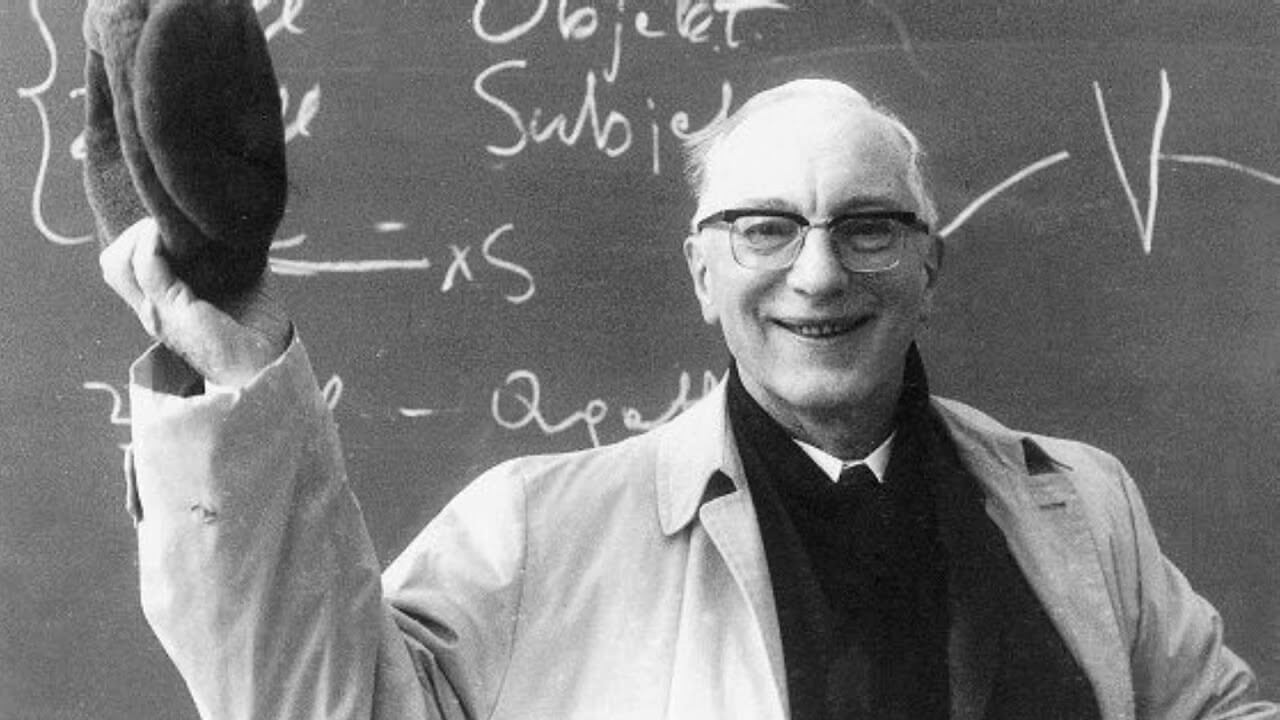
An illuminating guide to the transition towards scientific dominance and its rejection of religion is Leo Strauss’ Spinoza’s Critique of Religion. In this text, Strauss uncovers why Spinoza criticized religion to plant the foundation for the Age of Enlightenment. In the first chapter entitled “The Tradition of the Critique of Religion,” Strauss starts from a distinct position: he reads the tradition of the critique of religion as commencing with Epicurus (341-270 BC). An ancient philosopher, Epicurus is known for his philosophy of ataraxia, a state of serenity or freedom from fear. It is this freedom from fear that Strauss associates with the initial revolt against the Olympic gods. Epicurus holds hostility towards the fear menacing gods, which, by association, relates causal phenomena with divine intention. This relation results in an anxiety for which the human can never attain a peace-of-mind. The human can never achieve peace-of-mind because of its initial ignorance of causes. We do not know causes at first. But, as humans, we are inclined to search for causes. We are curious beings. When lightning strikes and causes a fire, the ancient Greek associates this event with divination. For fear of being struck by lightning, the ancient Greek must pay heed, always in life, to sacramental causes and effects. It is religion for Epicurus that keeps humanity in a state of perpetual anxiety and restlessness, as causes are attributed to a being outside of human comprehension.
What Strauss is displaying here is the anticipation from Epicurus of the reliance, in modernity, upon physics as a secular explanation for why natural phenomena occur. Liberation from fear of the gods will come from discussing the causes as comprehensible to the human being. This is true for early pagan religion and for revealed religion. The condition of fear is only maintained because we, as divine-fearing beings, do not know what causes the lightning strike. If those causes were known, humanity would be more amenable to a state of serenity, due to fear’s mitigation from the articulated knowledge of why things happen. Strauss claims that modern physics takes its first step as a revolt against comprehension from divine intentions. Epicurus is not denying the existence of gods but is anticipating a time when the intention of the gods does not control our motivation for comprehending the natural world.
Initially, humanity is helpless in the face of grand-scale cosmic events and the force of natural phenomena. Extraordinary and tragic perils only accentuate the fear of the gods. There is a terrifying character to the gods and to their motivations. Humanity cowers at the overwhelming power that they possess, as they are viewed as responsible for natural occurrences. In anticipation of tragic events resulting in death, filling this need are conventions of worship. We begin to understand that sacramental causes are outside of human knowledge. We, then, remain in a perpetual state of fear, disquiet, and restlessness. Epicurus starts a tradition in the West of criticizing this state as a lower philosophical priority than a state of serenity. His philosophy takes the first jump towards comprehending the world without divine aid.
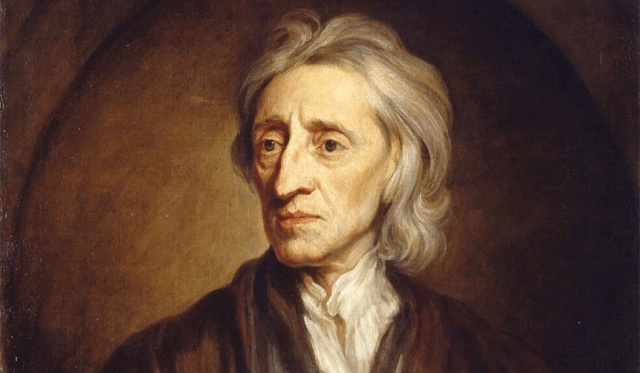
While Epicurus does not deny the existence of gods, but only anticipates the scientific frame of physics explaining natural causes, Thomas Hobbes (1588-1679), around the time of a revolution in the scientific method, converges science with a critique of religion. Epicurus holds that science and religion have the same end: maximum pleasure. Strauss, while devoting a chapter of a book about Spinoza to Hobbes, points to the implications of Epicurus’ intention of this constant satisfaction. Whereas religion is an insufficient means to attain satisfaction on earth, science can actualize pleasure. Although this view is not salient in the expressed writings of Epicurus’ philosophy, the implication is that religion is employed to keep humanity in a state of restless anxiety to never achieve ataraxia. While Epicurus does not hold that science and religion are two opposing attitudes, Strauss notes that Hobbes’ thought, embedded firmly within the modern world, stridently diagnoses religion and science as exclusively opposed to one another.
Hobbes’ main purpose is to overcome the infantile political conditions of violent death. To do so, Hobbes proposes a thought experiment, the state of nature, a condition before the time of government. Life in this condition is nasty, brutish, and short. To escape this violent and reckless condition, we would concede power to a sovereign to have power over this natural state. Happiness for Hobbes, reversing Aristotle’s conception of eudaimonia, is the perpetual increase of power over humans and over things. Happiness is not ceasing the chase for desires, but the constant state of movement for attaining the means for those desires. Power becomes a method for the increase of happiness through the dealings of commerce and the attainment of commodities. Commerce will channel the barbarism inherent in the natural state into the more civilized practice of competition for power. In civil society, the human can pursue one desire after the next, a striving that is only possible in a sovereign state. Strauss, in his chapter dedicated to Hobbes, emphasizes emphatically that the means to attain any thing one wishes is exclusively the functioning of power. With Hobbes, life becomes the never-ending chasing of desire after desire, and, according to Strauss, the implication for society is the increasing of power over nature to fulfill our desire for pleasures. Religion then becomes the greatest barrier to this progress of our growing pleasures.
In Hobbes, pleasure, and the enjoyment of it, becomes present oriented in time. No longer does society need the delayed gratification of satisfaction practiced in religious convention. Lasting enjoyment can only be pursued by increasing power; permanency is no longer conceived in eternal beings that outlast humanity but is now the infinite pursuit of power. As Hobbes famously states, there is no summum bonum, no ultimate good. Consequently, life becomes desire. The natural condition for Hobbes is unremarkable and banal. Nature is uncultivated in need of human power and exertion to transform it into comfortable means for living life on earth. Strauss finds in Hobbes that nature as uncultivated warrants human willing. It does so because nature occurs accidentally, so it needs human cultivation as a method for attaining power over it. We must take hold of nature. It is due to this lack of cultivation that science pervades modern society, to become the dominant position of the West. Science is most congruent with this pleasure-seeking behaviour in its dominance over nature. As there is no highest good for Hobbes, however, there is a great evil: a painful and violent death. This is what we want to avoid by pursuing science and the comforts of desirous life by controlling nature. Strauss says that after Hobbes, we are taking precaution against this greatest evil. There is no better precaution than science.
Science is a way for power to exert itself over nature. Science looks for causes of things in a systematic way. Causes that bring about an effect, as a process, can be replicated. So, we understand these processes as an “efficient cause,” or, rather, the gather of what is the cause of a change in holding a variable constant. The human can now articulate cause and effect, irrespective of sacralisation. The understanding of causes, within the scientific worldview, bolsters the human’s subjective ability. This is due to the replication of causes and effects through what we call the scientific method, a human invention fundamentally predicated upon uncovering facts. When we uncover facts, we combat the great evil of a painful and violent death. As Strauss claims in his analysis, science exists only because it increases humanity’s power. With this introduction of science, religion is now seen as unmethodical or unscrupulous in how it has arrived at explaining causal relations. It is seen as incorrect. According to Strauss, both science and religion spring from the same position: trying to understand human thinking in terms of causes. In Hobbes’ philosophical turn, science and religion are distinguished by method, one being a methodical replication and one unmethodical altogether.
In Spinoza’s Critique of Religion, Strauss articulates throughout that the gods originate due to our anxiety about not knowing causes. In a dream, we might imagine divine causes because, as humans, we are constantly searching for answers to the mystery of existence. An explanation for why things occur eludes us in our infantile comprehension. With the imagination, we carve out invisible powers from our human fear, which springs from our ignorance of why things happen, having no link between causal relations. The purpose of science, mixed with the Hobbesian fear of violent death, is to reject this. We can no longer have unmethodical searching out of causes, as they are too reliant on imaginative understandings. From the view of science, these imaginative causes become what Strauss calls “illusionary causes.” Within the scientific worldview, religion simply deviates the course from which we are meant to derive true causes and effects. There is a shift, particularly with Hobbes, Strauss emphasizes, where we start to define happiness and progress by discovering causes without illusion. The scientific task is to leave that initial ignorance behind, to free us from the perpetual state of anxiety and fear of not knowing the correct causes.
To connect this criticism of religion and the foundation of science to A.I. today is not straightforward, but I will intimate some connections to sum up. If technology is linked to the birth of modern science through the criticizing of, and then the rejection of, religion, as Strauss makes the case, then technology itself must be about reducing pain and maximizing pleasure from the Epicurean paradigm. A.I. being the latest technology but concerned with understanding causes at an alarming and instantaneous rate, is a result of criticizing causes outside of the human impetus. We can see this. To alleviate not knowing, a student once ventured to higher education to scrutinize causes for why things occur. The university or college student today now relies on ChatGPT so that the pain and anxiety of studying, requiring intentional distraction -free focus, can be quelled, so that further pleasures can be pursued. The pain of distraction- free studying becomes an obstacle to overcome, much like a blank canvas for an artist. The artist will be free of the pain when A.I. can artistically compose art within a fraction of the time. The maximization of pursuit of desire after desire today also means the maximization of ‘free’ time. Is this what A.I. is meant to solve, to rid us of the apparent perils of occupying our time? If A.I. is to bring about a state of eudaimonia or ataraxia, like the intentions of the scientific revolution for controlling nature, then what pain is it trying to eliminate? This pain might be tied to a fear of our human intelligence as fallible and our mortality as ephemeral.
How exactly does A.I. cause the eradication of our perils from the natural world? Is it meant to supplant human intelligence? With A.I., do we no longer need to hold information and develop critical thinking skills? To have more free time from the usual pains of life would result in further unrestraint for the passions, to bring Hobbes more fully to fruition. Human intelligence is seen as another product of nature to overcome with an artificial intelligence that is purportedly better in every way. We would need more passions and the subsequent pursuit of those passions if the maximization of pleasure is equated with the maximization of time.
Maybe some things are not supposed to have causes exposed by physics, such as the cause of human intelligence. Maybe A.I. is too concerned with exposing the causes of human intelligence as fallible and illusionary, just as scientific causes did to religion. If intelligence is simply the expanding of an instantaneous repository of information, then there is no human motivation to discover causes, and the foundation of the scientific worldview is upended. A.I. is moving away from science embedded as a critique of religion and moving towards a sort of postmodern form of intelligence. The further we expose the causes of intelligence, the less we have the ability for the human consciousness to naturally contend with reality. It is not too far-fetched to imagine a time when A.I. will rapidly expand to the point of determining all things in advance. No longer would the subjective, thinking individual be superior. No longer would one exist because one thinks, as Descartes proclaimed. In this supposed reality, existence will already be defined and presupposed for you. The uncovering of causes from A.I. is no longer the motivation from the same position as the basis of science. If technology is an epigone of science, A.I. is pushing the limits of this frontier like no other technology has done previously. The greatest evil then becomes the understanding of causes derived from human intelligence, as human fallibility can lead to a violent death. For example, human error, and not A.I., gives us a miscalculation of measurements for cables on a suspension bridge. The justification is that we avoid a painful and violent death if we simply put our faith in A.I., which will be seen as “more correct”. We would be one degree removed from a critique of religion. We would operate within the realm of a critique of human ingenuity and the errors that accompany mortality. In the A.I.-led society, politics will be presupposed for you; philosophy will be predetermined. It is a fear that algorithms and social media are already creating echo chambers on the right and on the left of the political spectrum. If brought to the fullest A.I. manifestation, all that will remain is an even more raw version of Hobbes: an artificial sovereign to oversee all. In this Orwellian scenario, what may be left is to consume, perhaps only with consumer products that are already chosen for you. The spiritual mystery of the human being is thus reduced to an instantaneous repository of information for predetermination, and this will be held in the highest esteem as our greatest technological achievement. To this end, A.I. is no longer solving a problem but simply creating one, with potentially devastating consequences.


Related Posts