The Future of the Humanities
Declarations on the decline and fall of the humanities have been commonplace for the past 40 years but never as loud and sorrowful as now. Concern for the decline of English majors, the general decline of the humanities more broadly, and expected declines in university enrollment is, of course, a major concern. No democratic society can endure without education, literacy, and a thinking (and virtuous) citizenry. However, the decline and fall of the humanities is overstated by the declinists. Yes, in establishment venues the humanities are in bad shape. Nevertheless, the humanities are experiencing a revival in other places: Christian liberal arts education, Christian journals and publishing houses, and digital media and podcasts.
It is richly ironic that those who have butchered the humanities through their own debauchery and playing Marxist political theorist in literature classes lament the destruction of the humanities that their own pyrotechnic hands have fostered. These are the same people who have believed, since Marx, that technology and economic change would bring the end of capitalism and the inauguration of socialism. But technological and economic change has not brought the transformation the Marxist elite anticipated; instead of the overthrow of capitalism our increasing digital and technological age has brought forth the decentralization and digitization of the arts and humanities which simultaneously threatens established institutions as much as it creates immense power for those who create and wield technology. Simply put, one does not need to attend Cambridge, Oxford, Yale, or Stanford anymore to receive a quality and insightful education in the humanities. While those elite institutions still confer certain tangible benefits, like human capital and social networking, the monopoly that brick and mortar education had over the humanities and intellectual life is over.
A new generation of educators, writers, podcasters, and editors are arising to make the most of the new world we live in as they promote the humanities through new means. Many have answered the call to be teachers at private Christian schools, some of which are entirely online or offer in-person and online courses, which are popping up across the United States and even in other countries where the poignancy of Homer, the lyricism of Ovid and Virgil, the insight of Augustine, and the beauty and passion of Dante and Shakespeare are encountered by students. Many have embraced writing for (new) online journals and webzines talking about the Great Books or writing poetry for a discerning and hungry audience. The “reimagination” of the arts, culture, and humanities continues apace. Many others have left the academy for work in the private sector with direct influence and impact on the humanities, curriculum development, and free speech issues essential for the survival of the arts and humanities in a totalitarian and philistine age.
In short, the apoplectic, overly dramatic, and sorrowful laments about the decline of the arts and humanities come from those who are watching their world burn, a destruction that was wrought, in part, by their own hands as well as the sudden pace of technological and economic change and transformation.
I can speak personally to the power and future of the new humanities. A gentleman I know who grew up in Southern California in the 1980s but now lives and works remotely in finance, splitting time in Dubai and London, reached out to me after discovering lectures of mine covering philosophy on YouTube. We have since become friends and I privately tutor him and dialogue with him over Google. I keep correspondences with many other newfound lovers of the humanities, many of whom come from non-humanities backgrounds (often finance or technology) but in the world transformed by globalism and capitalism, who have discovered a love for Homer, Dante, Eliot, Kant, Hegel, and so many others. These new lovers of the humanities, as should be clear, pursue their love outside of the traditional humanities means. They are not enrolling at universities for a career change, they remain in their current careers while expanding their life to include art, culture, literature, philosophy, and theology. As such, they are buying books about the humanities; they are reading C.S. Lewis; they listen to Bishop Robert Barron on YouTube; and they connect with humanities educators and writers on social media from across the world.
The desire for learning is not dead. It is, however, changing. As people prioritize time and capital, they are seeking new means to receive the education they previously did not have. Those of us in positions to help others begin their pilgrimages in the wonderful world of the humanities are therefore uniquely situated to help. Not only that, in helping we ensure the flame of the humanities persists into a new tomorrow. Maybe the professors at UC Berkeley and Princeton lament the digital world leaving them in ash and dust, but for many of us who see the potential and opportunity for the future of the arts and humanities online and through other digital means, the world is now open up to us. I can talk about Kubrick to someone in England, email a lover of Shakespeare in India, publish a poet from New Zealand, and reconnect with former classmates as they attempt to become writers back in their home states.
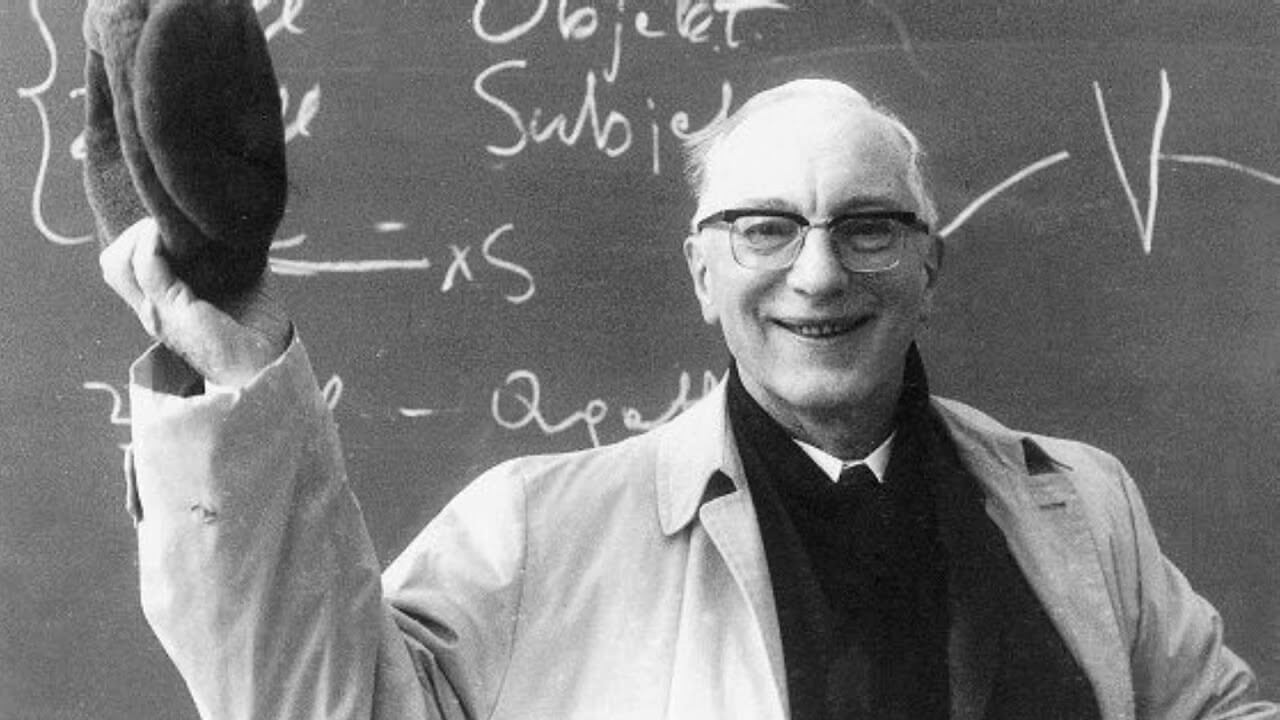
The life of Eric Voegelin is instructive for us at the Eric Voegelin Society and this journal. Commitment to cultural and intellectual renewal through the western humanities, a steadfast commitment to free speech and free governance, and a critical eye and courageous soul against totalitarianism are among the most noble spiritual gifts he has bestowed to the world. I really love a story a former student of his has said. When asking the maestro about why one should study Plato, philosophy, and the broader humanistic intellectual tradition Voegelin was steeped in, Voegelin responded, “to oppose totalitarianism.”
These are wise and inspirational words. VOEGELINVIEW is in a position to restore the humanistic heart of love required for any society’s health. VOEGELINVIEW also exists as a place for learning and education, a journal whose content exists for those with hearts aflame for beauty, goodness, and truth. As new institutions of the humanities are being built in the ruins of the old world, VOEGELINVIEW is, and will continue to be, a pillar of the new humanities and the humanistic revolution occurring with those who have the eyes to see and ears to hear. Moved by that spirit of anti-totalitarianism and a commitment to the cultural and intellectual wisdom of the west, we might go one further than just opposition to totalitarianism. Our goal in humanistic revival and education should be to help others know and love others more deeply through the beauty and wisdom of the humanities.
VOEGELINVIEW is free to read but depends on the generosity of its readers to ensure the highest quality of cultural and intellectual commentary is given to the world. With readers and contributors across all continents, we value our ability to bring commentary, reviews, and poems on the enduring questions of the human condition. While free to read, the journal is not free to host and maintain. Therefore, the Eric Voegelin Society, which publishes VOEGELINVIEW, asks that you consider a tax-deductible donation to continue the support of the journal. Your generosity allows us to give back to you in the form of our articles, essays, reviews, and creative writings.
VOEGELINVIEW is supported by the Arizona State University Foundation. You can make a donation through the ASU Foundation VOEGELINVIEW Fund.
The Eric Voegelin Society is a 501(c)(3) organization (Tax ID 45-5508836). The Eric Voegelin Society, which publishes VOEGELINVIEW, can be supported through Nicholls State University. Make sure to write “Eric Voegelin Society” in the comments when providing a donation by credit card to support the Eric Voegelin Society and/or “VoegelinView” if you wish your donation to go to the support of the journal. Alternatively contact Dr. David Whitney at [email protected] for instructions of how to make a contribution by check.


Related Posts