The Hidden Gems of Budapest
I finished Grad-School in Chicago in 2010; having had the opportunity to work abroad in China, Canada, South America, Mexico and in Spain, Central and Eastern Europe were always on my scope. Budapest first entered my life in 2012, when a semester of teaching brought me here as a Visiting Professor; having been an avid reader of the history of the Two World Wars, Hungary was like traveling back in time, onto that history I had only read about in books. The city’s energy was so magnetic that one semester turned into two and even after returning to Mexico and the United States, Budapest kept calling me back. By the late fall of 2016, when my daughter was born here, the call had become permanent. Since that November, the Hungarian Capital has been home.
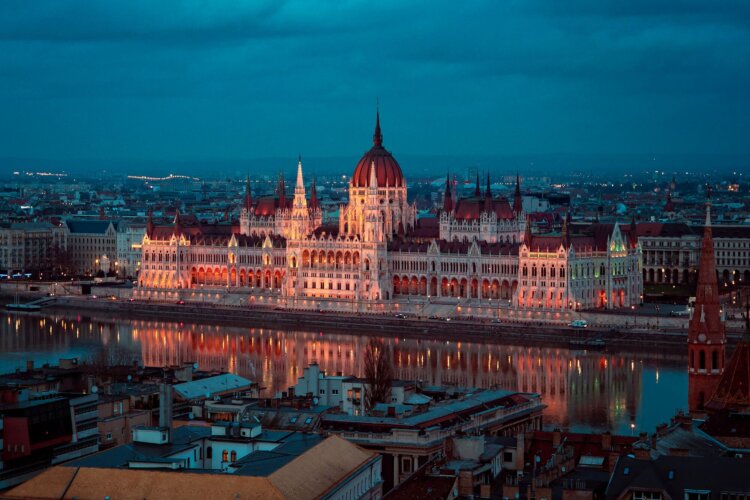
The dates matter because they mark the stages of what feels like a romance with Budapest. At the beginning all was new to me, the language, the way people behaved and the form in which people interacted; quite different from the American or even the Latin-American social dynamic. However, no one can dispute that this is a place of colossal architecture, a river that divides and unites bridges that gleam at night, and countless hidden gems tucked into corners of the city that only the curious will find. The first time the Parliament building appeared before me, it seemed like a resplendent fortress on the banks of the Danube; it felt as if history had stepped out of the shadows. Crossing the Chain Bridge at dusk or climbing up to the Buda Castle for a panoramic view of the city never grows old. Each season here has seemed to offer its own palette. The purple spring, the heavy green shade of summer, the crisp orange colors of autumn, and the long gray winters that have tested my endurance every year. For someone raised in The Sun City; El Paso, Texas on the dusty U.S.–Mexico border, the contrast could not be sharper.
One of my lifelong academic interests has focused on how human behavior is shaped by social cohesion. Travel has confirmed what the theory suggests: beauty and design can transform communities. From The Parthenon in Athens, The Eiffel Tower in Paris, The Statue of Liberty in New York to Machu Picchu in Peru and in more recent years, Colombian city planners placed libraries, playgrounds, and plazas in struggling neighborhoods, reshaping social values through architecture and civic pride. In The Basque Country of Spain, families of newborns received a sapling to plant, tying each child’s life to the soil and future of the community. These projects are small on the surface, but they ripple outward; teaching people to belong, to care, and to look after what is theirs. Aesthetics have long shaped societies and influenced individuals in peculiar ways. The impact of Architecture alone attracts the eye, but understanding deeper into the charge that education and the propulsion environment, invoking a participation guide for people to use spaces in ways that nurture physical and mental well-being.
Wandering through Budapest, a new discovery deepened this fascination. Scattered along familiar streets were tiny bronze figures. There are about thirty of these statuettes dedicated to historical figures, cartoon characters, musicians, freedom fighters, and journalists. Also, from a scuba diver who rescued a key from the Danube, Noah’s Ark, a vampire, dogs, a squirrel, a frog, a race car, a skateboard, and a teddy bear among others; and of course one of the most famous toys in the world created by the Hungarian architect Ernő Rubik, better known as the Rubik’s Cube. At first they appeared almost by accident, spotted by the corner of my eye or stumbled upon when slowing down for coffee. The more I looked, the more I found. These statues are the work of Mihály Kolodko, a Ukrainian-born artist based in Budapest. He is categorized as a guerrilla sculptor, who installs his bronze pieces strategically in public spaces around the city.
Kolodko’s art is about more than caprice or whimsy. Each installation is perfectly placed Yoda where you least expect it, or a character from Hungarian folklore hiding near a tram stop. The strategy is simple, yet quite powerful. The sculptures make individuals discontinue their destination for a moment. What struck me even more was how they seemed to shift people’s moods instantly: passersby crouch to examine them closely, children call the attention of parents, couples pause to smile, strangers stand next to one another to get their turn up close to take the inevitable selfie destined for social media. In psychological terms, they are micro-inventions, small surprises that disrupt routine and spark connection. In an era when city life can feel isolating and individualistic, these brief moments create sparks of shared experience. The statues are doing their part for social cohesion; tiny pieces of bronze capable of stirring joy, reflection, a fleeting sense of community, and a free ticket for a brief moment of happiness.
Earlier this year, I faced a profound personal challenge that forced me to slow down and see life with renewed clarity. After a long period of recovery, I began walking through Budapest again, retracing the same streets that once felt so familiar. Yet this time, every corner, bridge, and statue seemed to carry new meaning; reminders of resilience, gratitude, and the quiet beauty found in ordinary moments. Each step felt deliberate, as if I were relearning how to move through the world again, not just physically, but emotionally and spiritually. The same streets I had once rushed through became places of reflection. The rhythm of the trams, the echo of footsteps on wet cobblestones, and the sound of church bells at noon began to feel like a kind of music; a reminder that I was still here, still capable of wonder.
Recovery is not only about the body; it is about restoring the dialogue between one’s mind, heart, and surroundings. During these past months, Budapest has become my sanctuary. I have spent long afternoons sitting and walking by the Danube, watching how people go about their business but also contemplating the shades of light shift over the water, how the bridges mirrored the slow resilience of human spirit; so very fragile, yet enduring. The hidden old bookstore near Astoria on Vadász utca that I visit with my loved one. The city’s quiet corners and the narrow alley that takes me to Medve utca, where I can find another Kolodko. Taking long walks that led us to The Gabriel Garcia Marquez Park where the reflection upon the meaning of To Thine Own Self Be True; furthermore, to Look, to Admit and to Accept have became part of a personal ritual of renewal. Each discovery, no matter how small, feels like evidence of healing.
In those moments, I realized that recovery is not a destination, but a relationship with time itself. There were days when strength came in sudden waves, and others when progress seemed invisible. But through it all, Budapest has been patient. The city held space for my silence, for my return, for the rebuilding of something inward and essential. Slowly, I learned to measure life not by speed or achievement, but by the depth of presence one brings to a single moment.
Today, last but not least, I walked to Deák Ferenc Tér and turned on to Király utca where I found the mini statue of one Erik Weisz; better known as Harry Houdini, an actor, pioneering aviator, historian, inventor and businessman. On the wall behind it reads,, “escaped from the ordinary”,, I am no Houdini, but I did escape from an occurrence where the odds against me were not favorable, however, another chance was granted.
This is why I call my connection with Budapest a romance. The city has offered passion and heartbreak, laughter and tears, and every shade of human experience. It witnessed both my vulnerability and my rebirth, offering its streets as quiet companions through uncertainty and renewal. In many ways, rediscovering its hidden corners became part of my own recovery; a gentle reminder that wonder and healing often come from the same source. It continues to astonish me, and in doing so, it keeps teaching how beauty, playfulness, and imagination can bind a society together. For me, Budapest is not just the backdrop to my life, but a partner with whom I can be generous, loving, and endlessly surprising. Like any romance worth pursuing, it is one I do not want to end.


Related Posts