The Postlapsarian Academy and the Loss of Poetics

Modern academia is enamored with “theory.” It seems as if every literary, cultural, and historical scholar must by definition adhere to a certain presupposed paradigm that informs his understanding of how all types of discourse work. The modus operandi of contemporary humanities scholarship can be summarized in this handy template one is likely to encounter at least a half-dozen times between the pages of any quarterly journal: “[‘Provocative Phrase’]: Race/Sexual Politics/Oppression/Identity/Liberation in [Author/Work].” The academy is adrift in an interminable maze of theoretical perspectives, all of which purport to unlock new facets of meaning in works of art by means of whatever paradigms are in vogue. To enter the world of the university is to become utterly disoriented in a tempest of theories; to be battered on all sides by the myriad claims of feminism, postcolonialism, deconstructionism, psychoanalysis, and queer theory—and that’s just scratching the surface.
It would be predictably banal to use this observation as the springboard for a complaint about the state of the university in postmodernity; to lament that the university used to be considered a place where young people were inculcated into the universal human truths and duties, but now it is a place where they learn from the Marxist milieu that no truths are really universal except privilege and oppression, and no duties exist but the right to rage against those who believe otherwise. As much of a truism as this may be in conservative circles, it is entirely accurate (and let us not entertain the supposition that the Christian university is free from these plagues). But that is not my concern here. Instead, I aim to consider the consequences that standard scholarly assumptions about “theory” can instill in the unwitting member of the academy—and the necessity for vigilantly arming oneself with a more classical definition of “theory.” For this is not just a matter of scholarly integrity. It is a question of the real or perceived divinities that we worship when we engage in any sort of thinking about the nature of things.
My focus is particularly on literary studies, because this is the field of inquiry that pertains most directly to the imagination, and the imagination is notoriously liable to being taken captive by tantalizing vacuities (ye shall be as gods…). In this field, it is assumed that since texts must be interpreted in order to yield up their secrets, theories are a prerequisite tool for such interpretation. This is not new to the Western mind, which has always delighted in categorizing, synthesizing, and systematizing the testimonies of nature and the utterances of wise men. But in the humanities and especially literary studies, scholars are subsumed by the imposition of paradigms onto texts rather than the discovery of meaning from the text and the subsequent development of paradigms. Any scientist in the academy would be castigated for manipulating the conditions of an experiment and cherry-picking data to support his predetermined conclusions. Why are humanities scholars exempt from this standard? What would happen to the Western mind if interpreters of texts stopped glutting themselves on the self-indulgence of theories and returned to an older way of thinking about the life of the mind—one based on theory?
My principal argument is that criticism is not effective nor ethical if it is not concerned with the universal and the non-derivative: aspirations which the modern category of “theory” rules out by its very nature. To support this thesis, I will survey some classical literary theories and put them in conversation with the postmodern developments that dominate the English and Comparative Literature departments at the local university. In so doing, it may be found that a well-rounded theory of poetics—the fully-formed discipline and univocal concept pertaining to the study of texts—just may be able to escape unscathed from the ravenous pack of theory gluttons that inhabit the venerable halls of higher education.
The hypocrisy illustrated by the double standard of natural scientists and humanities scholars in the above comparison is real. Nonetheless, all academics understand that when we use the term “theory” in history, literature, and philosophy, we are not referring to empirical conclusions drawn from testable hypotheses. This is quite a useful method for grasping the bare processes of the physical world, but not for the moral, metaphysical, and invisible concerns that comprise the domain of true wisdom (as Francis Bacon, the popularizer of the scientific method, arguably failed to understand). “Theory,” as employed in classical philosophy and criticism, has a rich etymology which may come as a somewhat obvious surprise even to those familiar with the Greek language. In his brilliant and provocative book Real Presences, one of the greatest treatises on aesthetics that has been written this century, George Steiner observes that theoreo, to perceive, is rooted in theos—indeed the same root as theology. Theology, literally, seeks the “matters of God” or the “word of God”; the theologian is a recipient of divine revelation who submits to its authoritative teachings about God’s nature and strives to assimilate this knowledge into wisdom. Based on pure etymology, then, theory is based on proper modes of receiving and perceiving reality. It is an intellectual virtue that consists in training the mind’s eye to gaze upon what is revealed to us. Or, in other words, to theorize is to see the works of God as He chooses to make them known to us.
Conversely and ironically, “theory” today has become inseparable from developing and exercising authority—dare we say “theistic,” god-like authority?—rather than perceiving given truths. Postmodern critics such as Michel Foucault offer us this insight into the inextricable relationship between ideas and power, even though their very ideas are so often ironically complicit in perpetuating such power in the ranks of the academy. Scholars simply assume theories and go on to exercise a manipulative authority over both the texts under scrutiny and the readers of their criticism by subjecting everything under consideration to the tyranny of the theory. Theorist and theory-wielder claim the right of mastery over text and reader alike as both are forced into peculiar schemes which were frequently totally unknown to the author under evaluation and are mostly sanctioned off from the understanding of the average, untutored reader. If a theory is undecipherable to someone who hasn’t spent five years being initiated into it, can it truly be an accurate reflection of realities that concern us all?
Further, everything outside of one’s pet theory is treated with utmost suspicion and cynicism. With nothing to latch onto besides an invasive lust for power and a gnostic hunger for private knowledge, all sense of joy and discovery is stripped from literary experience and discourse. In a stunning and concise repudiation of all classical and Christian thinking about literature, Roland Barthes famously declared that “the birth of the reader must be at the cost of the death of the Author.” His is a direct attack on the concept of literary experience—that is, the (I believe, empirically proven) belief that readers receive and perceive something objective from imaginative texts. This basic acknowledgment is the foundation of all classical and Christian thinking about literature in the Western tradition, from Plato’s Republic and Aristotle’s Poetics through Sir Philip Sidney’s luminous theological “Apology for Poesy” to Romantic manifestos about the exalted status of the poet. Yet Barthes’s quip is not devoid of truth when we consider the standard assumption of what it means to be a “reader” in today’s theory-crazed university. In fact, his claim about the birth of the reader would make perfect sense if “reader” were replaced with “literary theorist.” It is certainly no coincidence that Barthes capitalizes “Author,” as his theory is specifically tailored to fill the void in a world disenchanted of a prime mover. To see why this is requires a gaze back toward Athens and Jerusalem.
Jews and Christians are often referred to as “people of the Book”; believers in the power of God’s spoken Word to spark the very universe into being, as well as to move men toward an understanding of their responsibilities before the Creator. This insight harmonizes with that of the classical rhetorical tradition of Isocrates, Cicero, and Quintilian, which posits that language is the highest and most distinctive trait of men. The beasts may very well have reasoning capabilities, says Quintilian, but they have no way of telling us whether they do or not. Only man verbalizes. Only he can transmit his inner stirrings into concrete form. Language encompasses the rational, affective, and appetitive elements of the soul all at once, since it can express anything. Therefore, to speak is to make one’s presence manifest in the fullest sense. This is why, for the rhetorical tradition, oratory is the quintessential aim of education. This requires speech that is well-ordered (grammar), thoroughly reasoned (logic), and beautifully presented (rhetoric). If a person can move someone else to legitimate action and contemplation of worthwhile ends through the spoken word, that person has cultivated his faculties to their fullest extent.
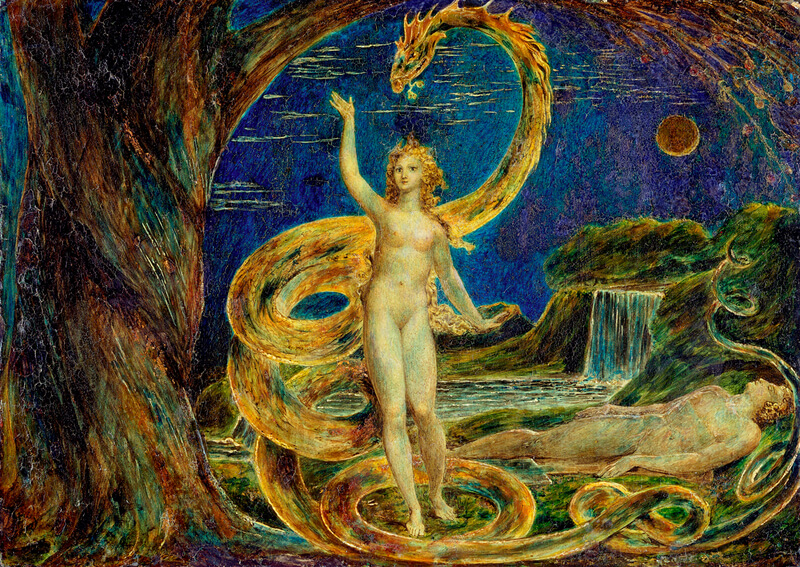
In comes Scripture. In the Bible, language is not just one of many important themes: it is about as front and center as can be, from the first few chapters. This does not just entail God’s almighty creating Word, but the privileges which He grants to Adam in cataloging the creation. If Adam speaks the word, so it shall be named. He is sanctioned as a coworker of God until the Fall, which entails falling prey to rhetorical persuasion from a terribly unreliable source. But not just that. Of the manifold ways in which the Fall account can be interpreted, one of the most piquant is that it is essentially a fatal misreading of the book of nature. God gave our first parents the clearest possible command, with no room for ambiguity whatsoever. But instead of training their faculties to respond gratefully to God’s words, Eve allows Satan’s rhetoric to question her natural dispositions by bringing in the possibility of a new private world unknown to anyone else. What would happen if the Author didn’t really mean what he said? What if there is an alternative reality I could fashion of my own doing, beyond those silly old parameters laid down by the One who circumscribed me into this reality? What if I could be freed from dependence on the external, life-giving Word, and liberated to develop my own grammar, my own authority, my own sense of Godhood rather than mere “imagehood”? What if I could become a theorizer (recall the etymology) who speaks my own words rather than only a recipient of the Word? What if I could create my own reality instead of naming the reality that I have been gifted?
Many other great figures of the Bible can be analyzed from a linguistic perspective. Moses, hindered by a stutter, is in a very real sense an incomplete human who is “recharged” from his frustrations by his awe-some encounters with the Almighty Word. He typifies the lover of truth who is smitten by his perceptions of the transcendent, but finds himself inadequate to communicate them verbally. So too is the prophet one who ingests the perfectly nourishing food of that Word (Jeremiah 15:16, Ezekiel 3:3, Revelation 10:10), allowing his own words to be fueled with the divine imperative. Christ brings the complete authority and awakening power of His Father’s voice to those who swooningly long for the Promised One, but his privileged mode of speaking comes in the form of remarkable stories, images, metaphors, rhetorical devices, and parables whose penetrating simplicity of utterance perplexed and aroused his audiences. They have lost none of that unique power today.
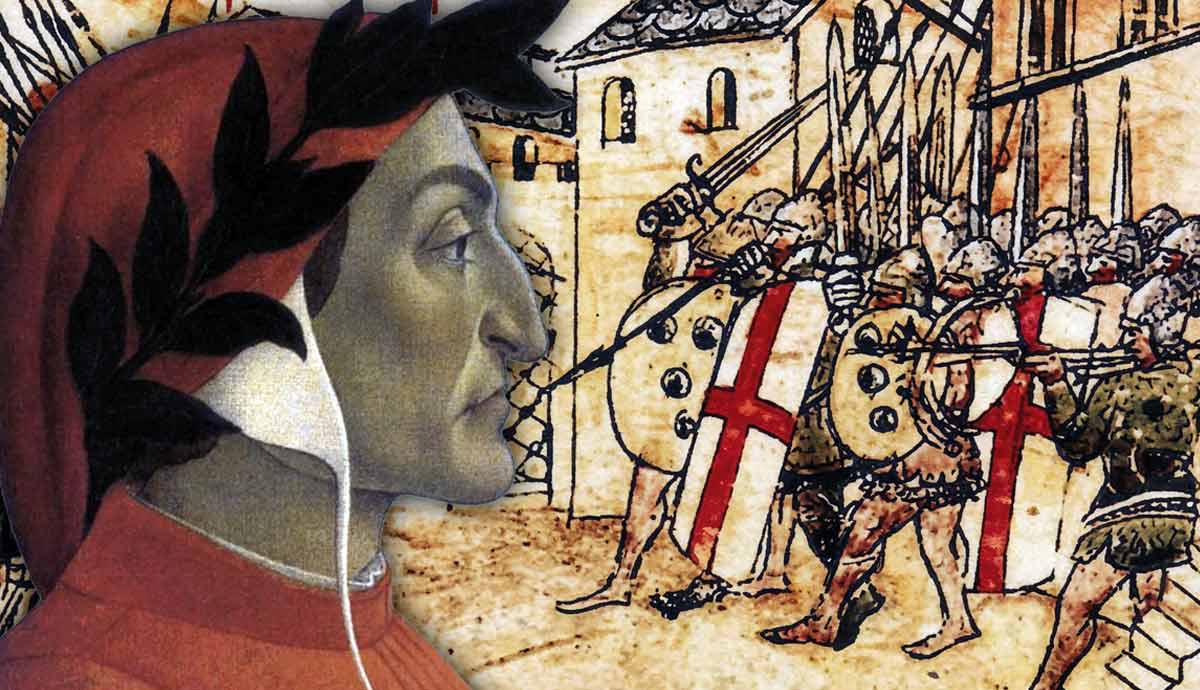
All this is to say that the Biblical understanding of using words well always involves an offering of the gift of language back to its Creator. God spoke life into us, and we fail to fulfill our nature if we do not use that life to speak back to Him in ways that please Him. Language names and catalogs the gifts of creation, just as Adam named the animals in the garden. For the Christian tradition of literary theory, this is precisely what happens when we use our imaginations—that is, the gift we have been given of cataloging creation (“catalogue” literally means something like “to bedeck with words”). Regardless of whether a literary author realizes it, he is acting like our first parents in the garden. It is through the sacrifice of our words as a thanksgiving offering to the one who inspired them that an author is made. This insight explicitly inspired the greatest Christian poets, who all write of transcendent matters and relate them to man’s pilgrimage on earth toward the heavenly city: Dante, Chaucer, Milton, the Metaphysical Poets, and, I would argue, despite the apparent ambiguity of his beliefs, Shakespeare. They all saw reality as a text to be read, and the use of good, true, and beautiful language as a way of paying homage to its Author. In whatever poor, broken speech he can muster in this shattered world, the poet can prepare readers for the day when all things will be made new at the end of time, and they will meet the Author face to face.
To return to Barthes, let us marvel at just how wide a gulf there is between his notorious statement—which is the foundation of the literary theory of today’s academy—and the view of the imagination offered by Athens and Jerusalem. Classically, the reader is defined by the author (and the Author) as he receives his gifts of language and strives to respond to them in a pleasing, fitting, and honoring way to the one who gave the gift. In this view, literature is basically a thank-you note, and criticism (i.e., literary interpretation) is the same thing on a lesser scale, since the human author is analogous to the Author in whose image he is made. But if there is no one to Whom we might make of our imaginations a burning sacrifice, the concept of the “author” becomes futile, as that label can only be applied to human creators serving fleeting, arbitrary interests. Both the use of language and its interpretation become totally sundered from value, and we are left only with a parasitic Pandemonium of paradigms. How one understands the nature of God’s communication (or lack thereof) has deep consequences for how one understands the nature of all communication. And in an Author-less cosmos, as we moderns have constructed for ourselves, the intellectual—the one who burns with the desire to know—is left with no choice but to theorize. Which, as we know by now, is to play God.
If we are to apprehend the mysteries of reality such that we do not reenact the Fall but draw near to who we were created to be, we must employ a proper definition of “theory,” which ought to be understood as equivalent to the substructure of a discipline. A theory is a description of how something really works, resulting from diligent observation of and love for the subject in question. It is the “God-ness” of a thing; the scaffolding that upholsters all its branches. It is the domain of the humble, earnest truth-seeker who can burrow beyond the particulars of a field of study to the basic foundation of what allows that field to work at all. Proper literary theory is equivalent to poetics, a term that certainly covers all the arts of “poetizing” in verse or prose. But it is also an important word to recover because poiesis entails both “making” and “doing.” Poetics is thus the theory of imaginative making and doing through language. How different from modern literary criticism, which is so often reduced to the study of power structures, identity, and other divisive claims. The Author is the first and greatest Maker, while the author of literary texts makes of his creative work a sacrifice to his own Inscriber. He interprets the Author’s creation through his speech and writing. The reader of the author’s text then interprets the author’s sacrifice to the Author (i.e., his text). This chain-like process is the foundation of a proper poetics.
Not only does this secular age make it deeply difficult to recover poetics, but our epoch’s lack of patience as well, exemplified in everything from the digital addiction of our youth to the apparent inability of anyone to really listen to each other anymore. How, then, can we be expected to listen to what the words of authors and the Author are really saying? In People of the Book, David Lyle Jeffrey speaks of the significance of the virtue of patience in the Christian literary tradition. For example, in many paintings of the Annunciation, Mary was depicted as diligently reading the Scriptures and praying for divine guidance at the moment when the angel appears to her to inform her of the greatest divine Word that the world has ever known—in fact, the very appearance of the Word in His own creation by means of herself. In this sense, Mary exemplifies the good Christian reader and critic—an earnest yet enthusiastic searcher of the Word who strives to efface herself entirely and submit to the Author’s will.
The Greeks and Romans were able to describe important phenomena of literary experience, such as Aristotle’s timeless account of catharsis (the inner “purging” of the viewer of a tragic play). But it took Christianity to provide a true deep theory—a true poetics—that satisfies the need for origins. This foundation is the perfect wisdom of God as manifested in the Word Made Flesh. Some of the old, pre-Enlightenment meaning of “theory” still lives in our language. For example, music theory is not a derivative explanation of unverifiable phenomena, but the set of principles which describes what actually happens in music. Such is the essence of wisdom: the focus of the mind’s eye upon what lies at the source of truth. The domain of literature is the penetration and transformation of the being by way of the imagination, just as Moses and the prophets were penetrated and transformed by the words of their Author. What, then, if literary theory were to be reclaimed? What if our readings of literature were centered not on individual, institutional, and social agendas but on literature as it actually pierces, challenges, and transforms our beings? Modern theories have thus flipped the meaning of the theos of its root to playing God rather than discovering God and acting in His image. If we want to understand theory anew and aright, to transform it from a divisive, self-and-sect-serving tool of dominion into an intellectual virtue that enables us to gaze upon the lovely, we must strive to reverse this attempted inversion of divine prerogative.
It is exactly such a foundational, even painful, reassessment that modern theory must undergo if it is not to continue on its current self-enclosed path of elitist pontificating. The commonly cited “hermeneutics of suspicion” is contrary to what has always been central to literary experience: the attempt to gain a wider and truer picture of reality than if we had stuck to the assumptions of our own limited spheres of reference. Once more: is not suspicion of the given the very essence of the Fall? Such suspicion was made the norm when Barthes declared the author deceased. From the ensuing chaos of deconstructionism, we receive the assumption that words and ideas are an interminable maze of signs that lead us nowhere in particular. Thus, the death of the author really becomes the death of the word: of the primal logos which for both Athens and Jerusalem is the fountainhead of truth, beauty, and goodness. This is why Steiner, in one of his most trenchant insights, can declare that we are living in “the epilogue,” that is to say, the “afterword”: a post-logos culture. Critics and theorists spar to make their questionably based readings prominent, but their models cannot be rooted in reality because they have ruled out the very possibility of having an encounter with something real and transformative in the text. The autocratic impulse in modernity is not limited to political power. In the absence of the logos, we try to be our own all-creative Words, only to fail utterly at being lovers of anything worthwhile at all. Our poetics involves making and doing, but in our own shattered images only. Like Adam and Eve, the result of our attempt to press ourselves upon the world is nothing but an encounter with the worst of ourselves.
Those such as myself who have decided to enter the academy often speak about an irresistible tug in the chest at the prospect of devoting one’s life to being a student of the human things, and to sharing the fruits of such learning with the next generation. If eros is simply defined as “desire,” then lifelong education is a fundamentally erotic endeavor. It tantalizes its subjects with the assurance of perpetual encounters with the beautiful and praiseworthy—everything that the Greeks thought of when they used the word kalon. But in the course of this argument, I hope it has become clear that if students—many of whom are just beginning to discover the first inklings of this erotic “tug” pulling them toward the life of study—remain suffused with the miasma of “theories” in the lecture hall, they will become confused and turned off from the exploration of the most noble and lasting human things. They will have their eyes averted from the great superstructure of theory which flows from the mind of the Author and become trapped in the vain designs of would-be gods. If we learn one thing from the death of poetics, it should be that the pride of the intellect always goes before the Fall of the whole person, and of whole cultures.


Related Posts