The Wild Color
2023’s Barbie film was a typical postmillennial starburst cultural phenomenon. Upon its advent, it had a tremendous effect on the (especially digital zeitgeist). At the same time, like many digital age phenomena, it came and went fairly quickly along to resurface as “nostalgic” memes. The film represents the tortured paradox of twenty-first century feminism, which, in the film, is represented by the paradoxical symbolism of the color pink. With the blonde hair and blue eyes of the title character, Barbie is both a celebration of traditional Western beauty. At the same time, it attempts to ground this beauty in crude reality of human-animal bodily functions. It (cautiously) celebrates traditional feminity as well as transgressive feminism—both of which, curiously, are represented by the color pink.
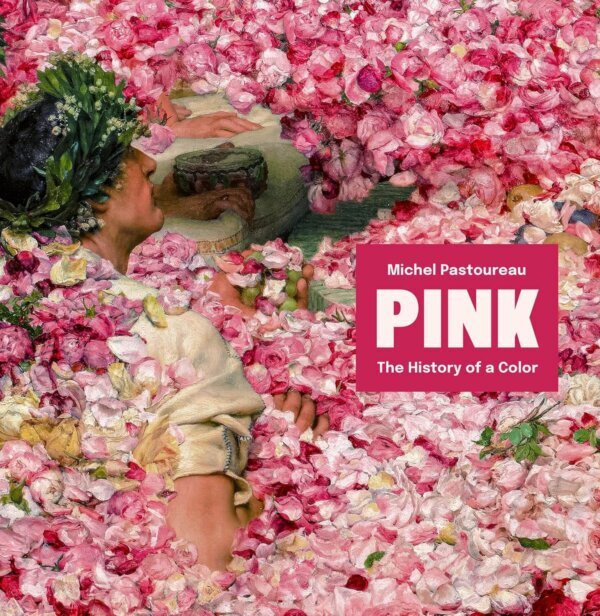
In his recent work, Pink: The History of a Color, French historian Michel Pastoureau explores the history of the color pink in its cultural manifestations, demonstrating that its current symbolism as both the feminine and transgressive color par excellence is a relatively recent historical phenomenon. Pastoureau’s central thesis, as it is in his other works on color, is that there is no definitive natural definition to culture, i.e., while red and pink are, in the twenty-first-century, associated with love, it was the color green that was tied to desire. There are, admittedly, times at which Pastoureau seems fatigued with his discussion, but, Pink actually contains less repetition of ideas and more new (and fascinating) material than his previous 2022 White.
Pastoureau notes that, of all the colors, pink traditionally has been one of the most difficult to define as well as one of the most detested in European history. It is a color that is found abundantly in nature, but it is a color that humans have not readily embraced until relatively late in human history. Physicists today primarily define pink as being a shade. There is not a word for pink in Greek or Latin, and it was not until the 18th century that French, German, and Italian took the name for pink from the rose. Pastoureau notes that among polls of favorite colors for the past one hundred years, pink is among the most detested—except for the demographic of young girls. In Western culture, pink has traditionally been associated with the skin color of humans—especially women.
While black, red, and white can be found in the Paleolithic paintings that haunt Pastoreau’s other volumes on color, pink is not found in the art works of the early Europeans except when the color red has faded over millennia. Pastoureau notes that recent discoveries of art in Macedonia—especially the royal tombs near Vergina, Macedonia, have revealed the use of pink in depicting human skin color. Pastoreau provides the further example of the famous mosaic of the “Stag Hunt” from the “House of the Abduction of Helen.” In depicting gods and humans, Greek and Roman as well as Egyptian painters tended to utilize lighter shade of pink for women and darker for men. Reflecting on the Faynum funeral portraits from the western portion of Egypt, Pastoureau questions whether or not the portraits were realistic or idealized—an important question that addresses even politically charged contemporary popular debates over the appearance of figures in the ancient world. Pastoreau notes that the figures are all presented in their ideal age: there are no old people or children. This suggest that the paintings depict the dead as their best selves as opposed to the date at which they died. Pastoureau elsewhere importantly notes that historians should not assume that the clothing in which people appear in paintings should be taken as a standard for everyday wear any more than contemporary fashion magazines represent how the average French woman dresses in 2025.
While pink would (especially later in Western history) become associated with pornography as well as deviant and immoral sexual practice, the pink bodies in much of classical painting and mosaic often served symbolic purposes, representing such qualities as beauty, fertility, and good luck. Pastoureau makes the key point, a point he will repeat throughout the work, that many contemporary historians often go looking for sex in ancient works where there is none.
As with the whole of Western culture, a dramatic shift occurs in the presentation of colors, including and especially pink, during the Middle Ages. Pastoureau argues that pink underwent a transformation in the Middle Ages. The Romans notoriously added new colors (colores floridi), including the barbarian blues and greens, however, pink did not appear. During the Ottonian period, around AD 1000, Medieval illuminations included noticeable amounts of pink. It was not only Germanic art that contained pink; Medieval Byzantine art included identifiable amounts of pink as well. Pastoureau curiously notes that the Christian liturgical use of pink is a relatively recent phenomena. Christian priests first celebrated liturgy in white, which itself, eventually reserved for Easter and other holy days. Gold appeared in liturgical vestments in the ninth century, and there arose an interest in the symbolism of liturgical colors. Pastoureau notes the De sacro sancti altaris mysterio of the future Pope Innocent III, which later was utilized by Guillaume Durand, the bishop of Mende, in his Rationale divinorum. The liturgical colors would be fairly recognizable to many Christians today. Curiously Durand mentions a “pale” or “palid” purple for certain days such as the third Sunday in Advent and the fourth Sunday in Lent or Gaudete and Laetare Sunday respectively. This pale purple would eventually come to be understood as pink.
As a humorous and pleasant side note, Pastoureau, whose The Bear: The History of a Fallen King, is one of his best books, affectionately lavishes Pink with animal anecdotes and photos. An elegant pinkish tiger, who symbolized beauty and speed, appears on a Roman mosaic early in the work. In the section on the Middle Ages, a pink crow appears on one of the stain glass windows of Chartres Cathedral, depicting the story of Noah’s Ark. Pastoureau further notes that pigs were not pink until fairly late in Western history. The Pink Panther is an outrageous and appealing animated animal that drew tremendous interest and popularity in the twentieth century.
Pink, in the twentieth and twenty-first centuries, has become a revolutionary and even decadent color. Pink was the color of much of the apparel of Marilyn Monroe as well as Jacquelyn Kennedy Onassis by whom the color came to represent modern feminine elegance. With the advent of chewing gum as well as various pink candies, pink also came to represent sweet culinary pleasures and happiness. With the temporary pink bathroom crazy in the 1970s, pink further (temporarily) attempted to nudge white out of the way as the sanitary color. Through pop art, as Pastoureau notes, pink further has come to represent spectacle and transgression. While it was used as a toned down version of the martial red for young boys in earlier times, now it represents feminity.
Perhaps the only critique of Pink is Pastoureau’s seeming dismissal of what has been called “essentialism.” His structuralist approach of separating nature from culture is solid and sober: he has made very strong arguments for how and why Western perceptions of color have changed of the millennia. However, one can make a reasonable argument that certain elements of human cultural are linked to real, natural phenomena. Indeed, the recent explosion of interest in “archetypes” and the philosophy of Carl Jung has unearthed how at least some symbols in nature are universal and perennial. Nonetheless, even with some nudes that may offender the chaster muse of some readers, Pink, like Pastoureau’s earlier works, is a fascinating exploration of the history of color.
Pink: The History of a Color
By Michel Pastoreau, Translated by Jody Gladding
Princeton: Princeton University Press, 2025; 191pp


Related Posts