Tom Wolfe and Alfred North Whitehead’s Squirrel
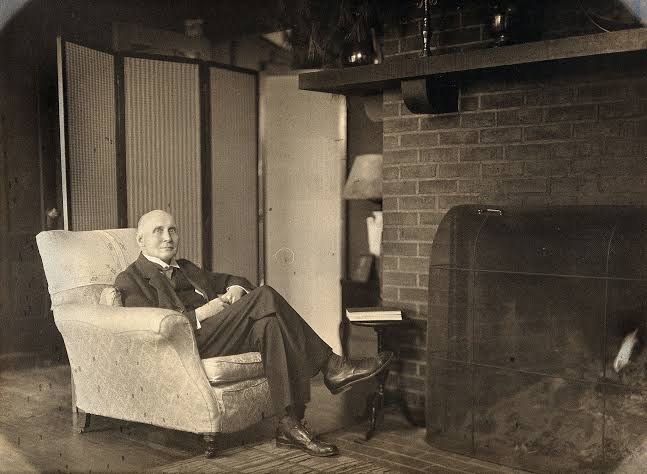
Mankind enjoys a vision of the function of form with fact, and of the issue of value from this interplay. ~ Alfred North Whitehead
In Modes of Thought the American mathematician and philosopher of process philosophy, Alfred North Whitehead, tells a curious story of a squirrel that does not have a sense of limitation, though the squirrel appears to perceive quantity.
Whitehead’s tale involves a squirrel that is seen gathering its young, except it does not know when she has gathered them all. The squirrel moves her young from one location to another. Once the squirrel has taken the last of her three offspring to a new location, she returns and becomes “mildly and vaguely disturbed.” Did the mother squirrel account for all her young? The squirrel, Whitehead tells us, “Lacked adequate experience of any precise form of limitation.” On the surface, this is a quirky tale of number and quantity told by a mathematician, though the broader importance of Whitehead’s tale is the relationship between limitation and form.
Whitehead goes on to say, “The rise of vivid experience of the good and of the bad depends upon the intuition of exact forms of limitation.” In a Disney movie, this squirrel would be portrayed scratching her head. Whitehead’s squirrel lacks the sense of numerality; though, she suspects that something is off, something is not right. This is a tale that the ancient Greek philosopher and mathematician, Pythagoras, would appreciate. Plato would also enjoy it.
Alfred North Whitehead relates this story in a chapter titled “Perspective” in his 1938 book Modes of Thought. The metaphysics of process philosopher depicts several examples of how living organisms, especially man, incorporate their surroundings into what he refers to as actual occasions of experience of the world. In other words, Whitehead is referring to objective reality.
Whitehead is a gifted writer – clear and succinct. As a mathematician, the man could not be a better writer. Whitehead’s squirrel story is a tale of the vague perceptions of reality that animals seemingly have. How can this simple story of a squirrel help us appropriate objective reality in human life?
Whitehead’s correlation between limitation and form offers us a suitable transition point to the storytelling of one of the best writers of the twentieth century, Tom Wolfe.
New Journalism with Guts, Flair, Intellectual Honesty, and Integrity
Tom Wolfe does not bloviate. His language is precise and tactical, incisive, like a scalpel. The form of Wolfe’s writing owes its inspiration to the function that he envisioned writing should perform. This is one reason why Whitehead’s idea that “the rise of vivid experience of the good and of the bad depends upon intuition of exact forms of limitation” is an appropriate description of Wolfe’s writing.
Let us see how.
In a world that is inundated with visual and auditory noise, mendacity and banality that subsumes truth to opinion, and reality to appearances, the average person resembles Whitehead’s squirrel in their not so ‘mildly and vaguely disturbed’ inability to cultivate what Whitehead calls the ‘intuition of exact forms of limitation.’ Wolfe’s books expose and cite the effects of the aforementioned in late postmodernity.
Wolfe is credited with coining the idea of new journalism, which originated in a series of articles he published in 1973. New journalism injects the writer of non-fiction into the article, thus keeping newspaper reporting from succumbing to the doldrums of vapid and sterile reporting. Wolfe was utilizing literary techniques in his non-fiction writing dating back to the 1960s. Other writers who wrote in the new journalism manner include Gay Talese, Hunter S, Thompson, Joan Didion, and Oriana Fallaci. After publishing thirteen non-fiction books, Wolfe turned novelist, publishing four lengthy novels, The Bonfire of the Vanities, A Man in Full, I Am Charlotte Simmons, and Back to Blood.
Wolfe’s non-fiction books and novels are truly unique. The literary voice of the writer of The Electric Kool-Aid Acid Test distances itself from other writers, like a statute in high relief, in a vivid and animated manner that merits closer reading, if not study. If I am pressed to compare Wolfe to any other writer, that writer would be John Dos Passos, especially Dos Passos’ creative and original U.S.A trilogy: The 42nd Parallel (1930), Nineteen Nineteen (1932), and The Big Money (1936). Another of Dos Passos books that warrants attention, in lieu of Wolfe’s new journalism, is his 1922 Rocinante to the Road Again, an imaginative re-telling of Cervantes’ Don Quixote in the twentieth century.
Nostalgie de la boue (nostalgia for the mud)
Wolfe’s writing squeezes human relations, firmly, smoking out and exposing the favorite hiding places and mechanism of hypocrisy and affectation in the late postmodern world.
But what type of hypocrisy and affectation? There are forms of hypocrisy and affectation that originate in envy and resentment, and hypocrisy and affectation that are employed to cover moral weakness. In addition, there is also hypocrisy and affectation that finds safety in numbers. In American lingo, this is often referred to as ‘peer pressure.’ Wolfe also uncovers the calculative type of hypocrisy and affectation that seeks self-gain and validation. Anyway you put it; hypocrisy and affectation serve to mask genuine beliefs and emotions. Wolfe exposes many varieties of hypocrisy and affectation. He does so with animated fervor.
Yet, Wolfe reserves his most poignant and perspicuous insights for hypocrisy and affectation that serve radical ideology, which promises its adherents emancipation from the shackles of the past and traditional mores; objective values being the greatest offender to emancipated leftists, relativists, hipsters, and other forms of timely-chic ‘liberals.’ The most nefarious and daunting effects of hypocrisy and affectation to human relations and society, Wolfe’s writing enlightens us, are hypocrisy and affectation that become disguised as radical ideology.
Unprecedented moral and spiritual aberrations, destructive dysfunctionality, and self-loathing human beings are fodder for Tom Wolfe’s books. Wolfe devours these and many such savory topics in his nonfiction books and his four king-size and grandiose novels. Wolfe argues that the economic boom post WWII had the unintended consequence of fostering the debasement of morality and values.
In January 1970 Wolfe attended a glamorous party that Leonard Bernstein and his wife gave to honor the Black Panther Party of America in their two-story, thirteen-room apartment on Park Avenue. Wolfe noticed that the classical composer and conductor, ‘Lenny’ to his admirers, had two pianos in different areas of the lush apartment. The party would turn out to be fertile material for an article, “Radical Chic,” that Wolfe wrote for New York magazine. The rich New York socialites and celebrities in attendance at Bernstein’s apartment were there to promote, and help fund, the ten-point program that a Black Panther field marshal read to the attendees. The ten-point program, Wolfe noticed and wrote about in his now precise and unapologetic tone, “entertained a vision of the future in which, after the revolution, there would no longer be any such thing as a two-story, thirteen-room apartment on Park Avenue, with twin grand pianos in the living room, for one family.” Needless to say, Bernstein’s party was hypocrisy and affectation on parade.
“Radical Chic” was combined with another article Wolfe published entitled “Mau-Mauing the Flak Catchers” about the violent confrontations that the government program, the War on Poverty, fomented in San Francisco. The two articles were published as a book in the fall of 1970, as Radical Chic & Mau-Mauing the Flak Catchers. The book created a fervor of criticism for its insight and exposure of the debased values of the New York socialites and celebrities who attended the party. Wolfe explains, “I figured that here might be some material for a chapter in my nonfiction Vanity Fair about New York. I didn’t know the half of it.”
Fourteen years after the publication of his last novel, Back to Blood (2012) and ten years after his last nonfiction book, The Kingdom of Speech (2016), a non-fiction book that refutes Darwinism, perspicuous readers are able to put in proper perspective the depth and moral, social, and cultural implications of Tom Wolfe’s literary achievement.
Wolfe’s work cavalierly recognizes the rotten moral, cultural, and intellectual state of late postmodern life. Wolfe is unapologetic. His work exposes the socialites, celebrities, literati, and establishment intelligentsia in America in late postmodernity. The people that Wolfe writes about, he points out in his books and interviews make up the New York, Northeastern, and West Coast opinion and morality brokers in America in late postmodernity. Besides being radical ideological elitists in a manner that does not value or even recognize meritocracy, the entitled, wealthy, and moral decrepits who Wolfe exposes form the web of corruption that late postmodern liberalism foments.
At the core of Wolfe’s writing we encounter a thinker who takes seriously the solitary nature and responsibility of being a free thinker. Looking to the future, public intellectuals can gain valuable insight and inspiration into what was once called the arts and letters.
We cannot undermine the importance of being bold in exposing hypocrisy and affectation in woke and censorious late postmodernity. Wokeness and censorship are the darling tools of ideological hypocrisy and affectation. As an intellectually honest writer, Wolfe smells the decaying nature of the crooked timber of humanity in the latter decades of the twentieth century and well into the twenty-first, a time that I define as late postmodernity.
In nostalgie de la boue, Wolfe identifies one of the premier moral, social, and cultural malaises that afflict late postmodern radical ideologues and the societies they create. Wolfe tells us that the so-called higher classes, credentialed people who spend many years in universities, have a fatal attraction for low-life culture and values. These people fit into one of two categories: hypocrites and affected opportunists or radical ideologues that recognize that hypocrisy and affectation enable them to ingratiate themselves with the people they seek to rule over.
The expression nostalgie de la boue (nostalgia for the mud) was coined by the French playwright Emil Augier in his 1855 play “Le Marriage d’Olympe.” The ruling classes who long for degradation and vulgarity, Augier recognized, possess a pathological romantic notion of primitivism. In late postmodernism, nostalgia for the mud has taken on a masochistic and Marxist messianism that defines, par excellence, liberalism’s failed social-political program.
Wolfe’s brilliant recognition that leftism’s social/political attempt to ‘deconstruct’ Western Civilization is rooted in nostalgia for the mud places him at the forefront of perspicuous social, political, and cultural commentators. In his seminal book, The Revolt of the Masses, the Spanish philosopher José Ortega y Gasset describes the devotees of nostalgia for the mud as mass man; the worst offenders being ideological intellectuals and other elites.
For reasons that Wolf reserves for himself, which is the right of every discerning thinker and writer, he leaves it up to his readers to decipher why, though not ironically, this is only understood by discerning non-ideological readers, his writing stops short of calling the subjects of his writing, the denizens of nostalgia for the mud, ideological opportunists …cretins…and other unsavory terms.
For good listeners, few words are necessary.
Wolfe’s Intuition of Form and Limitation in the Late Postmodern World
Wolfe’s four novels are colossal in length, themes, structure, complexity, and undertaking. Wolfe took many years researching material for his novels. His characters and situations take place in a world where the neglected or ignored minutiae of life swell to the surface in a manner that breeds destruction and dysfunctionality. Detail is paramount for Wolfe. Like mis-en-scène in French cinema, Wolfe crafts his scenes as if detail means the world to his novels, which, readers of Wolfe can attest to, they do. Williams Blake’s ‘to see a World in a grain of Sand’ in his poem “Auguries of Innocence” is indicative of the scope of Wolfe’s books.
Diligent readers notice that Wolfe throws them abundant morsels of late postmodern moral and spiritual aberrations, dysfunctionality, and mendacity as a clarion call to appropriate, when and why, late postmodernity became a back alley of human awe, wonder, and ambition, a ‘wasted passion,’ to use Jean-Paul Sartre’s vivid imagery.
Wolfe novel’s take their inspiration from American novels from the late 1880s to the early 1940s. That period in literary American history, Wolfe tells us, was fertile with intricate spice of life universal appeal. As a writer, Wolfe appreciates the novelist as chronicler of the passage of time, human experience, changing mores, and the tide of people who ‘come and go’ in society. He laments that that conception of the novel was taken over by nonfiction, post WWII.
Today, nonfiction and what remains of the novel as a form of realism have been taken over by cinema, video games, and social media. In other words, it is unlikely that we will ever witness again writers of Wolfe’s talent and stamina in chronicling aspects of American life. Where are all the readers?
On an intellectual and personal level, Wolfe took many chances in setting out to craft his brand of new journalism in nonfiction and novels. Predatory, envious, and resentful critics and other writers were always out to bring him to his knees and tear down his books – they still are.
Wolfe exposes the people and values of a time when leftists gloated over the deconstruction of Western Civilization, beginning in the 1960s, when leftist French intellectuals began calling for the destruction of grand narratives. Wolfe realized that the scaffolding of human reality, man, society, tradition, mores, and values hinges on grand narratives as a source of meaning and purpose. Wolfe understood that it is precisely the interweaving of grand narratives with space and time, people and places that determines the health of man’s psyche. This is one reason why he signals out the moral aberrations and destructive dysfunctionality of late postmodernism.
Like Whitehead’s puzzled squirrel, postmodern man, Wolfe is quick to point out, is confused and morally wounded because it no longer has intuition for limitation and form. Late postmodern life is determined by this abyssal myopia. Man’s sense and awareness of limitation serves to prop up man’s quest to understand and embrace possibility. In this respect, we should not confuse lack with limitation. We do not lack something that is impossible for us to conceive or attain.
Respect for limitation puts man in touch with the form and superstructure of human reality. Wolfe’s characters, all of whom are arrogant and entitled people who have no sense and sensibility, much less humility to respect limitation, deform the structure of reality that pertains to their own lives and that of others. These people, Wolfe informs readers, are responsible for making late postmodernity a time of smoke and mirrors that is rooted in hyperreality, a time when hypocrisy and affectation infest radical ideological social engineering.


Related Posts