Augustine and the Power of Memory
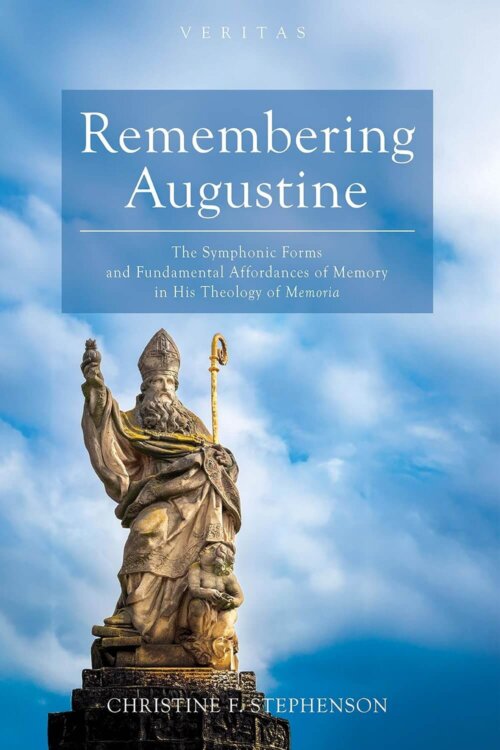
Saint Augustine is remembered as the “Doctor of Grace,” but a strong case can be made that he should be remembered as the Doctor of Memory. In fact, besides love, memory is the great concern of Augustine in his writings, and his theology of memory is among the most complex, rewarding, and incredibly deep explorations into the role of memory and the human person ever contemplated. To this end, Christine Stephenson’s Remembering Augustine is now the best book overviewing Augustine’s treatment of memory in the English-speaking world.
Three major concepts are interlinked with Augustine’s theology of memory: creation, interiority, and grace. Memory acts as a mirror and an active participant in creation, self-understanding, and the efficacy of grace in human life. How so?
First, it is important to know that Augustine did not see creation as a singular moment. While holding to the doctrine of creatio ex nihilo, he understood creation as an unfolding process toward God’s eschatological end. Time exists because of creation, and since time is not static but unfolding, creation is also unfolding. There is an order and ordering of creation because of the power of God. So too does memory mirror the unfolding of creation with past, present, and future. As Stephenson explains:
Memory becomes the basis for bringing back memory (present time from time past) and forms the memory of the future time through anticipation of eternity. In the same manner, movement in time is a re-enactment of creation in time; it is a re-calling of time itself. It is a re-enactment of time from creation ex nihilo to the incarnation of Christ to his resurrection and the eschatological realization of eternity.
The construction and ordering of memory is itself a pilgrimage from world to other-world, from the outer self to the inner self, and in this journey from outer self to inner self, it is a participation in the ordering of creation to its teleological end through the discovery of God. Memory exists as a mirror of creation in recalling past, present, and future just as creation is moving from its epoch of creation, its present state of nature, to its eventual glorification at the end of time.
In reaching into oneself for memory, this inward pivot creates the consciousness of the “inner man.” Stephenson writes, “Augustine turned inwardly to examine his ‘inner man,’ where he could acquire ‘self-knowledge’ and ultimately…become like god.” A famous maxim for understanding Augustine’s nascent philosophy of anthropological individuality is that we are our memories. Our memories are uniquely ours, but our memories are not cut off from relationship or experience. In particular, Augustine’s recognition of God in his life in the Confessions is from recollection. He understands that God was always within him and in his life through others.
The inner man comes to know God through the memory of the past in the present which reveals the future destiny of man. This occurs through meditation and contemplation. By meditating on the past and contemplating active participation here and now, Augustine came to understand that active contemplation is “an instrument of grace.” Memory as a road to divine understanding and participation must necessarily transform the soul into an active participant with the nature of God (who is Love). Hence Augustine was subsequently able to declare that God had always loved him even as he had forgotten (not loved) God. The realization of God’s love, goodness, and beauty in our life through memory is an active conduit by which God recreates humanity to its prelapsarian state and recreates humanity toward its eschatological end: love perfected.
Lastly, another major element of Augustine’s theology of memory is his bridging the divided between sense and abstraction. In time, we sense, perceive, and experience things. This constitutes the construction of imagery in our minds. The images we create are created from sense experience and visuality. Our ability to retrieve imagery, but to also contemplate abstraction from the experiences of memory, links sensory perception with abstract rationality, bodily sensation is not independent of thinking itself. Memory is the hypostatic union, the bridge that unites change with unchanging truth (concepts).
Augustine’s theology of memory is a rich and dazzling reality for any student or reader of Augustine’s works. At times mysterious, Remembering Augustine by Christine Stephenson helps to unpack that mystery into an understandable construction that can also be used to better understand ourselves in the world we inhabit. After all, that was the purpose of Augustine’s own “interrogation” of memory in his Confessions and broader corpus of writings, especially De Trinitate.
While Augustine tied memory with individuality, while there is an epistemology tied to his theology of memory (divine illumination), while there is a theology of grace and love also tied to memory, ultimately the reason why we must remember Augustine’s rumination on memory as a theology and not merely a psychology or philosophy (though it entails both psychology and philosophy as well) is because “Augustine’s fervent desire to know the intricate details of memoria…[led] Augustine [to] realize through memory that interiority was a discovery that finite creaturely existence and memory ultimately participated in God who lovingly upholds all in and for Christ.” Psychology, philosophy, personhood, and theology are all touched by Augustine in his investigation of memory. And Stephenson does an excellent job explaining this to readers.
Remembering Augustine: The Symphonic Forms and Fundamental Affordances of Memory in His Theology of Memoria
By Chrstine F. Stephenson
Eugene, OR: Cascade Books, 2025; 330pp


Related Posts