“Expelled My Soul to the Cliff”: How One Ukrainian Book Could Help Us Understand Contemporary America – or Maybe Something More?
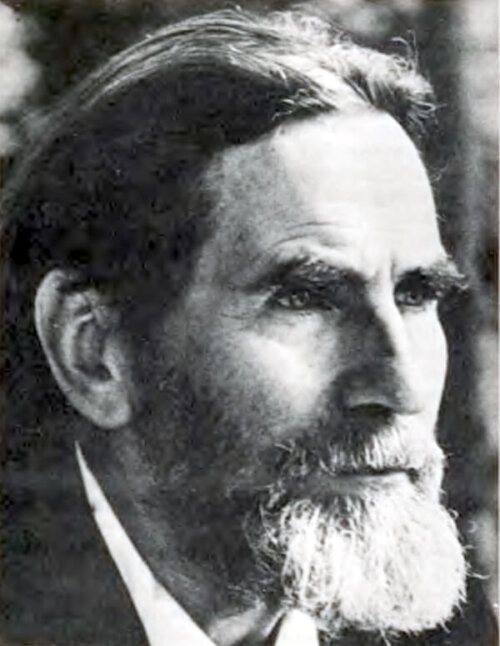
The arts can sometimes can get ahead of scientific prediction thanks to its intuitionally fixed insights into reality. This kind of “prediction” rarely prevents us from making wrong choices – not only because of its foggy form but also because we become able to understand such insights when something has already happened. I enjoy reading fiction per se, but as a social scholar, I enjoy it also thanks to this reason. The Ukrainian people, due to historical and political circumstances, have a relatively long-term exile component in their culture. We often search in it something about ourselves, something that could not be said, written or performed in unfree, imperial or totalitarian-controlled Ukraine. However, Ukrainian artistic works created abroad, also include reflections on the social and cultural environment of the receiving country. I understood this simple fact while reading the novel Repentant and the Keys of Earth by Wasyl Barka, a mysterious and metaphysics-oriented Ukrainian writer whose style usually terrifies ordinary readers. Therefore, we may use such cultural artefacts for better understand one other.
“Abyss Near the Threshold”
Wasyl Barka (today usually spelled Vasyl Barka) was born as Vasyl Ocheret in 1908 in what is now the Poltava region, into a Cossack family. His father, a veteran, was injured during WWI, which caused serious financial difficulties for the family. Barka began his education in a religious school that was secularized under the Bolshevik occupation. During his adolescence, Barka became a devoted Marxist and worked as a teacher in the Donetsk region. After his conflict with corrupt local Bolsheviks, he relocated to Krasnodar, where he studied art history and philology at the pedagogical college, later worked in a museum, and defended a dissertation on Dante[i] in Moscow. Kuban was a region with a predominantly Ukrainian population, despite being part of the Russian Soviet Federal Republic within the USSR. Kuban was colonized by Zaporizhian Cossacks in the 18th century and retained limited self-governance during the Romanov Empire. After the empire’s collapse, the Kuban People’s Republic declared independence, and according to negotiations with the government of the Ukrainian State in 1918, Kuban was expected to become a part of Ukraine with certain elements of traditional Cossack home rule. The project was opposed by both Russian White and Red imperialists, and after the consolidation of the Bolshevik regime, Kuban was incorporated into the Russian, not the Ukrainian Soviet republic – contrary to the declared principle of ethnically based borders.
Therefore, while living in Kuban, Barka remained in a Ukrainian context, yet he also witnessed the rise of Stalinism and the Russification policy, a part of which was the Holodomor that decimated the Ukrainian population in the region and facilitated Russification. In 1941, Barka voluntarily joined the Soviet army, when the USSR – formerly an ally of Nazy Germany – was invaded by its ex-ally. He was injured several times, captured by the Germans, and forced to work as an Ostarbeiter. During that time Barka, while working near a river, chose his future pen-name. Barka means “boat” in Ukrainian, it also refers to Pedro Calderon de la Barca whose plays he loved. After the war, he lived for several years in Germany in a camp for displaced persons, and later received a visa to the United States, where he lived for the rest of his life. For almost three decades he lived alone in an old water tower converted into a house in Glen Spay, New York. The United States was both a challenge and inspiration for Barka. The Soviet stereotype of the US technological capacity and futurist-like machinery was generally confirmed, however he was interested in “Whitman’s America, who in my youth used to be one of my godfathers in poetry.”
In 1952, Barka wrote to his German translator Elisabeth Kottmeier:
“The greatest American invention is not scientific research on nuclear structure, no. It is an absolute will, if we are talking about human life.”[ii]
Barka understood will very often in spiritual terms. He wrote extensively and, in all genres, remained a poet. Wasyl Barka died respected but not fully accepted in 2003.
He began writing in Ukraine and published two books before WWII. One was an authentic collection of poetry, the other composed of ideologically motivated texts that he published in the hope of protecting himself from Communist bullying by the party’s official publicists.
Paradoxically, despite all his private problems, financial insecurity, and other challenges, his life in exile became the most fertile period of his artistic development. Far more productive than in the Soviet “paradise”. Having started as a promising poet, he later wrote novels with strong autobiographical undertones.
His first novel, Paradise (1953), deals with an intellectual who experiences the rise of Stalinism and tries to resist. His most famous novel, The Yellow Prince (1962), is dedicated to the Holodomor, a men-made famine organized by the Communist regime, accompanied by mass police extermination, especially of intellectuals. It was an attempt to destroy Ukraine’s ability to resist and remain independent. The Holodomor has been recognized as genocide against the Ukrainian people by 35 countries around the globe, as well as by the European Parliament, the Parliamentary Assembly of the Council of Europe, and the Ecumenical Patriarchate of the Eastern Orthodox Church. The US Senate condemned the Holodomor as genocide in its resolution on March 14, 2018. The Holodomor has broad state-level recognition across the United States. Based on this book – translated into French, German, Italian, Russian, and partly into English – Oles Yanchuk directed the movie Famine-33 which won festival awards in Ukraine and France. The French translation of The Yellow Prince was published by the prestigious Gallimard publishing house. The original edition was illustrated by the prominent artist Jacques Hnizdovsky, who later continued to collaborate with Barka.
Unlike many of his compatriots, Barka never intended to own a home. He did not even have a TV. Following his beloved Hryhorii Skovoroda, a Ukrainian baroque writer and mystical philosopher of the 18th century, Barka lived as a secular monk without formal vows but guided by asceticism. His experience of Soviet and Nazi terror (his brother, a priest, and mother were executed during the war), and his witnessing of the Holodomor, totally damaged his early Marxist sentiments but not his humanism. Barka turned towards spiritual searching through a return to the Bible.
Barka’s legacy has faced a problematic reception. Shortly after WWII, Ukrainian émigré critics praised him as a key hope of Ukrainian literature (for example, George Shevelov, who later became a prominent Slavic scholar at Columbia University). However, Barka’s narration and style became increasingly obscure and too old-fashioned for many readers, diverging far from mainstream tastes. That also made it difficult to uncover the richness of his legacy for foreign readers. After the fall of Communism, despite the cult status of The Yellow Prince in Ukrainian literature and cultural heritage, he never received the Shevchenko Prize – the highest artistic national award in Ukraine – while second-line authors, compared to him, received the prize between 1992 and 2003. This attitude towards his writings probably reflects a deeper process of a wide-ranging secular split (first and foremost due to the Communist legacy and following consumerism) with the Orthodox and broader religious tradition among intellectuals in Ukrainian society. Barka becomes less and less clear to each new generation of readers.
For most readers familiar with Wasyl Barka, he remains a one-book-author. His legacy still stands in the shadow of The Yellow Prince, and understandably so. The naturalist, Zola-style depiction of a Biblical-scale disaster, based on real family experience from the pen of eye-to-eye witness, made this book terribly unique. Barka intentionally starved himself while writing. In contrast to this book, which has been reprinted regularly since 1962, his next novel Repentant and the Keys of Earth (1992) was published only once in Ukrainian and has never been translated. Even ordinary Ukrainian readers, let alone foreign ones, know almost nothing about this novel-parable (according to author’s definition).
Golgotha: Before and After
Despite the historical and cultural significance of The Yellow Prince, the author regarded Repentant as the most important of his prose books. He wrote it intermittently nearly 20 years (1969-1988). The title refers to a passage from Mattew 16:19, where the keys of the Earth mirror the keys of Havean. It is on the Earth paradise begins and on the Earth the gate to hell may be opened. The novel reveals the life of a small Ukrainian-American community centered around its parish in an undefined city, which the reader would recognize New York probably of the 1950s or 1960s. A lurid world of characters and places including parishes, local police, Soviet spies, and a drug den fills the first 100 pages of the text. The central character is Oleh Paladiuk, a composer and life loser in his 30s, a former Soviet soldier and immigrant who works as a stoker in a multi-apartment house. His girlfriend is Taisa. Among other community members are his former comrade from the Soviet army, Veniamin and his future girlfriend Zina; a downshifted intellectual named Nestrikha, who works assembling tombstones in a cemetery instead of teaching Russian literature at the college for which he is qualified; and Hremnyk, a former Russian imperial officer who wanted to become a composer but instead made a living as a respected handmade cello producer. Several plotlines unfold throughout the text.
The problems begin when Soviet spies fail in their attempt to relocate Paladiuk to the USSR and thanks to Hremnyk, Paladiuk visits a sorcerer just for curiosity, despite the priest’s warning. In the same building where the composer lives, a drug den operates under the protection of corrupt police officers organaized network. The priest asks Paladiuk to perform a special ritual, urging him to keep it secret because of conflicts within a parish, and then leaves the city due to his other responsibilities far away. Paladiuk fulfills the request on a beach, during his own, very private ritual in memory of his first love, whom he lost during WWII. Taisa witnesses his strange behavior and asks him about it, but he refuses to talk. Shortly after, a visitor of a drug den is found murdered near the house, and Paladiuk falls under suspicion. The policemen, involved into a drug business, fabricate evidence and the risk of capital punishment for Paladiuk grows. Taisa, due to strange Oleh’s behavior on the beach, testifies against him. She believes he tried to burn clothes stained with the victim’s blood. The real circumstances, however, are known to a group of young people who visited this drug den and wanted to cut their ties with it and with their own addiction. One student was shot by a policeman before he was able to uncover the truth, but his girlfriend Jessica provides valuable information to the court. Her testimony, however, turns into a public critique of the existing legal system and sharp argument with a judge.
Symbolism manifested itself even in the names of the main characters: Tais is allusion both to Thaïs of Egypt, who found fictional embodiment in the novel by Anatole France (1890) as a cause of troubles for the hermit Paphnuce, as well as, to ancient Thais of Athens, whose whim led to the burning of the Persepolis Palace by Alexander the Great. The Ukrainian name “Oleh” has Nordic, Variangian origin with roots in term meaning “wise”, while his surname Paladiuk might allude to one of the epithets of Athena Pallas, the ancient goddess of prudence and arts. Thus, his name forms a symbolic tautology which means wisdom. The surname of corrupt policeman, Choice, needs no any additional comment for English-speakers.
Although the plot, as usual for Barka’s fiction, is deeply rooted in his own life experience (many aspects of Oleh Paladiuk’s biography can be found in his own life as well), the novel still remains a parable. Paladiuk’s relocation from a firehouse to a monastic hospital at the beginning of the novel is an allusion to the transition from hell to purgatory – an overture to future hardships. The monastic hospital at the end is the place where one of the corrupt policemen changes sides in the battle. The scene in which Rev. Orson messes up and loses his glasses, which Oleh returns to him, is an allusion to the possible inspiration that the religious spirit, immersed in crisis, could find in the arts. The trial debates concerning Oleh’s case crossed formal boundaries altogether: with their metaphysical issues, moral contradictions, and expressively dramatic effects, they gave the process the image of the Last Judgment.
Jessica, as a novel’s character, is also a reminiscence brought back from Shakespeare’s play – The Merchant of Venice. Similar to a classical comedy, Jessica is a minor but extremly important character. She is also ambivalent. Shakespeare’s Jessica did some questionable things but was guided by a true love. The same happens in the novel. Barka’s Jessica was a part of a drug circle, but her love was not destructive; it guided her towards rebirth. Shakespeare’s Jessica converted to Christianity while Barka’s character revolted not only against local injustice but for a higher meaning. It should be mentioned that Barka is the author of the classical Ukrainian translation of King Lear by William Shakespeare (1969), a publication that preceded his own work on the novel. Publisher Eaghor G. Kostetzky, known for such legendary projects as the most complete translated edition of Ezra Pound’s poetry and prose available in any language, praised it.
“His undeniable merit,” wrote Kostetzky about Barka’s approach to translation, “lies in the gradual sophistication of means of expression, demonstrating… naming a thing in Shakespeare is not a direct way, but as winding as it possible, and the pleasure of knowledge lies in piling of word-images,” and the publisher added, “with modern tools he uncovered the structure of Shakespeare’s Baroque language.”[iii]
King Lear should also be named as an indirect source for his own novel. It is not only about absolutely unbelievable experiments in language provided by Barka, both as author and translator, but also about a comparable element of the plot: as Edmund’s confession plays a decisive role in Shakespeare’s tragedy, so too in the novel does the confession of one of the corrupt policemen, which creates the precondition for retrial. King Lear also deals with the problem of true and false love, which is essential for Barka’s novel. The love between Taisa and Oleh is false because it is not based on trust.
The fact that a name artificially created by a playwright became increasingly popular in the United States during Barka’s lifetime is an essential indication of becaming her character as sort of general image of a new American postwar generation and youth in general – alianeted from the truth but still searching for it.
So, Repentant is probably the most Shakespearean novel in Ukrainian literature, and roots of its inspiration is also lie in the English-speaking literary tradition. This is an additional factor for discussing this text as a sort of cross-cultural reflection: a Ukrainian author found inspiration in the English-speaking tradition and stimulus from American reality, and then redirected that cultural insights into the domain of the Ukrainian language.
Generally speaking, the prototype of the main character is also the poet Taras Shevchenko, who was a lifelong inspiration for Barka. The poet who lived more than a decade in exile and, shortly after his death became associated with the Christ-like image of persecution. In 1961, Barka published his essay Liberation of Shevchenko, dedicated to the centenary of the birth of the greatest Romantic poet of Ukraine, in which he discussed the problem of ideological falsification of Shevchenko’s legacy by Soviet propaganda. Even after death, the poet faced exile – a methaphysical exile from the truth. Barka again returned to his idea that universal truth and universal evil have changed their forms and manifistations but continue the same tragedy. Shevchenko lived the life of Christ and faced his challenges as any other human being. The inevitable fate of every person is to meet the suprerreality in his or her daily life, yet the human is reserved for choosing the form of this meeting: through evil or through good. And the person should navigate the choice like a ship (or boat) on the sea.
Another important inspiration influenced the novel was the philosophical poem Moses (1905)[iv] by Ivan Franko, a classical Ukrainian writer and polymath scholar. Barka mentioned this poem in his collection of essays The Land of Gardeners[v] (1977).
Moses in Franko’s poem, better say “novel in verse”, has a bit different biography than the Old Testament figure. Dissatisfied people rejected the prophet after many years of searching for the Promised Land and forced him into exile in the desert, where he eventually died. However, the youngsters, a new generation free from the memory of slavery, revolt and complete the prophet’s mission. This aspect can also be found in Barka’s novel.
Christ’s example, Shevchenko’s life, the poetic Moses, Dante’s alter ego in La Commedia, all mentioned and all still under shadow, represent the only essential story for the writer; the story of Revelation as universal plot of humankind that can be found in the ordinary life of a modern city inhabitant as well as in a hero of the genius poetry. This Christ-like biography for Barka is universal archetype for resurrection of any person, searching for truth.
However, Oleh’s condition is different. Christ wanted to avoid His fate and privately prayed for that, while Oleh’s choice to keep silence under legal attack was an attempt of spiritual suicide. It seemed he wanted to know whether it was possible to find justice through the choices of other people. This weak point of the novel from a genre perspective – that Oleh’s release resulted from a few accidents provoking some of the corrupt policemen to change side, not from a necessary consequence of the plot – was nonetheless important from a moral perspective: justice is rooted in personal choice rather than impersonal institutions. Just as God was embodied in a human being, justice needs a material embodiment in personality. It is a false idea that justice can be a result of institutional manipulations totally indifferent to personal choice and responsibility. How to grow this responsibility? The probable answer following the novel would not be to everyone’s taste. Barka’s novel normalized something rejected by contemporary society -suffering as a precondition for rising. Nestricha tells Oleh about his translation of a sermon by John Chrysostom on death, which equalizes the rich and the poor, the powerful and the weak. Probably, in death we are all the same, but in life we are willing to live, we are different. The human will is a tool to rationalize the inexpressible presence of God in the world.
We should not see Barka’s spiritual humanism as just a reproduction of old-fashioned concepts or an ideologically bankrupted worldview that totally rejects modernity. The good example is gender relations in the novel. The general context is a very traditional Ukrainian-American community in which Oleh and Tais, at first sight, follow community rules and expectations. Tais is the more dynamic character. The development of this character cannot be explained in terms of patriarchy or traditional gender hierarchies. In her relationship with Oleh, her role is rather negative than positive. She causes many troubles for him and she also is unable to find peace for herself. Only after they split, she understood and finally accepted his ex-boyfriend, moreover, she becomes able to do something truly important – Tais helps to save lives during the horrific storm. It is true that we may find similarities between the Oleh-Tais-prison line of the main plot and the Biblical story of Joseph in Egypt. This line is about exile. Oleh also had horrifying nightmares or heard about them from others. Tais testified against him. But the unnamed Potiphar’s wife completely disappears after the false accusation is made. In contrast, in the novel, Tais works intensely on herself, searching for truth. Her attempt to grow prevents her disappearance from the story. Barka, in some sense, “rewriters” the Book of Genesis story of Joseph, raising an unnamed woman through her ability to search for truth and correct her mistakes. Potiphar’s wife is a symbol of weakness and temptation, while Tais is a symbol of growing, strength and rebirth.
Eventually, Oleh cannot be seen as a paragon of manhood. His “angelic” behavior (their relationship does not include sex), alienated from the world, does not fit typical masculinity. Therefore, if a stereotypically patriarchal attitude describes a woman as a supplement to a man, in this novel she is an independent character who becomes stronger after the split. Yes, Barka believes in eternity of ties between man and woman, but only those who are truly united by love.
The novel mentions a bishop denied his own faith. I suppose this mention refers rather to a wider intellectual context than to a real situation of someone’s denial. In the mid-1960s, especially after Thomas J. Altizer’s essays in Time magazine, the discussion on “Death of God” theology attracted public attention. In his essays, as well as in the novel, Barka analyzed secularization and the consequences of modernity for the ability to believe. However, his response is totally different. For him – who was able to see God again amid the ruins of Berlin – the extremes of modernity were just an unfinished attempt to kill God by killing as many people created in His image as possible. He was not interested in theology without God, because theology is just a tool. Searching for meaning is not a logical procedure for solving a contradiction but a painful insight found in suffering – very often contrary to any logic. If the comfort of modern society makes people unable to see God, He will reveal Himself through ruins and death. If, for the “Death of God” theologians, the catastrophic experience of the 20th century was a precondition for doubt, for Barka – a witness of the Holodomor, Soviet extermination, and WWII – it was an undeniable precondition for belief. You simply open the Book of Revelation! The split between these extremes is not about evidence, it is about experience. Therefore, it is too difficult to rationally explain the idea of the presence of God. The role of suffering saints is to transform, through their lives, the inexpressible experience of God into a moral stimulus for ordinary people. Moral choice is the shadow of mystical experience. People around Oleh had their weaknesses but tried to help him when the situation became worse.
Barka was rather a mystic than an orthodox believer. His deeply personal experience of faith is closer to mysticism. Although Barka could be seen as too traditional in the time of new religious movements, his novel should also be considered part of the spiritual searching of the 1960s–1970s.
“Cut the Grass over the Dead”
The maturation of the novel can be reconstructed from Barka’s translations and essays written before and during his work on it.
“Closer, but invisible to our eyes, is unfolding supremateriality,” wrote Barka in his essay[vi].
This statement described not only his Skovorodian view on reality but also the preconditions of his own literary style. He used realist, sometimes even semi-naturalist narration, as in The Yellow Prince, as an external form to unfold the internal, hidden reality that exists as a symbolic reflection of existential forces like evil and good. Another of the author’s interests is “suprelanguage” (надмова).
Barka reached an unexpected conclusion that all expressions refer to the same set of symbols that together form a consistent story – a story once revealed and then forgotten again and again. The purpose of real art should be to search for the initial meaning of human history, the meaning that unites the past, the present, and the future.
“Revelation covers events of our days – both contemporary for the Apostles and remote for us – and, at the same time, events that will continue in coming centuries until the end of the world, and even further, in continuation of ‘eternal life,’” wrote Barka in another collection of essays, The Rider of the Sky (1972).
In another passage, he stated:
“The lightness of the invisible reality of the sky is so different from the visible world of matter that only the symbols and images of John’s Revelation can reflect it.”[vii]
Therefore, Repentant should be seen as a modern adaptation of the Biblical Book of Revelation to post-war history. Barka believed that the story is always the same: we merely have different forms for manifesting something fundamentally essential – our capacity for good and our capacity for evil. Material history is only a stage scenery that always reflects the same story, like a folk Nativity drama.
“…Thinkers need to split the history of every existing being into two parts: before Golgotha and after – and count the consequences of it,” said a bishop in the novel “and I should say, it remains in the essence of eternity.”
The author is interested in Golgotha not as a historical place, but as a metaphysical one. Golgotha is a place that can be found within every human being – a metaphysical space where the soul will be tested and tried according to the archetype of the human being, Christ. And not every person will survive on their Golgotha.
This reading is not for everyone, but that is a feature of a special novel. Its complexity, in this case, is not a feature of the plot (which is very simple, even naïve) but of its syntax and vocabulary. Even I, a native Ukrainian speaker, read this book as a foreigner who needed to navigate through sea stacks of text. Anyone who wants to read this book as a detective story or a political thriller would be disappointed. The plot develops in a way similar to scene changes in a Baroque tragicomedy – not through intrigue, but through the moral challenges faced by the characters. The so-called “Ghost”, leader of a criminal network who secretly operated drug trafficking, usually wore a mask that also recalls dark Baroque aesthetics. For example, dialogues between the janitor and the vagabond have no direct relation to the plot, but discuss some important moral issues in a popular form, reminiscent interludes in Ukrainian baroque plays.
Soviet spies, for example, appear only once, very close in the plotline to an undefined sorcerer visited by Oleh and Hremnyk, who later committed suicide. The author created an indirect equation between the Soviets and the sorcerer. Thus, the Soviet thread gains a rather metaphysical than political dimension. They promised Oleh that they would cause him many problems, but though he escaped from them, he could not escape the temptation to visit the sorcerer.
The text is not honey-tongued but contradictorily poetic. A lot of poetically bright flares infiltrate the text but you always get stuck, being stopped by violent interruptions in the following passages. It reminds his poetry masterpiece Mortal tranquility in the ruins (a literal, non-poetic translation) was written in Wurzburg immediately after the war, which has a similar structure: you need to have an extra breath to finish the reading of the full phrase that begins in one verse and ends in the next. However, his prose is even more studded with interruptions – no extra breath will be enough. So, this novel is poetry imprisoned in prose. Poetry that is shattered into a thousand pieces among thousands and thousands massive, concrete slabs of the city. Poetry that is devoured by heavy structured, suffocating prose. This internal split within its syntax makes reading so difficult.
He created originally non-existent words but in accordance with the spirit of the Ukrainian language and grammar: “Deadfall and “firety” (пожежності) of events,” he created a derivative expression from the word пожежа (“fire”); галерність пекла – galley-like hell or “galleish” of the hell (galley meaning a ship with slaves). “…the cobweb of death throws a fatal shadow, wrinkling my face”. It is hard to imagine policemen or city criminals speaking in this way. This is kind of prophetic poetry in the Old Testament style. If we can hypothetically assume any sort of relatively relevant translation of this novel into English, it would require the Baroque language of 17th-century plays or, at least, the poetic language of Milton and the King James Bible.
This strange vocabulary was an attempt to express the inexpressible and to remind us that daily life routine covers a deeper meaning. Barka also broke standard punctuation, using his own version of it (idea inspired by Skovoroda). The author’s punctuation functions rather as a hint for readers than as a reflection of grammatical rules. You can even imagine some dialogues with their intonations and interruptions, so the text becomes like long stage directions and remarks in a play. Excluding Tais, the characters are not psychologically developed – they look like “acoustic masks” (Elias Canetti) that should reflect certain ideas. This feature also brings them closer to Baroque allegories.
Barka already felt, even in the 1960s, that the next stage of American politics would be painted in the colors of religion, and that it would be a challenge for both politics and religion. The dialogue-interlude between the vagabond and the janitor, in which the latter character noticed an evangelist preaching near a brothel and stated that the coming “Bible truth from the Scripture” would put America on the right path, seems to be such a premonition. However, the initial contrast between the brothel, where women were taken by force, and the aggressive, apocalyptic rhetoric of the preacher converged in a similar kind of aggressiveness. It leaves the reader confused as to whether the author offered an alternative through the preacher’s presence or not. The possible hint could be found in Barka’s essays. In The Land of Gardeners, he wrote about traditionalism that loses its roots in real life and becomes like a “soldier marching while stuck in the same place”[viii]. Faith is a dimension of life. You cannot simply return to a previous point – you need to rebuild it using the current tools and conditions.
In the dialogue between Veniamin and Zina, the author’s voice says that even if all weapons are demolished, people will fight using thuribles. A policeman blames the clergy because in their lips, truth has become a chewed bubble gum. “Your wisdom is woven from thread that is too white as for our dark streets,” says Choice. So, organized religion, even with formally installing strict rules, guarantees nothing, according to Barka. Only a repentant who is ready to accept his or her fate, gives something little that can be seen as hope. As a secular reader, I was unable to understand this simply truth, originating not in political writings or theoretical debates but in the author’s tragic personal experience. The essence of this idea becomes clearer in the light of the current full-scale war against Ukraine. The increasing number of wonderful people, men and women, who have chosen a path that can only be described as sacrifice, saved us when foreign intelligence services gave us a few hours or days. Rev. Orson, who tries to understand rationally what Oleh feels emotionally, represents a sort of inter-faith dialogue of two great traditions – intellectually different but morally close.
The judge received from his own daughter, who belonged to Jessica’s circle, a bloody ax. She blamed the legal system for being extremely lenient toward hardened criminals. This small passage (pp. 379–380) reads as a direct allusion to the case of Iryna Zarutska. For Barka, who had lived in the USSR, where an additional form of control was created by incorporating criminals into the oppressive machinery of the totalitarian regime and using them as tools against political prisoners and so-called “enemies of the people”, such legal evolution would have reminded him of something he already knew.
Jessica and her friends organized a revolt on a campus that Oleh unsuccessfully tried to prevent. That attempt finally became a good occasion to eliminate her boyfriend by Choice and his criminal accomplices. Oleh’s key fear about students was that their good motivation to reduce injustice, can unnoticeably shifted them towards something terrible. The plot does not specify the context of the revolt, but I suppose the stimulus came from Barka’s impressions of the anti-war US movement of the 1960s, which was interfered by the Soviet regime in its attempt to challenge the US mission in the democratic world. Is it fair to think in the same perspective today, where we can observe red flags with the hammer and sickle during protests on campuses? Society may debate the reasons and real conditions of such protests, but what is clear is that Soviet regime and Communism – responsible for more than one set of war crimes and genocides – cannot be the real solution for current issues. “Every death has its own mileage,” wrote Barka in the novel. The current events in Ukraine as well as in other places around the world, push to the idea that even today’s deaths are shadow falling from the unsolved past upon our contemporaries. “Cut the grass over the dead,” says Oleh to Nestrikha, who is working in a cemetery among the “body ruins of others”. It seems we may address the same to dead symbols that are unable to free us.
However, the story gains relief. Despite the split with Tais, Oleh is freed. Veniamin and Zina invite the released Paladiuk on a car trip across the country, and he accepts the invitation. The novel closes with the scene in which Oleh accompanies Tais upstairs – a symbolic sign of her rebirth. The only way to make love possible is to create space in which trust is possible. This is not a deductive practice; it is something like trial and error. The Ghost is revealed. He defends his path as an attempt to navigate through the chaos of city life in which some form of controlled addiction is needed. He blames official institutions as corrupt and ineffective and claims that he simply did their job. This Ghost’s monologue, perhaps, sounds more frightening than in Barka’s time. Globally organized crime breaks not only city but also national borders, involving not only drug trafficking but also the use of migrants as a weapon, as it clear in the case of the EU borders with Russia and Belarus. The process always seems spontaneous, gains a new intentional dimension.
“The future of Ukraine will have a decisive impact on the future of all humankind,”[ix] – wrote French writer and journalist, former Auschwitz prisoner Piotr Rawicz (1919-1982), in his preface to the French edition of The Yellow Prince. These words sound more reasonable today than in 1981, when they were written. The search for the truth and the return from metaphysical exile in America, which seems the have awaited Barka, will affect this future no less. As humankind, our ways always cross. In this we need to find our strength, so that we will not need to say, with Barka’s character: “This is your defeat you do not even understand.”
Original edition: Барка, В. (1992). Спокутник і ключі землі. Київ: Oriy, Kobza. 427 pp. [Repentant and the Keys of Earth], ISBN 5-87274-010-7. Library of Congress Catalog Card Number TXu 448273.
The author thanks Roman Osadchuk for his kind assistance in working with a French source.
REFERENCES AND NOTES
[i] Later, Barka translated some excerpts from La Commedia into Ukrainian. When he was writing his monumental “strophic novel” (novel in verse) The Witness for the Sun of Six-Winged (published in 1981), he developed his own strophic model, based on modification of Dante’s terzetto. Terzetto was also used by Ivan Franko in Moses, see below in the main text.
[ii] Коттмаєр, Е. Передмова перекладачки / translated into Ukrainian by Roman Krokhmaliuk, Терем, 1979, 6, 76-77.
[iii] Костецький, І. Від видавництва. In: Шекспір, В. Король Лір. Штутґарт, Нью Йорк, Оттава, 1969, 9.
[iv] The poem had a profound influence on Ukrainian culture. For example, Neo-Romantic composer Stanislav Liudkevych (1879-1979) composed a symphonic poem based on Franko’s Moses. Listen to the performance between 1:07-17:17 under American conductor Theodor Kuchar.
[v] Барка, В. Земля садівничих. Мюнхен 1977, 48-49.
[vi] Ibid, 182.
[vii] Барка, В. Вершник неба. New York 1972, 80.
[viii] Земля садівничих, 55.
[ix] Rawicz, P. La preface. In: Barka, V. Le prince jaune, Paris 1981, XXI.


Related Posts