History’s Spiritual Side
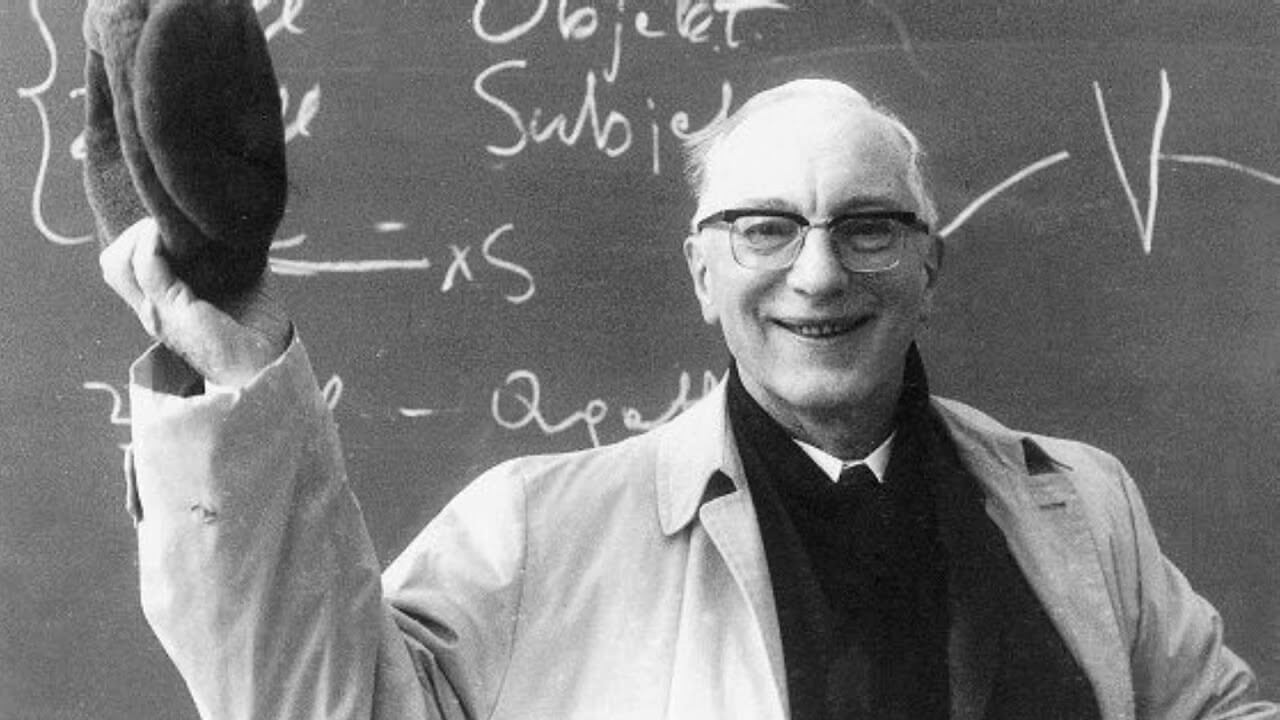
Over the past few days, Jerry and I have been attending and speaking at the Eric Voegelin Society meetings in Philadelphia. Though the EVS is nested academically within the American Political Science Association, it’s a political science organization with a difference. Voegelin, the thinker from whom this society’s members take their inspiration, noticed that human beings include a spiritual component in their complex concerns. So he held that this feature ought to be taken into account in any adequate political theory.
Voegelin had been a refugee from Austria in the 1930’s, himself narrowly escaping the Nazi takeover of that country. So his interest in the spiritual element was not an armchair concern. He held that individuals and societies must learn to recognize this element if they are to deal with it in a balanced way. The extremist ideologies of his youth – Nazism and Communism – were examples of spiritual yearnings mishandled.
Both Nazism and Communism exhibit the dangerous pursuit of a more-than-human purity. As such, Voegelin sees these seductive mass movements as imbued with a spirit he calls “gnostic.” Gnosticism, whether ancient or modern, involves a rejection of reality’s constraints – be they physical, biological, social and/or political – on the promise of a realm of secret knowledge (“gnosis”) pure, unfettered, and accessible immediately to its votaries.
Gnosticism is seductive because the labors required in trying to understand oneself, other people, and the natural and social world are hard, with any gains piecemeal at best. One’s findings can be disconfirmed. One can fail. And fail many times. Whereas gnostics can’t fail. Or rather, every defeat gets instantly explained away, leaving the overarching delusion safely beyond the reach of refutation.
So the EVS meetings are interesting in a way that more standard academic conferences sometimes fail to be. EVS participants are sincerely invested in their attempts – often with impressive erudition and credentials – to understand a particular topic. They don’t wear the masks of detachment. The interest they show in one another’s work is not merely polite.
The paper I read took its title, “The Evil of This Time,” from the final thoughts of Sidney Carton, who faces the guillotine, having taken the place of his friend, in the last pages of A Tale of Two Cities. This is Charles Dickens’ great novel of the French Revolution. Here is what Sidney Carton thinks but does not say: I see the evil of this time, and of the previous time of which this is the natural birth, gradually making expiation for itself and passing away.
The “evil of this time” that I was referencing begins “with the events of October 7, 2023, and proceeds to its aftermath in Western and wider-world culture. “How,” I asked, “did so many respectable people bring themselves to the point of justifying the atrocities committed against ordinary – in many cases leftist, peace-advocating – Israeli civilians … justifications [that] began long before Israel launched its war to prevent the repetition of comparable atrocities proudly promised by the unrepentant perpetrators.”
That was my question. Although I’m by no means persuaded that I’ve answered it, what my paper tried to do was trace the intellectual lineage of this collapse of the norms that ordinarily constrain nice people – like (for one example) the professors at the Religion and Public Life program of the Harvard Divinity School who signed a collective letter actually rationalizing the horrors of October 7.
Another academic, on the same panel with me, was Bruno Godefroy, a young German political scientist who teaches at the University of Tours. His paper was a report on research he has done that explores Eric Voegelin’s sympathetic affiliation with the authoritarian regime that briefly governed Austria in the period just prior to the Nazi takeover of that country.
Godefroy, as he told me afterwards, went into archival materials that had not been opened before. He’d begun with an open mind about what he might find there. But he had a hunch there was something to be found out in those unvisited repositories. What he discovered was that the young Voegelin – while rejecting Nazi racial doctrines – had not rejected an authoritarian Catholic illiberalism or the anti-semitism that partly fueled it.
So the moderateness of method and aim that had characterized Voegelin’s mature position had not been a feature of his initial position. This although eventually, after he came to this country, he appreciated and even celebrated the political virtues he found in America.
What I found impressive about EVS was that, although all present in that auditorium listened to Godefroy’s report with the most intense silence – you could almost hear it cracking – no one tried to find excuses or rationalize away such a discovery. Indeed, Godefroy’s presentation of his findings to this audience was a sign of his trust in their fairness.
Afterward, I asked him if he thought there was a God. I don’t know why I raised that question. Perhaps I was curious to know how he’d found the inner fortitude to go into those archives with an open mind. Especially since, evidently, he’d not tried to use his discovery to whip up an intellectual scandal. Anyway, I don’t recall his words, but it seemed that he saw no need for the God hypothesis.
Well, I remarked, the love of truth – regardless of where the chips fall – is religion enough.
*This post was first published at the Dear-Abbie Non-Advice Column.


Related Posts