How Germany Reunified
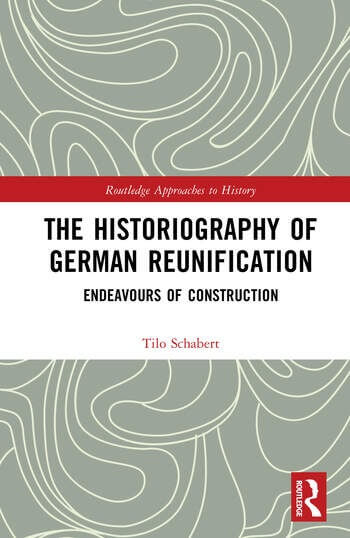
Tilo Schabert, emeritus professor of political science at the University of Erlangen, is well known to the readers of VOEGELINVIEW. He is an outstanding member of a brilliant generation of Eric Voegelin’s German students and the author of many books in political philosophy. Since the 2002 German publication of How World Politics is Made, followed by the French (2005) and English (2009) editions, he established an unquestioned expertise regarding the 1990 reunification of Germany. In How World Politics is Made, as Martin Palous noted in his review of it for VOEGELINVIEW, readers were not simply provided with the pertinent facts but were invited to reflect on the dramatic significance of the actions of the participants and on how the actors understood the relationship of their own thought to their actual conduct. As a consequence, Schabert has become the source of a thorough, balanced, and insightful appraisal of the entire process and especially about the political actions of François Mitterrand, President of the French Republic between 1981 and 1995. Schabert has gained this esteem because of his ability to turn his command of facts into a plausible and persuasive narrative.
In the present book, The Historiography of German Reunification, Schabert applies to his own writing of history many of the same hermeneutical strategies he used in his earlier account of historical action. The 2021 revision of How World Politics is Made, called France and the Reunification of Germany, carried the subtitle Leadership in the Workshop of World Politics. The present book may be understood as taking place in the workshop of historical political science. There, Schabert argued, historical events are re-presented in a scholarly narrative or story. For example, the conventional interpretations of the difference between France and the United States regarding German reunification held that the Americans were benevolently disposed towards Germany whereas France, including President Mitterrand, was obstructive. Schabert cited several historians who made that argument and showed beyond a reasonable doubt that they were certainly wrong about France. But that raises another question: why did they make such a fundamental error?
One answer was obvious: these historians were insufficiently familiar with the contents of the several national archives, particularly those of France, which, as it happens, have never been particularly user-friendly. This administrative impediment led to an asymmetry of historiography because so many historians simply ignored the material in the French National Archives since they could not access it easily. Typically, they either cited one another or they relied on three volumes of Verbatim, edited by Jacques Attali, one of Mitterrand’s advisors, which was entirely unsuitable as a reliable source owing to its many factual errors and inaccurate summaries of original material. Worse, Attali left readers with the impression that France was indeed opposed to reunification, which was simply false. As it happens, Monsieur Attali was himself opposed, which made his collection mendacious as well as useless. If historians were familiar with the material in the French National Archives, this systematic misinterpretation would not have happened.
Anyone undertaking a scholarly analysis of events knows that all historiography begins with previous representations of events in the so-called primary documentation that participants and political actors construct. This “early” historiography, close to the events taking place in the workshop, is hardly ever discussed. It takes a lot of imaginative work to understand what is going on and mastery of a great deal of documentation. Schabert undertook this neglected task by analyzing the archival collections of the French, British, German, American and Russian governments and by discussing events with workshop participants.
Indeed, Schabert argued that the major participants in the workshop –Mitterrand, Kohl, Bush, Thatcher, Gorbachev and their advisors—achieved a personal closeness, a trust that was not the same as personal agreement but was nevertheless a “decisive factor” in the achievement of German reunification. Some members of this “network” were initially in closer agreement than others, but eventually, through their activity in the workshop, they agreed that German reunification would enhance European security and stability. This is, of course, the “research methodology” Schabert undertook when writing his initial account of the role of France in the political process that led to German reunification. Many of the earlier participants reappear in this book, perhaps not quite as old friends but at least as familiar personalities and characters. For Schabert as well as for the workshop participants, the character of the political actors was important. There are, accordingly, several fascinating “character studies” of the major participants by one another and by their subordinates that appeared through their political conversations. Apart from Mitterrand and his peers in Britain –particularly Mrs. Thatcher—and elsewhere, in this book the second-tier officials and advisors took on a more pivotal role. They included the already mentioned Jacques Attali, Hans-Dietrich Genscher, the German foreign minister, Caroline de Margerie, another of Mitterrand’s advisors in the Élysée, Hubert Védrine, a security and diplomatic advisor also in the Élysée, and Douglas Hurd, foreign affairs advisor to Mrs. Thatcher.
To discuss the question of their significance, in The Historiography of German Reunification Schabert shifted his focus slightly from his earlier book. Now he was more concerned with why the initial claims to an authoritative historical narrative needed to be revised and how that was accomplished. In his own words, this book was a report on the often-hidden political process that enabled the historical event of German reunification. The big question, “how was Europe reconstituted?” required a detailed examination of the actions of political leaders to shape a political future that at the time of their action was unknown and certainly could have turned out differently. During the course of his previous research on this question, Schabert discovered that, despite claims to objectivity, the primary archival documents and interviews nevertheless needed to be checked and re-checked to discover any distortions that may have resulted from the circumstances of their initial composition and of their subsequent transmission. That is, primary documents are also interpretations that, for a thorough scholar such as Schabert, require comparison, analysis, and additional interpretation. As he put it, “historiography means controversy” and it does so beginning with the raw historiography of original sources. Controversy was implicit right from the start.
But what constituted the start? Here Schabert distinguished three types of original or fundamental sources: (1) statements by contemporary participants and witnesses; (2) personal documents and memories of political actors; and (3) archival documents. Schabert concluded that all three categories needed to be interrogated, analyzed, and evaluated. He came to see that the reports of contemporary witnesses were less disinterested narratives than self-centred portrayals of events. Likewise contemporary documents, which combined personal memories and written documentation, blurred the genesis of what they reported. Such documents may reflect the words of the author or they may be a quotation or a paraphrase of some other document or protocol. Often it was impossible to tell which source was “genuine.” As for archival documents, at least so far as France was concerned, matters were clear. Mitterrand preferred to communicate with his advisors in writing, most often in the form of two- to three-page “notes,” a French term that can be rendered in English as “memos” or “observations.” Thousands of these notes were produced during Mitterrand’s fourteen years in office and constitute a major source for “insight into the political workshop of the Élysée.” Mitterrand read 200 to 250 pages of notes each day, often adding his comments to them. There were also short handwritten notes that Schabert was able to consult during his time when he was given a desk in the Élysée. Not all were deposited in the National Archives, which made them even more valuable sources for understanding the work of Mitterrand and his colleagues. And of course, there were diplomatic documents from the French Foreign Ministry to be consulted as well.
Starting with his 1989 study of the mayor of Boston, Kevin White, called Boston Politics: The Creativity of Power, Schabert has maintained that politics is inherently creative. This attribute is evident with individual political actors as well as the more cooperative activity of the workshop. By looking at as much of the evidence as possible, he argued, one can “overhear” the unstructured conversation of the participants as they conduct their affairs. As anyone who has looked at archival materials knows, particularly looking at correspondence, these documents can be highly entertaining. More seriously, there are always questions surrounding translations not just between and among languages but also the translation of the notes or “read-outs” of telephone conversations into written documents. These considerations led Schabert to ask: with all the questionable issues regarding the foundations of historiography, “what remains to hold on to?” If historiography is from the start a “constructive enterprise,” then what in the end remains of the “original events”? On reflection, he decided that this was the wrong question. From the start historiography is an art so that looking for something that is unequivocally true is futile.
This does not mean that anything goes. We might recall a famous anecdote from the 1920s when former French Prime Minister Clemenceau was asked by a politician from Weimar Germany what he thought future historians would make of the “troublesome and controversial issue” regarding responsibility for the outbreak of war. “That I do not know,” replied Clemenceau, “but I do know for certain that they will not say that Belgium invaded Germany.” Probably not, but the question of so-called war guilt is not exhausted by the factual observation that German troops crossed the Belgian frontier on August 4, 1914. Perhaps the most one can do is be open to unexpected observations and discoveries and turn them into plausible stories. In The Historiography of German Reunification, Schabert has provided us with a remarkable account of how the condition of composing a plausible story can be fulfilled. He also, more tacitly, indicated how difficult that task is, not least of all because it requires so much dedicated skill and hard work. In this respect, Schabert has emulated the dedication and hard work of his own Doktorvater, Eric Voegelin. The result is a continuing inspiration for the rest of us.
The Historiography of German Reunification: Endeavours of Construction
By: Tilo Schabert
New York and London, Routledge, 2026; 152pp


Related Posts