The Cartesian Ghost and Gilbert Ryle’s Critique
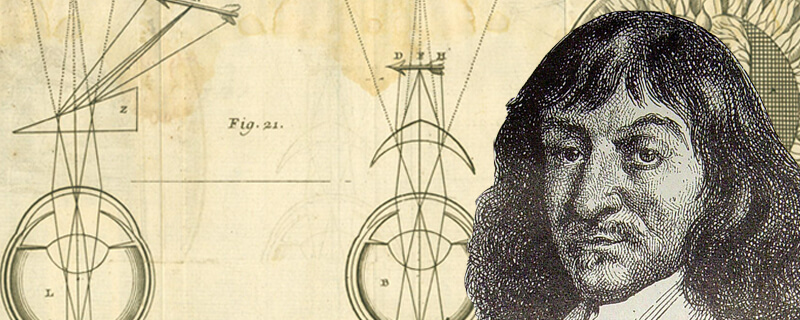
Many textbooks and dictionaries devoted to the “philosophy of mind” mistakenly regard René Descartes’s contribution to the mind–body problem as foundational or dawn-like. It is as if Plato and Aristotle, the Stoics, the Neoplatonists, the Church Fathers, and the Scholastic Doctors had never discussed the issue of the relationship between soul and body. Very likely, the predecessor of this exalted way of understanding Descartes’ contribution was Nicolas Malebranche. Eager to underline the originality of Cartesian thought, he wrote in the preface to De la recherche de la vérité (1674–75) that “it can be said with some assurance that the difference between mind and body has been known with sufficient clarity only for a few years.”
Perpetuating the same spirit, many contemporary authors sketch a so-called “Cartesian revolution,” pushing to extremes the interpretation of Richard Rorty, who spoke of the novelty of dualism in exaggerated terms in his book Philosophy and the Mirror of Nature. For example, in a substantial article titled “René Descartes and the Legacy of Mind/Body Dualism,” Robert H. Wozniak notes that although the distinction between mind and body can be found in ancient Greek philosophy, “it is to the seminal work of René Descartes (…) that we owe the first systematic account of the mind/body relationship.” Thus, not the issue itself but its systematic treatment would have been inaugurated by Descartes. Following the same rhetoric, it is not surprising to find in an online encyclopedia that Descartes “was the first author to formulate the mind–body problem in the form in which it exists today.”
Faced with such a perspective, we prefer the more balanced position of Brian Beakley and Peter Ludlow, editors of the excellent anthology The Philosophy of Mind. Classical Problems/Contemporary Issues, who state:
“Some philosophers have contended privately that the philosophy of mind is an irreducibly trendy branch of philosophy. We disagreed with this assessment and wanted this collection to show how many of the current concerns in the philosophy of mind have their roots in intellectual history.”
In turn, Marleen Rozemond felt compelled to “demythologize” the legend of Cartesian originality regarding the mind–body distinction:
“This problem is often treated as if it were new with Descartes’s dualism because his view that the mind is incorporeal is usually approached as if new. But the incorporeity of the mind or soul was surely not a novelty introduced by Descartes. In the history of Western philosophy it is at least as old as Plato—a fact often ignored in discussions of Descartes’s dualism. More directly relevant to Descartes, the incorporeity of the mind was generally accepted by the Aristotelian scholastics, although their conceptions of mind and body differed in important ways.”
Robert Pasnau also, referring in his study “Mind and Extension (Descartes, Hobbes, More)” to Malebranche’s claim cited at the beginning of this article, pointed out that “none of these claims is entirely original.”
Following the suggestions of Beakley, Ludlow, Rozemond, and Pasnau, we understand that the French author did nothing more than redesign, in his own terms, themes long debated by thinkers indebted to prestigious intellectual traditions such as Platonism, Aristotelianism, and Stoicism. This is also the balanced position of Bernard Baertschi, who noted that while Descartes offers a new way of posing the problem of the soul (mind)–body relationship the underlying issue is identical to that of the Greek and Scholastic classics.
Without minimizing a certain Cartesian contribution—properly named by Gheorghe Brătescu as a “psychophysiological mechanicism”—my investigation will analyze the critique of one of the most prominent English philosophers of the twentieth century, Gilbert Ryle. This approach will open the way to rethinking, from a broader theoretical perspective that combines philosophy, theology, and anthropology, the issue of the relationship between mind and body.
From its very appearance, Ryle’s The Concept of Mind (1949) attracted the attention of the scholarly public and remains to this day mandatory reading for students of philosophy of mind. Interest in this philosophical work—both original and controversial—remains alive, as Daniel C. Dennett notes, drawing an analogy with Borges’s novella Pierre Menard, Author of the Quixote, that at the turn of the millennium Ryle’s book is a much “richer” text than when it first appeared.
Developing his own conception—considered by some interpreters a “soft” behaviorism—Ryle strives to demolish the “myth of consciousness,” that is, the view that posits its radical difference from the body. In advancing his ideas, he attacks the “myth of Descartes” (i.e., Cartesian dualism), managing—according to the expression of Julia Tanney—to drive “the last nail in the coffin of Cartesian dualism.”
The first chapter of Ryle’s book, entitled “Descartes’ Myth,” opens with an almost caricatural presentation of what he calls the “official doctrine”:
“The official doctrine, which hails chiefly from Descartes, is something like this. With the doubtful exceptions of idiots and infants in arms every human being has both a body and a mind. Some would prefer to say that every human being is both a body and a mind. His body and his mind are ordinarily together, but after death of the body his mind may continue to exist and function.”
Going further, Ryle shows that if bodies occupy a spatial location and are subject to mechanical-physical laws, being able to be observed and analyzed, intellects (minds) are not spatial and do not submit to mechanical laws. In other words, every human being somehow has a kind of double life, or a dual history, unfolding on the one hand in a bodily mode, and on the other in a spiritual (“private”) mode. Usually, those who speak about these two parallel “histories” refer to bodily, physical life as being “external,” while spiritual life is “internal.” The major problem raised by this view, continuing the famous doubts of Princess Elisabeth of Bohemia, is that of how the two dimensions interact:
“Even when ‘inned’ and ‘outer’ are constructed as metaphors, the problem how a person’s mind and body influence one another is notoriously charged with theoretical difficulties.”
A true mystery is represented by the “occult” character of the individual’s inner (or intellectual) life, his “private” (i.e., internal) history not being publicly accessible. Everything is marked by the polarity between mind and matter:
“There is thus a polar opposition between mind and matter, an opposition which is often brought out as follows. Material objects are situated in a common field, known as ‘space,’ and what happens to one body in one part of space is mechanically connected with what happens to other bodies in other parts of space. But mental happenings occur in insulated fields, known as ‘minds,’ and there is, apart maybe from telepathy, no direct causal connection between what happens in one mind and what happens in another.”
In the same ironic style, Ryle continues by maintaining that, according to the dualist perspective, each of us lives “the ghostly life of a Robinson Crusoe,” exiled on the island of his own soul, lost somewhere within the body. As a logical consequence, no person has access to the “intimacy,” to the events of another person’s inner life. Therefore, we could do no more than speculate by using “problematic inferences” based on certain behaviors that uncertainly signal what the agent is thinking.
Following the critical crescendo of his exposition, Gilbert Ryle inaugurates the second section of the chapter by calling Cartesian dualism “the dogma of the Ghost in the Machine.” He immediately announces that he intends to prove its falsity. The foundation of this falsity consists in “a certain category-mistake,” and the dogma itself is nothing other than “a philosopher’s myth” attributable to Descartes.
If we carefully analyze the rhetoric and style of Gilbert Ryle’s critique, we will notice its similarity to the famous critique brought by Rudolf Carnap against Western metaphysics in general, and against Heideggerian philosophy in particular, in his essay “The Elimination of Metaphysics Through Logical Analysis.” In this regard, John Foster pointed out in his bold monograph The Immaterial Self: A Defence of the Cartesian Dualist Conception of the Mind the following:
“The simplest and most familiar version of analytical reductionism is that advanced by the behaviourist. The thesis here is that statements about the mind are to be ultimately construed in purely berhavioural terms; more precisely, that each statement which ascribes a mental state or activity to a human or animal subject turns out, on conceptual analysis, to be a statement about that subject’s behavioural condition. This doctrine was quite fashionable in the first half of the twentieth century, mainly owing to the influence of logical positivism. Its advocates have included such distinguished philosophers as Rudolf Carnap, Carl Hempel and Gilbert Ryle.”
Returning to Ryle’s exposition, we note here his famous example—repeated again and again by most of his commentators—through which he illustrates the category mistake.
Suppose that a visitor were guided through the various locations of the University of Oxford. He would have the opportunity to see a series of colleges, libraries, sports fields, scientific and administrative departments. At the end of the tour, he might ask: “But where is the University?” In other words, knowing the different buildings and institutions, as well as the various people who populate all these locations, would still not satisfy his desire to know the university itself. The forest cannot be seen because of the trees. What, in fact, is the problem? Our visitor has assigned “the University” to the same category to which the subsidiary institutions belong. Seeking to strengthen his critique, Ryle provides another example, that of the game of cricket. Suppose someone learns the functions of the various players and then asks where the one is whose main function is to crystallize that “esprit de corps” absolutely necessary to the team. Starting from these illustrations, Gilbert Ryle then maintains the following:
“The mistakes were made by people who did not know how to wield the concepts University, division and team-spirit. Their puzzles arose from inability to use certain items in the English vocabulary.”
Again, the influence exercised by logical analysis of language upon Ryle’s conception is more than evident. Pursuing his “destructive aim,” he seeks to circumscribe the origin of the category mistake. First, he notes the cultural starting point that conditioned René Descartes. Conditioned by his scientific outlook, he adopted the mechanistic perspective, while his religious-moral convictions discouraged him from applying it to human nature. For Descartes, “the mental could not be just a variety of the mechanical.” Caught between the contradictions of bodily (physico-mechanistic) laws and those proper to the mind, he transferred to the mental/spiritual world the deterministic system that governs the physical world. The French thinker erred when he presumed that there must exist an alternative to the mechanical laws governing the body; he reflected upon the mind in the same causal-mechanistic manner in which he reflected upon the body:
“He had mistaken the logic of his problem. Instead of asking by what criteria intelligent behaviour is actually distinguished from non-intelligent behaviour, he asked ‘Given that the principle of mechanical causation does not tell us the difference, what other causal principle will tell it us?’ He realised that the problem was not one of mechanics and assumed that it must therefore be one of some counterpart to mechanics. Not unnaturally psychology is often cast for just this role.”
This mistake led him to postulate the existence of two radically different substances, the bodily and the mental—an hypothesis that blocked the discovery of the truth claimed by Gilbert Ryle:
“It is perfectly proper to say, in one logical tone of voice, that there exist minds and to say, in another logical tone of voice, that there exist bodies. But these expressions do not indicate two different species of existence, for „existence” is not a generic word like ‘coloured’ or ‘sexed.’ They indicate two different senses of ‘exist,’ somewhat as ‘rising’ has different senses in ‘the tide is rising,’ ‘hopes are rising,’ and ‘the average age of death is rising.’”
Following this path, one of the direct consequences is the diminishing, even to the point of disappearance, of the contrast between mind and matter. Moreover, Professor Ryle’s contribution highlights the fact that what Descartes undertook was a reformulation of the “prevailing theological doctrines” about the soul in terms of the new “syntax” established by Galileo Galilei. The “ghost of predestination” was replaced by the “ghost of determinism,” just as in physics “the myth of occult forces” was the scientific improvement of the “myth of final causes.”
Despite the nuances added by Gilbert Ryle to the critical portrait of Cartesian dualism, his conception was absorbed into the intellectual current of the 1950s, considered by Taylor Burge in his diachronic study “Philosophy of Language and Mind: 1950-1990” to be the main vector of the materialist monism dominant in the philosophy of mind of the 1960s. Perpetuated, more or less explicitly, up to the present day, the echoes of Ryle’s anti-dualist critique can be perceived, for example, in John Searle’s article “Why I Am Not a Property Dualist,” where he states that “there are not two (or five or seven) fundamental ontological categories” because “we live in one world.” Thus, the idea of a “causally closed universe,” consisting “entirely of physical particles and force fields,” appears to be the direct consequence and ultimate development of Ryle’s conception. Unfortunately for him, his critique did not arise from a desire to return to the traditional, non-Cartesian discussion of the relation between body and soul, but rather from a vision that seems to have completely denied the existence of the latter. Such a step might represent, after Galileo, Descartes, and Newton, only the final stage in the vast process of mechanization and disenchantment of the modern world.


Related Posts