Ibn Khaldun, Petrarch, and the Fate of Civilizations
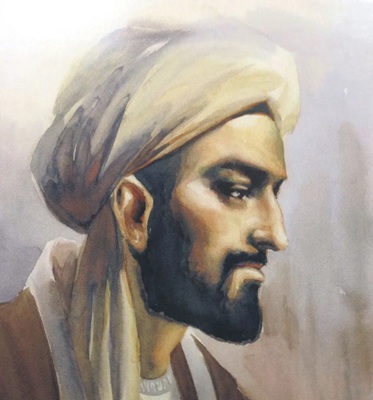
Societies rise, fracture, and rebuild. We see it in history. We feel it now. We live small versions of it in our own lives. The pattern is familiar. The cause is usually missed.
The driver is meaning: how people understand the world, their place in it, and the purpose that holds them together. We live under a canopy, a shared frame of meaning that lets people interpret the world together. When that frame drifts faster than the bonds that carry it, a society begins to split.
Ibn Khaldun, writing in the fourteenth century, saw this with unusual clarity. Collapse, for him, was not first a matter of bad ideas or empty treasuries. It was meaning pulling away from lived experience, the official story no longer matching the life people actually led. He could see the structure because the world still moved slowly enough for the gap to show.
At the same moment, Petrarch was working the other side of the same cycle. He widened what a person could think by recovering an older layer of books and inwardness. Where Khaldun described how a world comes apart, Petrarch showed how a horizon can open again.
We are now inside their cycle at a different speed. Meaning travels faster than anyone can test it. Cohesion thins faster. The shared canopy of meaning strains under pressures neither man knew.
This essay follows the pattern through Khaldun, Petrarch, and the present, and shows why meaning, not ideology, is the engine of stability and collapse under modern velocity.
Ibn Khaldun: The Structure of Collapse
Abd al-Raḥmān ibn Khaldun was born in 1332 into a family that served the Hafsid court in Tunis. As judges and administrators, they were men who lived by the official story of the dynasty. By then that story was already slipping. Rival branches fought over Tunis and Constantine. Ministers rose and vanished. Beyond Tunisia the Maghrib lurched from one house to the next. Granada hung on in al-Andalus. In Khaldun’s youth the Black Death cut through the Mediterranean and took a large part of the class that ran cities.
He did not watch from a library as this unfolded. He served rulers who were gone before his letters arrived. He was jailed by one court, taken to another, pushed out when that court fell. He made truces that lasted weeks. He learned, the hard way, that the names on the coins and the life in the streets were no longer the same world. He was watching a canopy thin, the official frame still speaking while the life beneath it had already changed.
His great literary work, The Muqaddimah, came from that wreckage. Too many readers today have never heard of it, and those who have often imagine it as a medieval history text. It isn’t. It is far more unusual; a man trying to turn the rise and fall of civilizations into a science.
He wrote it in a fortress in what is now Algeria, after another reversal. He was not trying to tell a prettier history. He thought ordinary history was full of “errors and falsehoods” because it stayed within stories and persons. He sought the machinery under the stories, why a group rises, softens, and is replaced.
He starts from a fact every reader in his world already knew: people do not hold together by accident. Something binds them. He called it asabiyya, group feeling. It was not virtue or tribal romance; it was the structural bond that let a people interpret the world together. Asabiyya is not blood or loudness. It is shared hardship and mutual obligation, the memory of having carried life together. A tribe that still shares hunger, danger, and memory can take a city. That is the rise.
Then the wheel turns in his own sequence. The desert toughness is lost. Group feeling and courage weaken. The members of the tribe revel in the well-being that has come to them. Their children grow up too proud to look after themselves or to attend to their own needs. They disdain the things that group feeling requires. In the next generation the feeling decreases. Eventually it is destroyed. The group is swallowed by another. Khaldun thought dynasties had lifespans, often three or four generations, like a body that grows, flourishes, and then decays.
He is just as plain about where the wheel is heading. Sedentary culture, the city, the crafts, the comforts, is the goal of Bedouin life. Civilization aims at luxury. When it reaches that goal, it turns towards corruption and starts being senile, as a living body does. These qualities that come with luxury are, for him, the same as corruption. Luxury is not “the rich are wicked.” It is the ruling layer leaving the life that produced the bond.
He watched the ruling house try to replace the missing bond with force and with outsiders. The desire of the rulers to keep all power and wealth, he wrote, sets them against the very men whose group feeling had held the dynasty up. They hire support from outside. They raise taxes to pay for the hired men and for their own comfort. Slowly the ruler becomes a ruler in name. That is not a sermon. It is a description of a canopy that still speaks while the life under it has changed.
In Khaldun’s world, the canopy was Islamic, Quranic revelation, law, and the ethics of the desert, but the motion he describes does not depend on that canopy being unique. He never uses our modern terms, canopy, drift, velocity, and we should not pretend that he did. The cycle is his; the structural reading is ours.
Then he describes what happens when the frame no longer matches lived experience. After the plague and the wreck of dynasties he said the quiet thing that makes the book necessary: “When conditions change in general, it is as if the entire creation had changed and the whole world been altered, as if it were a new and repeated creation.” He meant: the old reports no longer fit what a person can see. Someone has to write the new conditions. That is as close as he comes to our word drift. The official story and the lived world have come apart.
External shocks still happen, plagues, invasions, hired armies, but what makes them fatal is the thinning of the bond. A strong group can absorb a blow. A softened group cannot.
He could write this because his world was slow. Drift unfolded across generations, slow enough for one man to watch the frame pull away from the life beneath it. News moved with riders and ships. A dynasty had time to grow fat in the sight of one man’s life. The gap showed. Arnold Toynbee, centuries later, told Western readers that The Muqaddimah was the greatest work of its kind, not because of its dates, but because Khaldun saw the motion beneath them.
Khaldun saw drift as a generational motion; velocity makes it a daily one. The leap from the Maghrib dynasties to modern nations is mine, not his; the cycle is Khaldun’s, the speed is ours.
The names have changed. The wheel he wrote down has not.
Petrarch: The Structure of Renewal
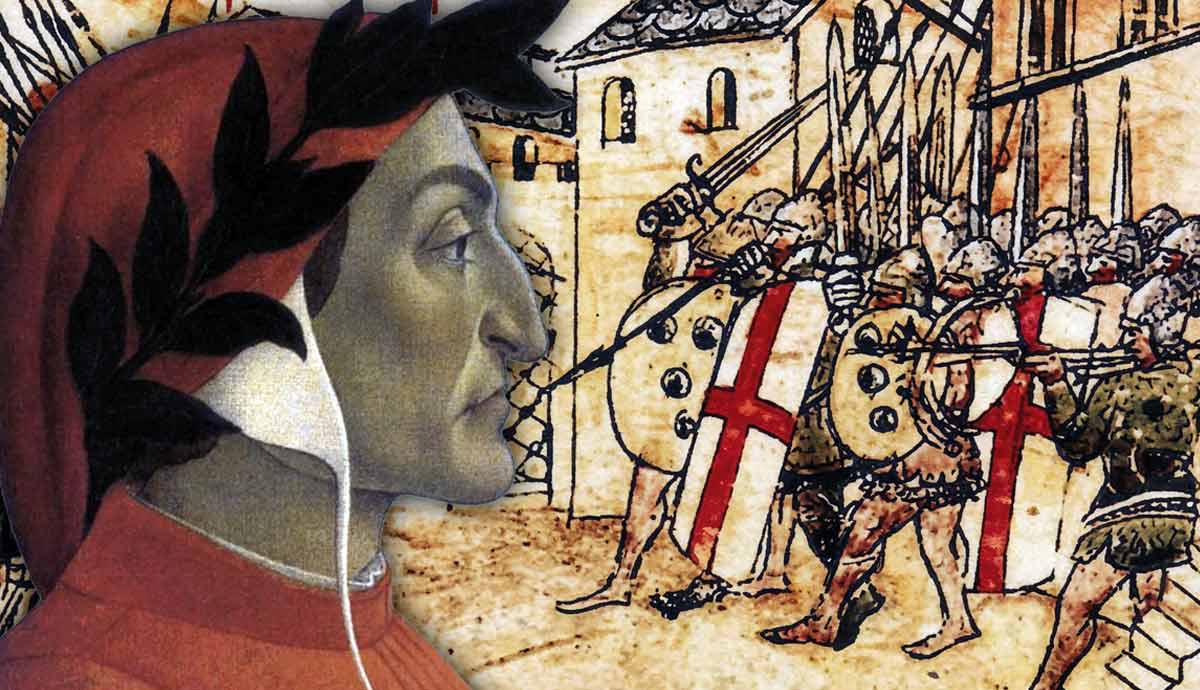
Francesco Petrarca, now as Petrarch, was born in 1304, twenty-eight years before Khaldun, on the other side of the Mediterranean. They never knew each other. They lived in different worlds, under different canopies, shaped by different crises. Yet the same motion Petrarch set in place, opening the mind to a larger world, is the renewal side of the same cycle Khaldun wrote down.
Petrarch grew up in a landscape of small Italian city-states: Florence, Venice, Milan, Genoa, Siena, Pisa. They were not nations. They were rival republics and principalities, each with its own laws, factions, and ambitions. Their politics were unstable. Families rose and fell. Exiles were common. Armies hired by one city might fight for its enemy the next season. The papacy itself had left Rome for Avignon, leaving what is now modern-day Italy spiritually leaderless and politically fractured. Scholasticism, the intellectual canopy of the Middle Ages, had grown dense and inward. The old frame still spoke, but the life beneath it had changed.
Petrarch felt that thinning personally. He was trained in law but found no meaning in it. He lived between courts, libraries, and monasteries, always searching for something older and larger than the world around him. He climbed Mont Ventoux simply to look outward. He wrote letters to long-dead Romans as if they were alive. He hunted manuscripts in forgotten chests and half-ruined monasteries. He copied them by hand. He restored their language. He made their voices speak again.
His discovery of Cicero’s letters was the turning point. Medieval Latin had become stiff and ceremonial. Cicero’s Latin was clear, direct, human. It showed Petrarch that a person could write with a personal voice, that thought could be expressed plainly, without the scaffolding of scholastic categories. This was new. It widened what a person could think.
His love poems to Laura, collected in the Canzoniere, widened the horizon in another way. They were not theological allegories. They were interior. They treated longing, memory, and self-examination as worthy subjects. Medieval writing had spoken through inherited forms. Petrarch spoke from the inside. He made interiority legible. A reader could feel a mind thinking, not a doctrine speaking. He remained a Christian and wanted a purified Rome, not a secular self; he stayed inside the faith, but he wanted a larger mind inside it. Petrarch widened consciousness by distributing a larger horizon to many minds, not by centralizing meaning into a single frame.
The widening was not ideological. It was cognitive. Petrarch expanded the range of what a person could understand. He made the world feel larger. He made the self feel more articulate. He gave Europe a deeper memory. He did not overthrow the medieval canopy. He stretched it, making room for clarity, for self-examination, for the idea that a person could look at the world with their own eyes.
And his widening had consequences. Petrarch did not read Greek, but his obsession with antiquity made others want to. Within a generation, scholars like Salutati and Bruni were learning Greek. Chrysoloras arrived from Byzantium to teach it. Greek manuscripts began to flow into Italy. The recovery of antiquity became a movement. Humanism took shape. Education changed. Reading changed. Consciousness changed.
That is the structural motion; collapse creates a vacuum; the vacuum invites a search; the search widens the horizon; the widened horizon becomes the seed of a new meaning canopy. Petrarch did not build the Renaissance. But he lit the fuse. His letters, his manuscripts, his insistence on clarity and interiority created the conditions for what came later: humanism, philology, new forms of education, new ways of reading, new ways of seeing the self. He made it possible for Europe to rebuild meaning after the long medieval drift.
His world also saw the first signs of velocity. Not modern speed, but the beginnings of acceleration. Literacy was rising. Travel was more common. Merchants carried ideas along with goods. Scholars corresponded across borders. Manuscripts moved from monastery to court and back again. The horizon widened not only through Petrarch’s hands but through the movement of people and texts.
Velocity was still human-scale. A letter took weeks. A manuscript took months to copy. A new idea took years to spread. Consciousness could keep up. But the motion had begun. The world was no longer closed. It was opening. His widening worked because the world still moved slowly enough for a new horizon to settle before the next arrived.
Petrarch lived inside that opening. He felt the medieval canopy thinning and reached backwards to widen the horizon forward. He did not know Khaldun. He did not know the Maghrib dynasties or their cycles. But he watched the official mind go stiff and went looking for an older, wider speech. Khaldun watched the bond die in a ruling class. Petrarch watched the canopy thin and searched for a larger frame. Same gap. Opposite move.
Khaldun wrote the wheel of collapse. Petrarch began the arc of renewal. Both lived in slow worlds where the gap could still be seen.
Modernity: Velocity and the Return of Asymmetry
Khaldun wrote the wheel while it still turned slowly enough to see. Petrarch began the widening while a new book still had time to become a life. What follows is the same two motions after the clock changes.
Modernity is not a mood and not a date on a syllabus. It is a change of speed. Printing, literacy, ships, then wire, radio, satellite, and the feed did not only spread Petrarch’s wider horizon. They made meaning arrive faster than a person or a people can test it. In a slow world, a story and a life can stay in step. A dynasty can go soft in one man’s sight. A recovered Latin letter can sit in the mind for years before it remakes a school. Drift shows. Repair has time.
Khaldun watched luxury do that work for a ruling house: the layer left the life that had produced the bond. Speed does a version of the same work for almost everyone. It is not comfort. It is the shrinking of the interval between a story and the life needed to test it. Caravan and copied book; years. Press: months. Wire and radio: days. Satellite and feed; before the body has caught up. Consciousness still runs on a human clock. The canopy does not.
This is why it matters. Khaldun’s bond thinned across grandchildren. Petrarch’s new books had years to settle. Under today’s speed the official story can change twice before anyone has lived the first one. Drift stops being a historian’s pattern and becomes a daily feeling: the words still circulate; they no longer land on the same world. A family still makes meaning at the speed of meals, work, and the people in the room. The feed has already revised who is safe, who is guilty, and what the day “was.” The inside cannot answer at that tempo. External meaning wins by clock, not by proof.
The canopy is forced outward. Khaldun’s world could live and die inside one frame; the sword settled what talk did not. Today, interdependence, trade, travel, signal puts frames in the room every hour. Diplomacy becomes an argument about meaning as much as about ground. That is not a plot. It is a contact under speed. Where a people still have a thick inner story, pressure can be absorbed. Where the inner story is already thin, the outer story starts to do the holding. Velocity accelerates drift; drift thins the bond; and a thinned bond cannot absorb shocks, which is the modern form of Khaldun’s cycle.
The same asymmetry appears in a single life, the reliance on the outer story when the inner one cannot keep pace. When identity and purpose arrive from platforms and cycles, the inside has nothing as fast to answer with. External meaning wins by tempo, not by proof. A person feels the same a polity feels; the outside moves faster than the inside can stabilize.
This is the crux of modernity. Consciousness still has a limit. Velocity does not. Consciousness cannot update at the tempo of external meaning. When meaning outruns the test of lived life, the old words keep circulating and stop pointing at the same world. The gap is what Khaldun could watch over a lifetime. We feel it before lunch.
Closing
Khaldun was not forgotten because he was wrong. He was forgotten because the reading went quiet. After his lifetime the Mediterranean did not slow; print, guns, oceans, and empires sped it up, and collapse could be treated as plague, war, and kings rather than drift. The wheel still turned, but the speed was still human enough that people could explain failure without touching the frame beneath it. His book sat on shelves. The motion slipped out of view.
Velocity makes the motion visible again. Meaning moves faster than a person or a people can test it. Drift accelerates. External frames press inward. Internal frames thin. Renewal, when it comes, still requires the widening Petrarch began: a larger horizon, a deeper memory, a frame that can absorb the speed. Renewal is not a single canopy replacing another; it is a widening distributed across many minds, the same motion Petrarch began. Khaldun matters now not because his world resembles ours, but because the motion he described has reappeared under conditions he never saw.
The cycle has a shape. The bond thins. The official story pulls away from the life under it. A gap opens. Someone reaches for a wider horizon. A new shared frame forms. Drift begins again. Khaldun saw the first half while a dynasty still had time to grow soft in one man’s sight. Petrarch felt the gap and went backward into older speech so the mind could go forward. We live both motions at once. The wheel and the widening have not changed. The clock has.
Under that clock, a story that cannot be tested where people actually live will not hold, however large it is and however good it sounds. Meaning has to be made again at the scale of a life before it can be asked to carry a world.
Under today’s speed the gap does not stay empty. When the bond thins faster than a horizon can widen, something rushes in to hold the words together, moral rankings, finished maps, systems that claim to steady meaning while lived life cannot keep up. Modern moral systems are not mistakes; they are attempts to steady meaning when lived life cannot keep pace. They stand where jurists and theologians once stood: inside a canopy, not as the canopy itself. In Khaldun’s world that canopy was Islamic; the arguments beneath it were downstream of the frame. Our arguments are the same motion under a clock that no longer waits. We are living Khaldun’s cycle at a pace that still needs Petrarch’s depth. Velocity makes the old asymmetry visible again and brings the next one before anyone can answer it.


Related Posts