Israel’s War and the Crisis of Gnosticism
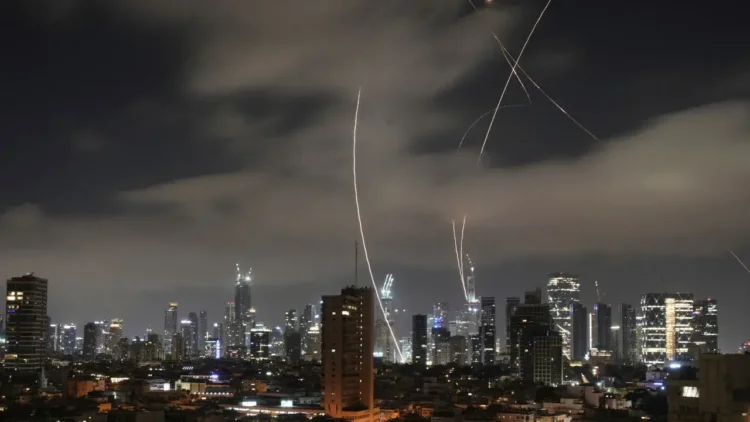
Israel’s dismantling of the Iranian terror network surrounding it and its strike into the heart of Iran, destroying its nuclear facilities and eliminating top generals and other military leaders, caught the world by surprise. The stunning success of Israel in the last year to de-fang Iranian proxies like Hezbollah and now revealing to the world the weakness of Iranian’s defensive (and offensive) capabilities has been met with an equally revelatory response—not merely more “anti-Semitism” but the theologico-political disease at the heart of the West: Gnosticism. This war has revealed, clearer now than in the past, the spiritual rot inside the souls of many in their reactive response to conflict.
Eric Voegelin’s science of politics as a manifestation of spiritual restlessness is very apt for us in Israel’s military strikes against Iran over the last week. Throughout the Western World, Boomers and Gen Z have taken to the streets in protest – an odd alliance of aging feminists, younger fourth wave feminists, LGBTQI+ activists, environmentalists, and the professional progressive activist and protestor class with an oppressive theocratic regime that opposes everything their Western sympathizers claim to support – thus revealing the restlessness that resides inside so many people in the free world. A surface level critique of the Iranian sympathizers can point out that the New Left (and New Right) supporting the Iranian cause is a reflection of its anti-Semitism, anti-capitalism, and anti-imperialism (which is just an anti-Westernism since they never oppose the aggressive imperial ambitions of non-Western nations) misses the more fundamental and substantial reality that Voegelin pointed to: the spiritual restlessness and emptiness that often defines the very existence of human life.
The protestors and agitators that have taken to the streets in the sweltering summer of 2025 have done so because of a dissatisfaction with life. They yearn for a substance that the empty consumerism of a desecrated neoliberalism cannot provide. I do not mean to be harshly negative toward neoliberalism, a term that has entered the political lexicon as one of abuse just like “neocon” has, but there remains a factual reality to a reductive neoliberalism as mere economics as being an empty ideology that cannot provide meaning to our lives. Very true. While the earlier generations of neoliberals, just like neoconservatives, had a strong moral and religious dimension and shape to themselves, today’s advocates of the aforesaid ideologies of western establishmentarianism are themselves empty suits and shells of their forebears. The loss of the spiritual understanding of humanity and its replacement by homo economicus has directly led to the restlessness of our contemporary societies – now best evidenced by the dividing lines of the Israel-Iran War and the frustration with the neoliberal architecture in its exhausted state (exhausted not because as an construct it is but exhausted because the people who sustain it are).
At the heart of this political and societal restlessness is a metaphysical alienation from existence. Discontent over life, our alienation from the mundane of living itself, makes Marxism and revolutionary fascism appealing as these ideologies provide a sense of meaning and destiny to a generation awash in the emptiness of relativism. Anyone who spends a modicum of time online and on social media platforms knows there is a growing radicalization of the young toward the very totalitarian ideologies that were defeated in the 20th century. But the defeat of political fascism and communism by the West did not cure the symptom of those ideological ailments which was spiritual sickness.
This is what Eric Voegelin warned about in his New Science of Politics and subsequent magnum opus, Order and History. Unless there was a return to the understanding of humanity as spiritual beings searching for a sense of the divine during this metaxical existence on earth, “political science” would fail at being a science of knowledge relating to politics and society. All politics is an outgrowth of spiritual desires, even among self-professed atheists. No amount of material wealth, the prevalence of air conditioners, and the luxury of driving cars on highways is going to satisfy what is ultimately a spiritual condition of the heart and soul in its postlapsarian existence.
The enemies of Israel, the United States, and the legacy of the West are the restless Gnostics that Voegelin identified as always being the vanguard of revolutionary and totalitarian politics. These individuals hunger for a sense of duty and the divine, mission and destiny, in life. But having forsaken God and the spiritual struggle we are called to embody, they turn instead to materialist fantasies of empire, the universal state, global revolution, and whatever new equivalent of “workers of the world, unite!” has indoctrinated the minds of restless class – we might say now, “workers of the intersectional revolution, unite!” But what such a phrase really means, what is really signified by this surface level absurdity of upper middle-class intersectional activists in the West wanting to unite with totalitarian theocrats in Tehran, is “all the spiritually restless, unite!” Cut off from normative spiritual realities and having turned to mere politics, that is what makes them very dangerous to the normal hum and buzz of societal life.
There remains a leadership hierarchy within this Gnostic revolutionary movement spreading across the western world. There are the prophets of old (Karl Marx and Michel Foucault) and their living disciples and priests or priestesses (the professoriate and podcasting class), those who have seen the truth and speak it to the masses who will follow and “immanentize” the eschaton. Despite the pretensions of absolute equality, there are those who will lead and those who must follow and enact the revolution. Those who lead are the new priests and prophets who understand the intersectional exploitation of all sorts of groups, which includes the theocratic regime in Iran, demand unity against the oppressive architecture and individuals of that architecture: namely, white males in US and broader Anglophone world, Jews, and the “1%.” It really is an alternative church in construct, composition, and operation.
The sloganeering of the new Gnostics, their demands for justice, the emphasizes on global unity against a demonic other – and it is always a “demonic” other that is intrinsically evil and needing to be defeated in battle – speaks the language of spiritual religiosity and reflects that inner truth of spiritual nature regardless of what the new Gnostics say about their own personal beliefs about God, spirituality, and religion. The new Gnostics must be confronted but will not be defeated by the partisans of End of History liberalism, the impotent leadership class which is obvious to the real science of politics they are meant to govern. The new Gnostics must have their hearts touched by the radical grace that is Love itself, only then can their restless hearts be calmed, they can discover the love and justice that they seek, and find the relationships of fraternity that they desperately want. It is preferable that only this spiritual battle be fought instead of it being concurrent with a physical catastrophe which erupts when the neglect of the spirit reaches its tipping point. We are not there yet, but it seems like we are moving toward that tipping point quicker and quicker year after year.


Related Posts