
Josef Pieper and the Recovery of Leisure
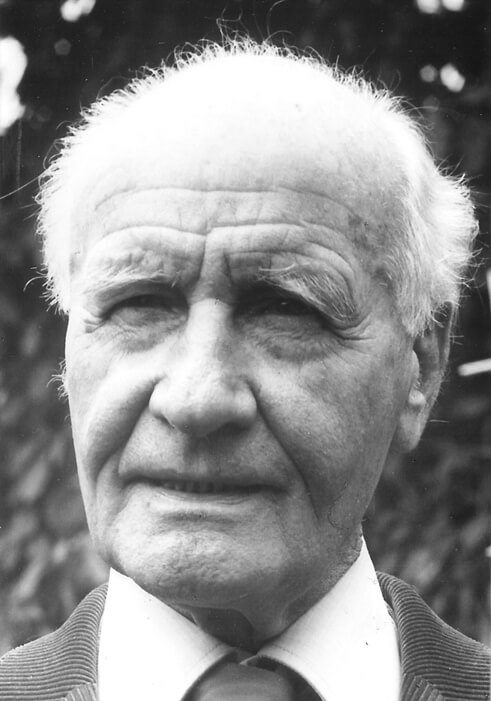
The Catholic German philosopher, Josef Pieper, wrote Leisure: the Basis of Culture in 1947, in the aftermath of the Second World War when Germany was rebuilding materially, to be sure, but morally, culturally, and spiritually, too. This situation raised both a practical and a theoretical problem for Pieper: where do we go in or after a time of crisis? How do we rebuild society, particularly one damaged by its historical sins? And how do we do so not only humanely, but humanly, which is to say in conformity with our human essence? These questions were timely in his day, but they are also perennial; the questions are distinctly human.
I don’t wish to overstate similarities or imply that whatever ordeals we face in countries like the United States of America and Canada in the first part of the twenty-first century are just like those in Germany in 1947, but the issues Pieper addresses in Leisure appear contemporary. We have not recently emerged from a devastating war during which millions of our fellow citizens, including our friends and family members, were murdered by the people entrusted to our shared safety. Nonetheless, many citizens of modern Western regimes are, despite living with relative prosperity and stability, demoralized and distrustful of their governments, the news media, and the putative experts administering everything from public health policies to their children’s education. There is a sense – vague and inarticulate though it may be – that there’s something very wrong in our world that cannot be resolved by improving material conditions; any rebuilding must also be moral, cultural, and spiritual. Pieper speaks to this sense that something more than economic and political is amiss, that our very humanity is in danger.
My experience teaching Leisure to undergraduate students, most of whom have neither familiarity nor sympathy with Pieper’s Catholic perspective, confirms the relevance of the book today. Many young people see in Pieper a fellow traveler, someone who speaks to them as much as, if not more than, most contemporary writers. I hear it often: Leisure reads as if it were written today. If my students are right, then it should be read today, too.
Pieper’s intuition in the book is simple: social, political, and cultural rebuilding depends on leisure. Before proceeding to leisure itself, let’s be sure to not confuse what it means to rebuild. By rebuilding, Pieper doesn’t mean destruction masquerading as improvement, that diabolical spirit that leads to divorce in a troubled marriage, demolishes beautiful buildings because repairs are too costly, encourages apostasy when one feels God asks too much of us (He asks much, but never more than each can give), and inspires humans to tear down under the pretense that doing so is a necessary prelude to utopia. This spirit, whether we call it by its ancient names – tyranny and despotism – its modern names – totalitarianism, fascism, and nihilism – or something newer like deconstruction, is exactly the problem for which leisure provides a solution. Destructive ideologies turn us away from what is higher and greater to focus only on what is most immediate, namely ourselves in our worldliness; they favour brute power and control over human flourishing.
In contrast to destructive pseudo-improvement, building needs creative freedom guided by a clear vision of reality: it needs leisure, which is the freedom from work that is also the freedom to orient oneself towards the true, the good, and the beautiful, and, in so doing, to cultivate the self in alignment with our created nature. This is what Pieper means by saying that leisure is the basis of culture. Work is needed, of course, but without leisure, the products of our efforts will not be properly human. We can build houses, roads, and schools, but unless we grasp what is true, good, and beautiful about them, unless we know what they are for, they will not promote the human good. We apprehend the good – if we do at all – in leisure not in work.
A world in crisis is one without sufficient or genuine leisure. Accordingly, Pieper’s project is one of retrieval: to be fully human and rebuild a culture in turmoil, we must look backward to rediscover truths that appear to have been lost. To find what we’ve lost, we must look to our past, to more vibrant times. Pieper finds salutary models among the ancient Greeks, Romans, and medieval Christians. More importantly, looking backward means looking to philosophical first principles, to the realities that underlie our concrete human existence but that we also readily forget and obscure, including human nature. We must understand what we are if we are to know where we should go.
Pieper begins with an objection that probably resonates with some of us presently: now is not the time to worry about leisure; now is the time for action, for doing, for useful things. The objection is understandable; it may even be common. Especially in hard times, we should focus on practical issues. We must be pragmatic to solve our problems. There’s no time for the indolence of abstract and abstruse theorizing when times are tough; there’s no time for leisure.
But even in relatively comfortable ages, we hear a similar retort against anyone defending something like leisure: what’s the use of that? This is the situation of many of my students when they first go home and announce to their families that they will be studying philosophy. Only the general presumption that nothing worthwhile happens in universities anyhow saves some of them from condemnation rather than having to merely endure some affectionate teasing. In either case, the presumption is simple: we need to work, to put effort into living so that we can prosper and be happy. We don’t need leisure. Leisure may even be an obstacle to flourishing, as free time can be wasted on pointless recreation and amusement. Our success, individual and collective, relies on effort, as uninterrupted and incessant as possible.
The objection is not without justification. Worldly problems are not solved in the abstract; they are certainly not solved by the abstruse – though they may be exacerbated by it. We must act concretely in the world to address its ills and our own; doing so takes effort, oftentimes much strenuous effort. We ought, thus, to take the objection seriously.
Nonetheless, the objection makes a mistake. It presupposes two claims: leisure is useless and what is useless has no worth. This is partially right, but it is also fundamentally wrong: leisure is useless but not worthless. There may be some useless things that lack worth, but it doesn’t follow that all useless things do. The highest things are useless in a strict sense: they have no cash value. Yet they are also immeasurably worthwhile. We don’t, for example, need a trite pop song to teach us that love cannot be purchased, which is as obvious as the fact that life without it is virtually unliveable. Love is worthwhile despite, if not on account of, having no price. Like love, leisure is useless because it produces nothing of quantifiable value, but it is not worthless; life without it may also be virtually unliveable. Leisure isn’t needed for survival, but it is for human flourishing. The objection is not unreasonable, but it forgets the central and longstanding role of leisure in human culture and flourishing. There is no culture suited to humans as humans without it.
The specific approach Pieper takes is to reclaim leisure from a culture that treats humans are beings whose purpose can only be achieved through work and whose value is measured and validated by wages: he calls this total work. In this view, the worth of human life is its usefulness, what it produces, and how much that product costs on the open market. To retrieve leisure, we must reject the prejudice, not of valuing work and effort, but of overvaluing them. The culture of total work is the ideology that ties work to the human being itself. By no means the only, but the most famous example of this is the Marxian notion that human being is reducibly economic: man is the being who produces; he is the worker.
The Marxian thesis doesn’t just mean humans make things; of course they do. It means that the human being is characterized by making, which in capitalism means labouring for pay. The result of one’s labor is more than a product; it is the self itself: I am the output of my work. As Marx puts it in the “Estranged Labour” section of his 1844 Manuscripts, “labour produces not only commodities; it produces itself and the worker as a commodity.” This is why a modern economy is so alienating for Marx: if I spend my time making widgets, then I produce myself as a widget of sorts, as the cog in the machine so entertainingly depicted by Charlie Chaplin in Modern Times when the tramp is literally caught in the gears of the machine he operates. He’s caught in it because he’s neglectful of his work, but he’s neglectful of his work because it is meaningless and alienating. He makes himself into something he despises. The tramp is not only like the cog in the machine; he is the cog. Total work announces an anthropology: I am what I do, and what I do is make widgets for pay; I am but a living, breathing widget.
Pieper does not object to the fact that humans work. Indeed, he repeatedly stresses the importance and value of working. Humans benefit from the purposefulness and directedness of work, and, even more obviously, from earning wages. As Pope Leo XIII teaches in Rerum Novarum, there is dignity in work, evidenced by the fact that Jesus “chose to seem and to be considered the son of a carpenter – nay, did not disdain to spend a great part of his life as a carpenter himself.” Following Pope Leo, Pieper accepts the importance and dignity of work, but he objects to the view that this is what one is full stop, that work is the substance of human beings simply and fundamentally. The problem is the reductionism of total work, which turns human value into cash value.
The idea that ours is a culture that reduces human nature to wage labor might be overstated, especially today. Indeed, we are observing some resistance to the centrality of work in modern life. It appears that people are trying to slow down, work less, find more “work-life balance”, and, as much as possible, withdraw from the hustle and bustle of the workaday. Nonetheless, I don’t believe we can in good conscience deny that total work continues to influence our understanding of human beings and experience. Consider, for instance, the first question one is typically asked when meeting someone for the first time: what do you do? The question, we all know, doesn’t ask about our favorite pastimes. Rather, we understand the question, immediately and automatically, to ask: what is your work, how do you get paid? This question is not unrelated to another question, though not one we would typically be comfortable asking someone we’ve just met: what are you worth? This question is ostensibly economic, asking about the net value of one’s assets and debts. But the question is also moral and theological: what is your value as a person? Whether or not one explicitly rejects the implication, as I suspect most people would, the not too hidden meaning is clear: the person who is worth more is also better; he is more useful to himself and others, including all of society.
Imagine how strange it would be to answer the question about what I do in any way other than the expected one: I take long walks; I read philosophy books; I pray; I go to Mass? I’ve never been willing to try it, but I’m confident such answers would be received with confusion, if not with disdain. Admitting to being unemployed would probably be accepted as a much more valid answer, albeit one that betrays a deficient and unproductive life. To answer the question by announcing and describing one’s job – or lack of a job, as the case may be – is not a mere convention of polite society. It is, instead, the expression of the deep-seated assumption that the human is what the human does, and what the human does above all is work and get paid.
Not being an historian, let me leave history to the side, except to note that this anthropology is relatively new: work had previously been understood as a necessity for living, and, as such, for living well, but not as the purpose or essential function of the human person. As Aristotle puts it in the Nicomachean Ethics, “we engage in unleisured pursuits in order that we may be at leisure.” In short, we assume the burdens of work to have free time during which we can develop the virtues that promote genuine happiness.
Not all humans can be free of economic circumstances all the time and no human can be free of material circumstances any of the time. There can be no fully leisured human life. But if our human condition is to be more than just workers toiling to satisfy our basic needs and our less than basic wants, then we also require freedom from toil to accomplish that “more”, to cultivate a rounded and full human life. Leisure has hitherto meant just that: the time and space for freedom to be human. If there is a crisis to be solved, a modern problem to be remedied, an edifice to be rebuilt, then we’ll need a new conception of the human, a new anthropology, which is actually an old one: man is not the worker, though he works; man is the leisurer, the being whose flourishing is bound up with the freedom from work needed to orient himself away from the workaday world, albeit briefly and intermittently, to the apprehension of the true, the good, and the beautiful; in doing so, his time in the workaday will be a little less false, bad, and ugly, too. Humans always need leisure, not to survive but to thrive. Useless though it is, leisure is needed. Humans need leisure more at times when it is in short supply. They need it most at times when it is squandered, even if the opportunity for it is abundant. Humans need it especially today.


Related Posts