Midlife: A Philosophical Guide
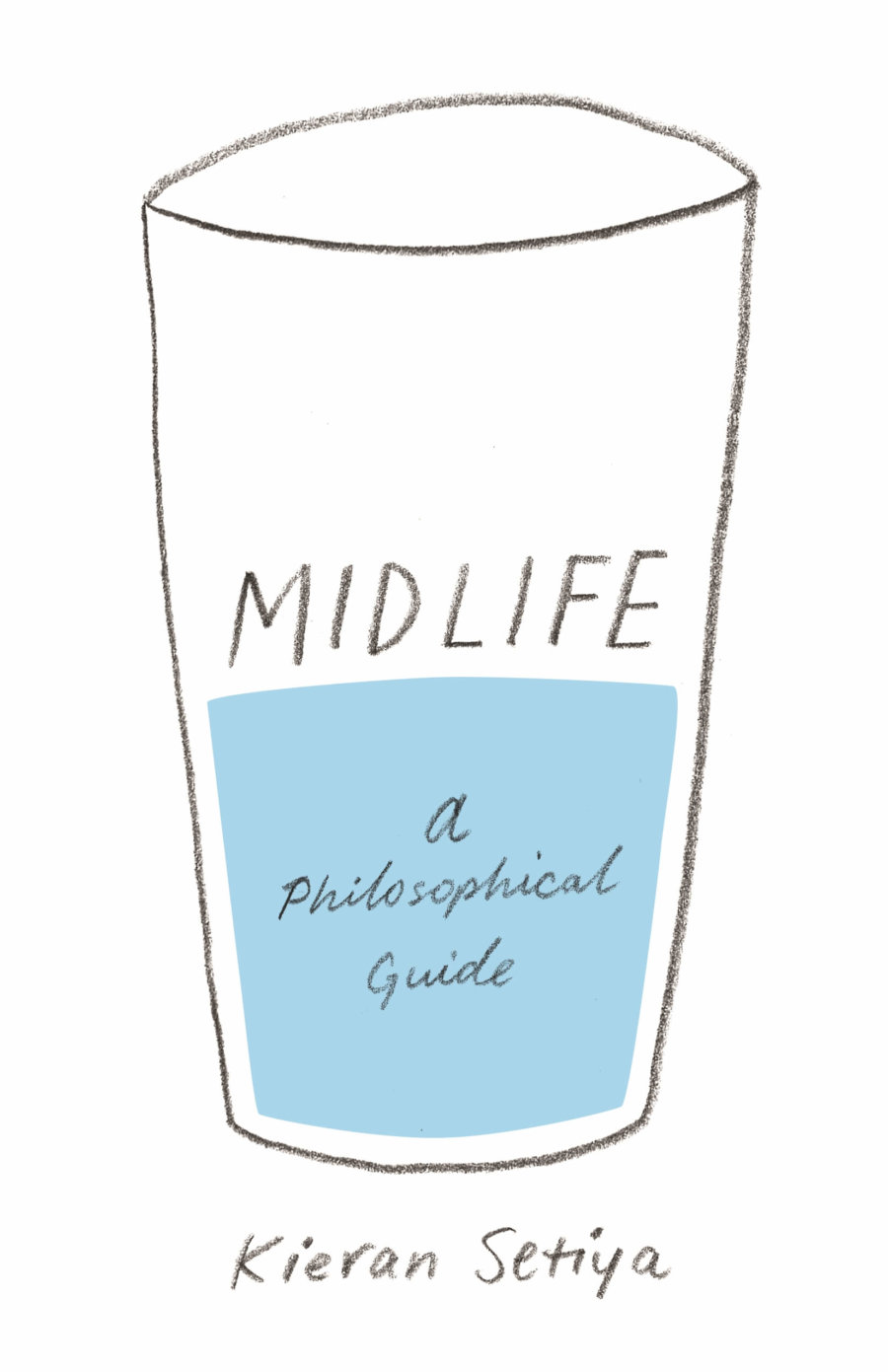
Midlife: A Philosophical Guide. Kieran Setira. Princeton: Princeton University Press, 2017
Kieran Setira has written an accessible, yet thoughtful book on the existential questions of midlife. As a work of applied philosophy, it is written in the form of a “self-help guide.” Setira brings thinkers such as Aristotle, Kant, and Mill to help illuminate and navigate the typical pitfalls of midlife. Unlike most self-help books, Setira points to a change in thought as the primary goal, as opposed to outward changes in behavior. Therefore, his turn to philosophy to solve the problem seems appropriate.
In chapter one, Setira outlines the history of the midlife crisis, noting that although it was not actually named until 1965, it is a problem that has arguably plagued mankind for thousands of years (the oldest example he cites is from an Egyptian dialogue written around 2000 BC). The crossover to popular consciousness occurred within the U.S. in the 1970s and in the last 45 years, the midlife crisis has made its way from couches in therapists’ offices to our television sets, radios, books, magazines, and of course the internet. Although the empirical evidence has been mixed, Setira points to a 2008 study, which shows perceptions of “well-being” to be U shaped. The survey adjusted for income, marital status, and employment, and asked respondents “all things considered, how satisfied are you with your life as a whole these days?”[1] The low point occurred around age 46 and the pattern (high levels of satisfaction reported in young adulthood and old age) held across 72 countries, with results similar for men and women. Perhaps more importantly, Setira’s own life experiences confirm the experience of midlife malaise. In spite of holding a tenured position at a good university in a field he enjoys, along with a wife and child, he notes “the novelty of accomplishment is gone. . .my body creaks and sags. . .my parents are getting on, their health increasingly precarious. I feel the finitude of life: the years are numbered, time is moving fast.”[2] Simultaneously, he recognizes it could be much, much worse, but wonders “why can’t I be more grateful for what I have?”[3] Setira hopes to solve his own crisis through the therapeutic endeavor of writing the book.
Chapters two through six focus on common problems tied to midlife, all of which Setira suggests can at least be partly overcome through changes in thought. In chapter two, he focuses on the life of John Stuart Mill to highlight the need for existential activities, in addition to the ameliorative ones many of us focus on. Mill’s turn to poetry and Aristotle’s advocacy of the contemplative life both point to the former since they are chosen for their own sake. Ameliorative activities include daily demands such as “bills to pay” and “mouths to feed.” Setira turns to Aristotle in the second half of the chapter, but deviates from Aristotle by classifying leisure activities in general (such as golf) as existential, right alongside the bios theoretikos. He’s right to recognize contemplation requires leisure time, but does not adequately explain Aristotle’s reasoning. The contemplative life is the best (and happiest) because it involves the use of man’s highest capacity, not simply because it is chosen for its own sake. Golf, swimming, and sailing are amusements for which Aristotle would perhaps find some value (we play so that we can work), but these fall well short of the seriousness (and bliss) related to the contemplative life. It would have been helpful to fully explain Aristotle’s rationale in the process since the book is not assuming any comprehensive philosophical knowledge.
Chapter three covers “missing out,” which the author rightly points out is a necessary result of having choices. One cannot become both a successful doctor and lawyer, at least not without considerable difficulty. We cannot simultaneously live in the mountains and on the beach. Choices must be made as to when and if to get married and to whom. Some of those choices can be reversed, but many cannot. Setira advises us not to overvalue alternatives. Chapter four deals with a somewhat related topic: regret over past decisions. The author suggests there are very few mistakes that cannot be overcome, and some make us better.
Chapter five deals with death and finitude. For some, midlife is defined by the realization that life is indeed limited by time. Elderly relatives and aching bodies remind us of our mortal condition, something we can easily overlook in youth. Setira appeals to temporal neutrality as a reason not to fear death. Being dead is no worse of an experience than was the time before you were born. Perhaps death is as Socrates suggested in the Apology and resembles a deep slumber. The author also likens the alternative, immortality, to a superpower like learning to fly. Once you learn to fly, you are no longer a human. Likewise, death is a natural part of the human condition. I am not sure either of these arguments is convincing, but it would be unfair to expect Setira to offer a solution to one of mankind’s most vexing questions in a chapter on midlife.
The final substantive chapter is about the emptiness that can arise from an orientation towards the completion of projects, to what Setira refers to as telic activities. As soon as the current project is complete, we begin thinking about the next one. We might look back on past accomplishments or forward towards future goals, but the present can feel empty if our lives are defined solely by project completion. Instead, Setira suggests we must learn to live more in the present. By embracing and enjoying the process, we can find satisfaction in daily activities.
As a philosophically inclined, middle aged reviewer, I found the book to be worthwhile. This is not due to the specific solutions it offers nor to the philosophical depth, both of which are lacking in certain respects, but rather to the encouragement it offers to stop and reflect upon meaningful questions related to our everyday lives. While it might be geared more towards those in their middle years, everyone can benefit from pondering the core questions contained within.
Notes
[1] P.18
[2] P.22
[3] Ibid


Related Posts