Patrick Parr’s Malcolm Before X and the Politics of Race in 20th & 21st Century America
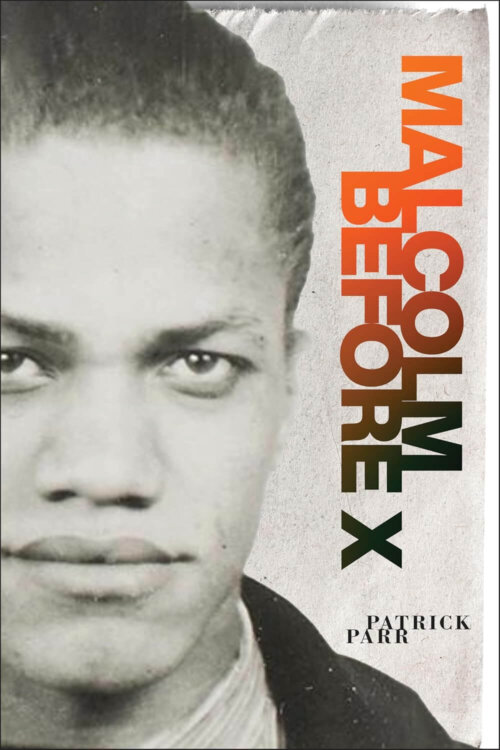
When I first read The Autobiography of Malcolm X, I was captivated by the story of a man who had transformed himself from an imprisoned small-time criminal into the most controversial public intellectual of the 1960s, if not the 20th century. His first-hand accounts of anti-black racism, prison life, and civil rights activism give the reader a constant exposure to perspectives on American society that are at once fascinating and disturbing. But what really stood out for me was Chapter 10, which describes the pseudohistorical claim that white people were purposefully created as “devils:” demonic, malignant, and inferior beings, the end result of a centuries-long selective breeding project begun 6600 years ago by a renegade black scientist in Mecca named Yacub (also spelled Yakub). This story is central to the foundation and ideology of the Nation of Islam (NOI), also known by the media moniker “the Black Muslims.” Influenced by his siblings, who had already joined, Malcolm became a member of the NOI while in prison, converting to their particular brand of the Muslim faith.
Interestingly, the Yacub fable goes completely unmentioned in Spike Lee’s 1992 biopic Malcolm X. Of course, it is ultimately a piece of entertainment rather than a historical account, and not every fact about its subject could be included. Still, imagine a movie depicting someone joining the Christian Identity movement, but with no mention of their beliefs that only whites are descended from Adam, that blacks are an inferior race of pre-Adamic origin, and that Jews are the literal descendants of Satan. In effect, if not by intent, such an omission would serve to (however imperfectly) “sanitize” a narrative, making it more palatable to a wider audience. Being called a devil is one thing, but being called a devil who was created to be genetically inferior and evil by nature is quite another. It might even take a bite out of box office sales.
To his credit, Malcolm X eventually disavowed the Yacub story when he broke ties with the NOI to strike out on his own. It’s hard to know how deeply he ever really believed in it, though it seems to echo in a statement he made in his NOI days, once he had become internationally famous, during a 1963 interview with Alex Haley for Playboy:
Thoughtful white people know they are inferior to black people. Even
[segregationist Senator James] Eastland knows it. Anyone who has studied
the genetic phase of biology knows that white is considered recessive and
black is considered dominant. When you want strong coffee, you ask for
black coffee. If you want it light, you want it weak, integrated with white
milk. Just like these Negroes who weaken themselves and their race by this
integrating and intermixing with whites.
This was a pseudoscientific argument on Malcolm X’s part, as no genetic trait is inherently defective or inferior, nor even necessarily rare, simply by way of being recessive. For example, type O blood is genetically recessive (a fact known for over fifty years before the Playboy interview). It is also the most common blood type in the world among all races and more prevalent among blacks than whites. It would have been interesting to see Malcolm’s reaction to these facts had Haley pointed them out in the interview.
A similar assumption about “genetically recessive whiteness” was made by Ibram X. Kendi (writing under his birth name Ibram Rogers) in a 2003 article published in The Famuan (the student newspaper of Florida A&M University) titled “Living with the White Race.” After claiming that “Europeans are simply a different breed of human” who are “socialized to be aggressive people” and “are raised to be racist,” he writes:
Caucasians make up only 10 percent of the world’s population and that
small percentage of people have recessive genes. Therefore they’re facing
extinction. Whites have tried to level the playing field with the AIDS virus
and cloning, but they know these deterrents will only get them so far. This
is where the murder, psychological brainwashing and deception comes into
play.
Europeans are trying to survive and I can’t hate them for that. However, I’m
not going to just sit back and let them physically, mentally, socially,
spiritually and economically destroy my people.
As noted above, if genetically recessive traits were a precursor to extinction, type O blood wouldn’t be the most common in the world. Kendi was a university student when he wrote this argument, which amounts to a race-baiting failure of middle school biology knowledge. Moreover, using it to posit a conspiracy theory about vaguely defined “whites” (which whites?) weaponizing cloning and AIDS against non-whites is more or less a mirror image of the “replacement theory” so popular among white nationalists. While Kendi seems to have distanced himself from that level of paranoia, the claim that there is a kind of malignant “whiteness,” whether genetic or cultural (see the “murder, psychological brainwashing and deception” claimed above), hasn’t gone away, and shares features with the “white devil” rhetoric of the NOI’s Yacub fable.
Like the Yacub myth, Malcolm X’s use of pseudoscience as an ideological pillar in the Playboy interview goes undepicted in Spike Lee’s biopic, despite its publication in a magazine whose circulation at the time was in the millions. When depicting historical figures, what is unsaid can be as important as what is said, especially considering that, by all indications, people are more likely to watch a film than to read the book that inspired its creation.
To be fair to Spike Lee, I should note that it is rumored (though unconfirmed) that NOI leader Louis Farrakhan—also a prominent NOI member during Malcolm X’s rise to fame—threatened Lee with death if he did not refrain from depicting Farrakhan in the film. (In 1965, Farrakhan, outraged at Malcolm X’s criticism of the NOI, called him a traitor who was “worthy of death.” Two months later, Malcolm was dead, and unproven allegations that Farrakhan ordered the assassination followed.) Whether there is any truth to the story of death threats against Lee, the absence of the Yacub story in Malcolm X may have resulted from a demand from Farrakhan, whom Lee met in order to seek “his blessing” on the biopic’s content. Only Lee himself understands the true extent of the pressures and obstacles he confronted in completing the film, so he is entitled to the benefit of the doubt.
By 1964, Malcolm had broken ties with the NOI, adopted a more conventional set of Islamic tenets, and founded his own organization, Muslim Mosque, Inc. These actions were reinforced by his new belief, gained during a trip to Mecca, that whites do not personify evil after all. (And following the Mecca trip, he converted to the Sunni denomination, placing himself more firmly within the Islamic mainstream.) As he states in the Autobiography: “Despite my firm convictions, I have always been a man who tries to face facts, and to accept the reality of life as new experience and new knowledge unfolds it.” This foundation of intellectual honesty was forged in prison, along with those convictions he later kept, modified, or abandoned.
Regarding those convictions, then: In what milieu, under what influences, did he begin adhering to them, thereby embarking upon one of the most remarkable self-reinventions in history? A work focused upon those transformative years in prison, when Malcolm Little became Malcolm X, is long overdue. Patrick Parr, already established as a consummate biographer and historian of 20th century American society, delivers the goods with an exceptionally deep-diving biography, Malcolm Before X.
In The Seminarian, Parr’s 2018 biography of Martin Luther King, Jr., the author maintains a focus upon King’s egalitarian convictions and deep sense of justice, yet also provides irrefutable evidence that the future civil rights icon committed serial plagiarism as a seminary student. That same approach is employed in Malcolm Before X. This is no tome of laudatory hero worship, but a “warts-and-all” depiction of the good, the bad, and the ugly. Parr shows us the steadfast attempts by Malcolm to improve himself and his lot in life through religious faith and books (his self-described “alma mater” in the Autobiography). He also shows us Malcolm’s reckless and self-destructive behavior leading up to those efforts, such as habitual drug abuse, threats of violence to keep the members of his burglary ring in line, and the theft and pawning of his half-sister’s fur coat.
There is no shortage of historical context, with narratives such as the 19th century arrival of Malcolm’s enslaved ancestors in the Americas, as well as the circumstances of his birth in 1925 and his upbringing in the American Midwest. The historical backdrop also includes the race riots and lynchings of the early 20th century, events which influenced Malcolm’s parents, Earl and Louise Little, to be actively involved in Marcus Garvey’s Universal Negro Improvement Association (UNIA) while living in Omaha, Nebraska. Garvey, a Jamaican black nationalist, was a proponent of the “back to Africa” movement, which advocated the emigration of blacks to the continent of their ancestors. Though the Littles never opted to go “back” to Africa, it is perhaps unsurprising that decades later, their son would enter the fray of racial politics, becoming in certain respects the Marcus Garvey of his time. (Incidentally, on January 19, 2025, Garvey received a posthumous pardon from President Joe Biden for a 1923 mail fraud conviction.)
It’s not difficult to see why J. Early “Earl” Little, Malcolm’s father, would be inspired to join a movement such as Garvey’s, and why similar sentiments would be carried by his son. Parr, quoting Malcolm’s autobiography, describes the deep sense of injustice Earl must have felt growing up with the ongoing threat of racist violence.
As Early grew up, segregation and racial conflicts persisted across the
South. Mob violence and lynchings (both Black and white) occurred on a
weekly basis, some being carefully documented in local newspapers. As
Malcolm recollected to Alex Haley, his father, while growing up in
Georgia, “had seen four of his six brothers die by violence, three of them
killed by white men, including one by lynching.”
Parr depicts a strong sense of independence in Malcolm’s parents: Earl’s unyielding intent to provide for his family as a carpenter, even building the family’s home when they lived in Michigan; his determination, according to a quote by Malcolm’s brother Philbert, that no one but himself “would exercise authority over his children. He wanted to exercise the authority, and he did.” There was also Malcolm’s mother Louise, burdened with raising her children alone after Earl’s death (in what was deemed an accident, but suspected as a murder carried out by local white supremacists). She had no choice but to go on welfare, something she tried desperately to avoid. She resented visits by the inquisitive social workers who, upon her eventual commitment to a mental institution, would later separate the Little siblings into foster homes.
Such a mindset on the part of Malcolm’s parents conveys an intriguing corollary to arguments by economists such as Thomas Sowell and Walter Williams, who have argued that black self-sufficiency, stable home lives, and intact families were on the rise from Emancipation in 1865 until a century later, when welfare program expansions under President Lyndon B. Johnson incentivized underemployment and single motherhood. It is not a simple thing to resolve: Even if LBJ is to blame for fatherless black homes and high rates of welfare dependency since 1965, in 1931 the $84 in welfare per month received by Louise Little—a single mother not by choice, and who by all accounts could not possibly have supported her family on her own—was “not enough,” according to Malcolm, who would at times spend days “‘dizzy’ with hunger” as a result.
Some incongruous nuances of racial strife in early 1900s America are shown in Malcolm Before X: The white mayor of Omaha, Ed Smith—survivor of a beating and brief hanging by a lynch mob during the “Red Summer” of 1919 as he vainly tried to protect a black prisoner from being murdered—sought to suppress Ku Klux Klan activities in his city. (I would love to see Mayor Smith’s reaction to Robin DiAngelo urging him to acknowledge his “white fragility.”) By contrast, in 1922, Garvey went to Georgia for a meeting with provisional KKK leader Edward Young Clarke. Parr notes that this was because Garvey was convinced the UNIA and the KKK “had somewhat similar agendas, mainly the idea of keeping the races separated.”
In the description of the years before Malcolm’s birth, one point meriting more attention than it receives is the connection between US racial politics and the so-called Red Scare following World War I. A reader unfamiliar with the history of Soviet-backed communist actions in America could easily infer that paranoia among whites (and a racist and classist white elite) comprised the long and the short of it:
After the end of World War I, America’s cultural landscape quaked. There
were fears, fanned in part by then-president Woodrow Wilson, that the
ideals of Russian Bolshevism could infiltrate or undermine the minds of
impoverished people tired of feeling like they were second class.
While the “red” paranoia festered, many African-Americans had started to
carve out places in the country.
While paranoia-fueled false accusations of communist subversion existed in the 20th century, a specific goal of the Kremlin—in particular during the interwar period—was to convince black Americans that attaining equal rights was mutually inclusive with establishing a communist government (a conflation brilliantly depicted in Ralph Ellison’s novel Invisible Man). More generally, there is abundant evidence in the form of extant documents that the Communist Party of America was explicitly complying with directives from the Comintern in Moscow, and also received funding from them. Concerns over Soviet influence in America were ultimately based in the reality of communist actions rather than paranoia, so a brief description of the latter with no mention of the former conveys an incomplete picture of this core aspect of the interwar US political climate. That said, this is a contextual element of Malcolm Before X spanning only two pages and doesn’t detract from the book as a whole.
Parr’s book isn’t quite a linear narrative. Rather than beginning with the ancestral stories noted above, Chapter 1 depicts Malcolm Little’s leadership of a Boston burglary gang in the winter of 1945-46, and the arrest, trial, and conviction of him and his accomplices. It is an impactful start, showing the direct cause of the environment that would serve as the catalyst for transformation from Malcolm Little to Malcolm X. Parr’s description of an encounter in Boston between Malcolm and his friend Francis “Sonny” Brown evinces that the future Malcolm X’s way of life was a prison sentence waiting to happen.
From late July to early October 1945, Malcolm had been living in New
York City, performing as an emcee at the Caribbean Club on 7th Avenue….
He’d gambled, hustled, been arrested at least twice, snorted more than a
few lines of cocaine, smoked “a stick a day” of marijuana, and drank a fair
share of whiskey. Both men were cash-poor and wanted to do something
about it. Let’s “break into some house[s],” Sonny suggested to Malcolm.
And so they did.
Thus began a string of burglaries in Boston, for which Malcolm was eventually sentenced to 8 to 10 years of imprisonment. He was transferred between three different Massachusetts institutions, the names of which grace the chapter titles with a Dantean flair: “The Hell of Charlestown,” “The Purgatory of Concord,” and “The Paradise of Norfolk.”
From Parr’s description, Charlestown State Prison surely merits the moniker “hell,” with its exceptionally small cells, inadequate food, complete lack of flush toilets, and one brief shower a week. As I read about these conditions, I was flabbergasted that they existed in a US prison in the middle of the 20th century. By comparison, the “purgatory” of Concord had better food, fewer restrictions, and opportunities for vocational training. (And flush toilets.) Norfolk, the “paradise” every prisoner in the Massachusetts prison system hoped to enter if freedom was no option, was—and still is—a progressive institution with a strong emphasis on training and rehabilitation as well as a more open, campus-like environment. More than in the other two prisons (which no longer exist), at Norfolk Malcolm could take fuller advantage of self-improvement resources: the prison library, debating club, and engagement with outside contacts. He thereby developed the eloquence, intellectual acumen, and self-discipline he would carry with him to the outside upon his release in 1952.
It was also in Norfolk that he converted to Islam—that is, the NOI’s version of it—and began the journey that would take him to the turbulent center of the US civil rights struggle, his prominent role cut short by his assassination in 1965.
Knowing Malcolm X’s uncompromising opposition to injustice and his flexibility of thought in the face of new evidence, we can only guess how his opinions and activism would have evolved had he lived longer. If he were alive to reach his 100th birthday this year, what would he make of societal changes such as post-1960s Affirmative Action programs, DEI, Critical Race Theory, and the “Defund the Police” movement? As a Muslim, what would he say about the global spread of Islamist terror attacks? We will never know for sure, but we are free to speculate. Any such thought requires an accurate and insightful understanding of the life of this iconic historical figure, and Malcolm Before X is an important and fascinating contribution to such knowledge.
Malcolm Before X
By Patrick Parr
Amherst and Boston: University of Massachusetts Press, 2024; 352pp


Related Posts