Richard Weaver and MAGA Politics: A Response
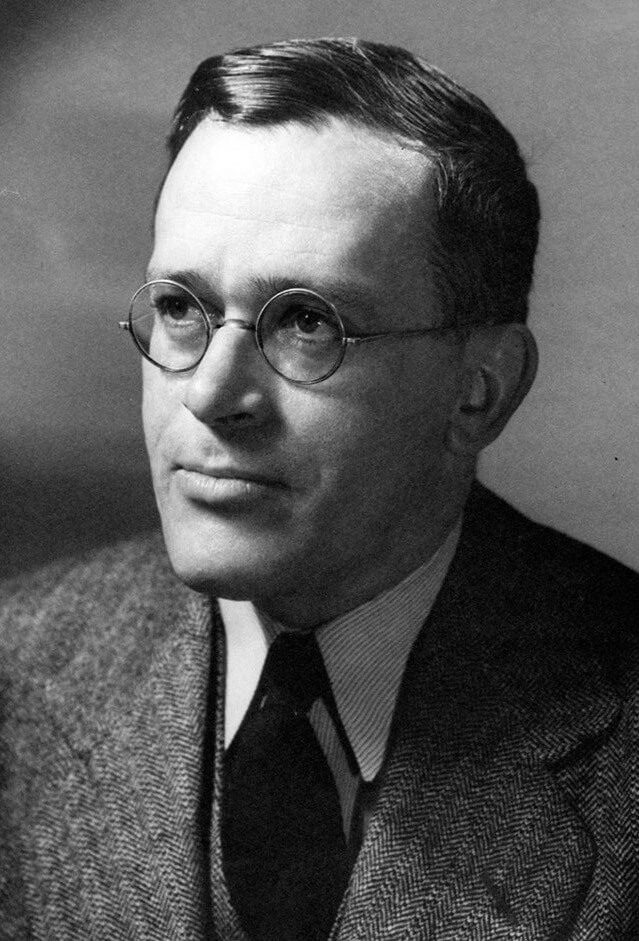
In historical analysis, establishing influence and causation is a precarious task. While the safest method is to find direct attribution in one source to the other, a careful historian can look for patterns and ideas that connect one idea to another and extrapolate those ideas in such a way as to demonstrate, if not influence, at least common themes. The task of the virtuous historian is to treat sources with respect, ensuring that connections are not specious or logically unbound. If this careful treatment of sources is neglected, historians risk unduly connecting ideas or movements simply because they have similarities. In a recent article for The New York Times, guest essayist Laura Field suggested that Richard Weaver’s 1948 book Ideas Have Consequences “captures the Spirit of the MAGA mind” and that Weaver’s rejection of moral relativism led to the rise of the “MAGA New Right.” In Field’s estimation, Weaver’s criticism of nominalism—the philosophical system that rejects the existence of universal forms and transcendent truth—has led to the “radical anti-modernism” and “absolutism” that she sees as trademarks of the Trump era.
Field is the author of a book on the origins of the MAGA movement. Her assessment of Ideas Have Consequences is clearly undertaken in that vein, as she seeks to probe into foundations of modern American conservatism to find causation for the current political landscape of the Right. She is right to locate Weaver as a primary fountainhead of American conservative thought (the founder of fusionism, Frank Meyer, called Weaver the fons et origo of modern conservatism), but she fails to differentiate the intellectual conservatism of Weaver from the political and populist rightism of MAGA. Field’s primary argument is that the “MAGA New Right” (a phrase that Field does not define) latched on to Weaver’s insistence on the necessity of universal truth and objective standards of morality. This insistence, Field writes, is repressive and intolerant of differing views. More than being unwelcoming, Field claims that Weaver’s ideas are antithetical to the American ideal, which she sees as an exercise in subjectivism wherein “citizens are entitled to shape their own conceptions of the world, as individuals …” Weaver anticipated this modernist objection when he wrote “since both knowledge and virtue require the concept of transcendence, they are really obnoxious to those committed to material standards.” Field’s essay is one in a long line of mass media takedowns of conservative intellectual ideology that is rooted in transcendence. In the postmodern materialist mind, of which Field is a representative, objective standards of knowledge and virtue are not only odious, but they are also downright nonsensical. It is from this postmodern perspective that Field framed her argument.
In seeking to connect Weaver to the modern MAGA movement, there are instances wherein Field is factually mistaken, the foremost example being when she states that Weaver traced nominalism to early modernity, when he explicitly pointed to the medieval philosopher William of Ockham as the source. This is not a small piece of trivium in a footnote, but it is the primary thesis of Ideas Have Consequences and it is written on the third page of the book. Field’s misreading of Weaver here is representative of an unfortunate pattern of her uncritical and unfair reading in of Weaver. Field quotes from only one section of the book, the introduction, and does so only three times, giving quotes without context and providing commentary on the passages that directly contradict the broader argument to which the quotes were contributing.
Field sees Weaver’s insistence on a realist metaphysic—a system that is founded on the existence of universal truth—as a precursor to the ideological exclusivity of Trump where “only one political party possesses truth and reality.” This is a spurious logical jump, one that demonstrates both Field’s ahistorical assessment of Weaver and her desire to fit Weaver into her preconceived idea of the MAGA movement. Weaver’s realism led him to advocate for a careful and honest use of rhetoric, agrarian simplicity, and a deep skepticism of unfettered consumerism and industrialization. Those principles stand in near diametric opposition to the commercialist, and often bombastic, populism of Trump and his base. In seeking to connect Weaver to MAGA, Field fundamentally misunderstood Weaver, his argument, and his prescription for the conservative disposition.
The primary objection that Field has to Ideas Have Consequences is that it led to the rejection of “pluralism and tolerance.” In a philosophy that insists on the reality of universal truth, Field protests, those who believe differently are inherently “repressed.” She then inexplicably connects the metaphysical debate on universals to a hypothetical authoritarian imposition of Christian nationalism, border policy, and gay marriage. This is not only anachronistic, but it is also completely unrelated to Weaver’s employment of metaphysical realism for his conservative philosophy. In a liberal democracy, Field argues, everyone is able to define their own truth, based on their individual perception and experience. To suggest otherwise is to trample on freedom and American values, a reality that she claims is understood by “many conservatives.” That sort of broad, unsubstantiated claim is a use of rhetoric that Weaver would find highly objectionable. Field here makes the common liberal-progressive argument that any external source of authority necessarily robs a person of their autonomy, which stands as the prized possession of those who have unhitched themselves from metaphysical and historical objectivity.
“If words no longer correspond to objective realties,” Weaver wrote, “it seems no great wrong to take liberties with words.” Throughout her essay, Field employs what Weaver called “god terms” and “devil terms.” The god terms are those words and ideas that are deemed unquestionably good and right by a society. In the modern West, and in Field’s essay, terms such as equality, tolerance, and pluralism are god terms. If one questions the assumed good, or even the definition, of these terms, he puts himself in opposition to them, and thus he puts himself against the idols of a culture. Devil terms, similarly, are those that are unquestionably bad or wrong, terms such as repression, exclusivity, and absolutism. Today, if one finds himself accused with a devil term, the only recourse is to post a public apology and resolve to “be better.” Weaver presciently predicted this state of rhetorical affairs. In her essay, Field uses these terms in such a way to silence opposition, as if the claim that an idea is “repressive” (a term left undefined in the article) automatically renders any conversation about that idea invalid. Weaver lamented and lambasted this unethical and unintellectual use of words, but he knew that in a system where there is no universal reality, words can mean whatever a person wants them to mean. Field ably, if unintentionally, proves Weaver’s point here.
What Field neglects to understand is that Weaver was not primarily interested in governmental policy. His objection to the relativistic consequences of nominalism were chiefly philosophical, rhetorical, and ethical. Weaver was a professor of rhetoric at the University of Chicago, and his academic expertise was on cultural cohesion, particularly the cohesion of a culture in crisis. It was in the immediate aftermath of the great cultural crisis of World War II that Weaver wrote Ideas Have Consequences. The book is largely unconcerned with policy, but rather with the moral degradation of modern man and the atomization of society, both of which Weaver saw as having their origin in the subjective morality of nominalism. This is a direct blow to Field’s thesis, as she treats Ideas Have Consequences as a work political science rather than one of rhetoric, history, and moral philosophy.
Weaver, while undoubtedly conservative, was also a radical, if that word is understood in its etymological context. He sought to get to the root (radix) of things, arguing that when pernicious ideas—nominalism, in this case—are given enough time to be entrenched in the cultural ethos of a people, they lead to the disintegration of society. In Ideas Have Consequences, Weaver pointed to the various ways in which the abandonment of transcendent reality led to the fracturing of the modern person. He saw that without a “metaphysical dream of the world”—as expressed in a culture’s shared language, customs, and traditions—individualism and subjectivism destroyed culture and made society unintelligible. This putrefaction of society then robbed modern man of his guiding principle and ethical framework, thereby rendering him unable to understand the world and make decisions. In the absence of transcendent meaning and a hierarchy of values, the modern Western man turned to egotism, work-addiction, and mindless consumerism to fill the void in his life. To remedy this metaphysical sickness, Weaver exhorted a recommitment to metaphysical realism and piety, the ownership of small private properties (homes and businesses, preferably rural and agrarian), and a thoughtful and ethical use of rhetoric.
The arguments of Ideas Have Consequences stand against modern political opinion, both left and right. While it is unclear (and irrelevant) if Trump holds to a realist metaphysic, it is obvious that metaphysics and thoughtful epistemology are not his priorities. Field saw Weaver’s insistence on an objective moral standard and made the staggering conclusion that this made him the origin of the MAGA movement. A cursory reading of Weaver proves this to be an untenable and ludicrous position. Rather, Field’s connection of Weaver to MAGA is her attempt to connect the intellectual conservatism of the past to the neo-populism of Trump. In seeking to fit the square peg of Weaver into the round hole of MAGA, Field misreads Weaver in order to place him neatly in her own categorical system.
What Field likely does not know is that Weaver originally wanted his book to be titled The Fearful Descent. In his view, the rejection of objective morality led inevitably to a rapid and alarming descent from civilization to barbarity. It is this descent into subjectivity and atomization that Field celebrates as the American way, and it is this descent that she so fervently sought to defend in her lamentably misinformed reading of Weaver.


Related Posts