The Fellowship and Me

Sometimes — if you are very, very lucky — you will be introduced to a story early on that changes the course of your life in important and far-reaching ways. I was one of those very, very lucky ones whose mother had a literary mind and began to read J.R.R. Tolkien’s The Lord of the Rings to my siblings and me when I was eight years old.
Within a single chapter, I fell completely — and I mean head-over-heels completely — in love with the story. I would take up my dad’s old, well-worn paperback of The Fellowship of the Ring and continue to read ahead long after she finished the chapter for the day. I had moved well into The Two Towers while the rest of my family was still traveling with Frodo and company to Rivendell. The story could not unfold fast enough for me as I tore through it to the end. Within a month or so, I picked it up and began to read it again. My instincts told me that this story was one of the most important ones I could ever take in, even though, at the time, I was far too small to understand why. Even still, I would continue to read and re-read those books as I grew older. Now, in my thirties, I still read them once a year.
Despite this undying love, for most of my life I think I would have struggled to pinpoint exactly why Tolkien’s books ignited such an enthusiastic response. When I was a child, I might have pointed out the comfort of escaping into Frodo’s dire adventures to get away from the stresses of adolescence. The problems of the day, while quite real as far as they went, seemed much more manageable compared to bearing Sauron’s Great Ring. Later, when I learned to pick up my own pen, I might have pointed out Tolkien’s exquisite craft in world-building. It ignited my imagination and helped me set out on my own tasks of subcreation. After I donned a military uniform and was sent to Afghanistan, I might have pointed out the poetic use of language which gave me something beautiful to hold onto, even when deployed into the barren landscapes of a warzone. Or, much later on, after I was given the language to understand theopoetics, I might have pointed out Tolkien’s deft use of theology and imagination to tell a deeply true story wrapped in the fantastic.
Four possible explanations from any number of valid reasons to fall in love with The Lord of the Rings, and all of them are at least partly true, at least in regard to my experience of reading them. However, I think there is one element that truly drew and whispered to my heart, one thing that kept me returning so frequently in order to revive my imagination and my hope: Fellowship.
As a deeply creative child with a strong imagination and a penchant for melancholy, I was often lonely. In truth, this was part of the reason that I had time to read and re-read these books in between taking care of schoolwork and homework and work of the regular adult variety. I did not often have friendships to otherwise fill the time with. When, in my middle teens, melancholy settled into depression, I withdrew even further. The things that called to me, that set my heart on fire, just didn’t seem to stir my peers in quite the same way.
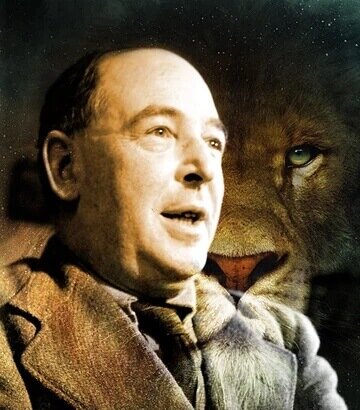
To be clear, I wasn’t bullied during those years. Far from it. I had acquaintances to varying degrees, and I loved them like they loved me. I had family, and I had community — plenty of both. In the Army, I had common cause (for a while, anyways). Once or twice, I even had a sort of romance. However, I struggled to find anything like the depth and loyalty Tolkien described between these characters. I was waiting for the “What? You too? I thought I was the only one,” as C.S. Lewis puts it in his book The Four Loves.
Fellowship, or Friendship, all through those lonely years, sat at the heart of my own deepest felt needs, and here was this story in which everything turns on the friendship of the characters. Cause, nation, community, even romance — all have their roles (even critical roles) in the final defeat of Sauron, but friendship is the undeniable factor that brings our heroes to their victory. When they set about saving the Shire, or restoring the line of Elendil, or stirring the strength of Rohan and Gondor, it was only through the strength of their friend bonds that they were able to carry out these great tasks. Gandalf speaks as much when Elrond is choosing the nine to send out from Rivendell: “I think, Elrond, that in this matter it would be well to trust rather to their friendship than to great wisdom.” Wisdom would demand a warrior of strength — Glorfindel or another elf proven in battle — but Gandalf knew that loyalty depends on strength of love over strength of mind or blade.
In this arena, Tolkien knew whereof he wrote. Many folks are familiar with the Inklings, the Oxford group of literary-minded friends with whom Tolkien met frequently and grew as a writer and philologist. These men, of whom C.S. Lewis was also a key part, helped Tolkien produce The Lord of the Rings, but this was not his only nor even first such experience. In his childhood years at King Edward’s, he formed the Tea Club and Barrovian Society (or TCBS) with three other boys with whom he found what he called “Friendship to the Nth power.” The strength of these friendships carried Tolkien through grief, change, growth, and war.
In fact, the number four shows up again and again. The TCBS had four boys: Tolkien himself, Geoffrey Bache Smith, Rob Gilson, and Christopher Wiseman. While there was a much larger rotation in the Inklings, four of them are usually the first to come to mind: Tolkien, C.S. Lewis, Owen Barfield, and Charles Williams. This pattern can be seen repeated in Tolkien’s writing.
In popular imagination, Frodo and Sam are often held up as the standard of what C.S. Lewis calls Philia, or the friend bond, and this is for good reason, but it is four Hobbits that set out from the Shire. Merry and Pippin’s love and support are also key to getting Frodo more-or-less safely to Rivendell. Without his knowing, they prepare for the journey into an unknown darkness, and their biggest fear is not the danger they all face, but that Frodo will escape them and head into that danger alone.
Even after facing the terrors of barrow wights and Black Riders on the road to Rivendell, they refuse to turn back upon learning that Frodo will go on to carry the Ring into Mordor. Sam boldly sneaks into the secret Council, and Pippin threatens to force Elrond to send him home tied up in a sack. Their determination is part of what prompts Gandalf’s speech to Elrond regarding loyalty over wisdom in saving the day. These four are separated from each other by the end of The Fellowship of the Ring, but they maintain a loyalty that ultimately brings about the waking of the Ents, the cleansing of Isengard, the victory at Helm’s Deep, the victory at Minas Tirith, and the destruction of the Ring. It is not renown these Hobbits seek in any of their actions. At every turn, they are motivated to help their friends and to be reunited with them.
During those years of loneliness, I kept coming back to Tolkien’s story so I could experience something like this friendship, even if only through the lens of fiction. I needed the levelness of a Sam, the cunning of a Merry, the joy of a Pippin, and I could be sure to find them in The Lord of the Rings, even when I wasn’t sure I could find them in life. I kept a pretty thick exterior, but I secretly hoped that since the friendships Tolkien wrote about were based on his experiences, one day I might experience them myself.
Nineteen years is a long time to wait, and the thing about delayed hope is that it is often just as likely to result in a hardened heart as it is a sharpened longing. The Preacher attests to this in Proverbs 13:12: “Hope deferred makes the heart sick.” In being given this gift of Tolkien’s tale of fellowship, in repeated exposure to these perfectly written friendships, a crack always remained in the shell I was tempted to build. Instead of stone, my heart became a seed. On the surface, they might seem to be the same thing — inert, lumpish, maybe even a bit grubby. However, there’s a world of difference if the right conditions are maintained.
By my late twenties, I was so familiar with Frodo and Sam, Merry and Pippin, I could recognize when they finally began to appear, not just in these pages, but right in front of me. Here were the hearts who felt the same burning that mine did. Here were the ones with whom I could freely and totally share my loves, could share a chorus of ringing “What? You, too?” And I was primed to receive them.
The first conversation I had in which my profound love for language and writing was not met with only polite interest or mild bewilderment cracked that seed wide open. I could ramble on and on, and here — at last! — was someone who could follow those trails and show me new ones I hadn’t yet explored. It was he who largely awoke the courage in me to share my poetry. He did so through encouragement, enthusiasm, and even exhortation, when fear would have gotten the best of me.
Another appeared who shared my deep joy in trees and coffee. Towering canopies and tiny leaves haunted our hearts and our art — hers through painting and mine through writing. We could hold forth for hours on terroir, shrub species, and brewing methods to produce the best cup that can be had. She taught me depths of delight as we looked out on the world in wonder together.
A third shared my love for games, for evenings on the porch in the summer, for jokes and tales told over a cigar or pipe and a pack of playing cards. He taught me gentleness and loyalty, and how to let an afternoon just be enjoyed without a need for mining its depths for every ounce of profundity.
Four again, although I admit that these are hardly the only ones. Over the past few years and on into my thirties, I have found an entire fellowship of my own, and it was a wonder.
But there was one other thing Tolkien unexpectedly prepared me for in this tale. He didn’t only write about friendship, he wrote about the loss of it, for this is another reality with which he was well acquainted. Even the most extraordinary friendships may fall to death, to broken hearts forgetting how to communicate love, to overwhelming circumstances that drive people onto different paths they might not have chosen for themselves. Tolkien lost Robert Gilson and Geoffrey Bache Smith to WWI. In later years, although Tolkien’s friendship with Lewis became a famous one in literary history, even they had a falling out, a separation that hurt them both.
Tolkien writes of death and separation in the second half of The Fellowship of the Ring. Gandalf falls in Moria, and the grief-stricken survivors flee to Lothlorien. The final chapter of the book is titled “The Breaking of the Fellowship.” Boromir, clouded by desperation and the influence of the Great Ring betrays Frodo and attacks him. An ambush by orcs then falls upon the company, killing Boromir, and scattering the rest. These are dark chapters, but Tolkien is careful that they are not allowed to end in hopelessness. At one point, when they are met by the elf Haldir on the edges of Lothlorien, he reflects that “though in all lands love is now mingled with grief, it grows perhaps the greater.” After they have all been scattered, as he and Sam walk alone toward Mordor, Frodo remarks “I don’t suppose we shall see them again.” To which Sam stoutly responds, “Yet we may, Mr. Frodo. We may.”
My heart needed to be softened to receive friendship when it appeared, but it also needed to be strengthened to face the loss of some of those I found. It takes a stout heart to let love grow greater in grief, rather than be killed by it. It takes a Hobbit’s courage to hope that sundered roads might be reunited, even when you can’t see how they could. It takes a Hobbit’s faith to forge new friendships, even when the old ones are not yet restored. It took a great book about Hobbits to teach me these things, and I am very grateful to Mr. Tolkien for writing that great book, and to my mother who read it to me.


Related Posts