The Second Reality of Spiritual Pathology
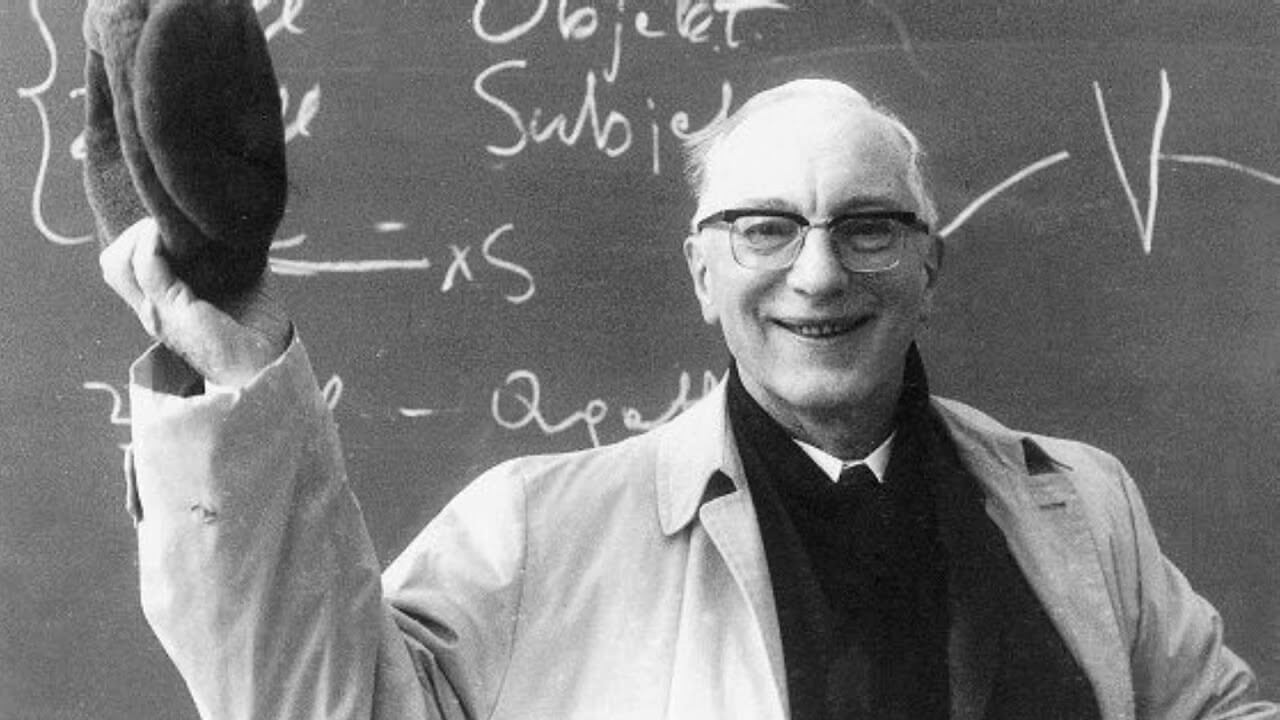
In 1964, at the University of Munich, Eric Voegelin conducted a series of lectures entitled Hitler and the Germans, in which he presented an extensive examination of German society, focusing on the period from 1933 up to the time of the lectures. By then, the philosopher was already recognized as a prominent professor and scholar, having developed his philosophical thought through his extensive bibliography. It was through his profound insight into history that Voegelin was able to present, in these lectures, his deep critiques of the human condition in Germany. Beyond his evaluations of the Nazi regime, Voegelin’s thought sought to denounce the collapse of humanity, which replaces history with gnosis, reason with atrophy, eliminates the spirit, and cultivates stupidity, giving way to the totalitarian movements of ideological gods.
In Hitler and the Germans, Voegelin exposes the nuances of the National Socialist regime in Germany, from the behavior of the German people following the fall of the regime — including the various opinions about Hitler and the “merit stars” awarded to active participants in Nazi actions — up to the philosophical elaboration of how a society emerges in spiritual decline and, from this, enacts its full dehumanization. It is precisely at this point that the essential reflection on the concept of stupidity and its consequences in reality is located.
Much is said about stupidity, not as a concept per se, but as an offensive adjective aimed at degrading or disqualifying someone. However, this type of usage typically falls within the realm of common sense, which is not committed to any specific study regarding what is being judged. In the philosophical sphere, stupidity is often correlated with another term: ignorance, closely linked to Socratic philosophy. Even so, stupidity and ignorance have points of intersection; yet, if we take ignorance as Socrates frames it — using it to ground the maxim “I know that I know nothing” — and stupidity as a spiritual pathology responsible for human decline, as argued by Eric Voegelin, we establish here a significant difference between the two concepts.
However, in order to understand the idea expressed by the German-American philosopher, it is necessary to establish his anthropological view. Voegelin conceives the idea of the human being on the basis of two pillars: reason and spirit. Thus, the human, being grounded in these two pillars, participates in this “world which exists in itself by virtue of a mystery, and the name of this mystery, the cause of this being of the world, of which man is a component, is called God.” This serves as the guiding thread for grasping Voegelin’s argument regarding the primary cause of the Nazi movement, as well as other movements of a Gnostic core.
Thus, what is the relationship between spirit and stupidity that the author develops? Why is stupidity a symptom of this declining spirit? Voegelin, based on his understanding of the human being, asserts that German society of his time — like modernity as a whole — was submerged in a descent into the abyss, characterized by a distancing from reason (as a rational, critical, and guiding tool of the intellect) and a rejection of the transcendent. Stupidity is a sign of this descent, and beyond being a mere sign, it is a demonstration that “all, among the German elite, were involved in the criminality and stupidity of the National Socialist regime, and remain burdened with that involvement to this day.”
In sum, in the author’s thought, the world that is given to us is, fundamentally, divine and therefore transcendent, so that the reality of this world is constituted in its true form (primary reality) by characteristics that lie beyond matter and the values we establish. Considering that this world is transcendental in its conception, and that the human being is likewise transcendental, the only way to comprehend reality as it is essentially presented is to be aligned with reason (one of the anthropological pillars described earlier) and, above all, with spirit.
From the anthropological perspective and the understanding of the world as part of the divine, the question of reality is approached, whereby humanity attains it through the balance of reason and spirit. When these are not properly aligned, reality leans toward a distorted view of what is truly real, because by derailing the human essence, which is by nature theomorphic, the reality is lost, as the self no longer perceives itself in the transcendent, but only in the immanent. Voegelin concludes that if part of what constitutes humanity is lost, for example, the spirit, then humanity itself is also lost.
Spiritual decline, followed by the loss of reality, forms the basis of what Voegelin calls the Buttermelcher Syndrome, or, in the author’s words, “the stupidity of an entire people.” Voegelin develops this syndrome by presenting letters and newspaper discussions from the time concerning Hitler and the Nazi regime; he highlights the passivity, and often the relativism, with which certain people approached the figure of Hitler. The following is a comment cited by Voegelin: Hitler’s only crime was to have been a player who lost — and who took an entire people with him, so that they sank along with him. “Yet all politics is a game, and the gains increase when the stakes are high. Today, we can no longer — and do not wish to — play; therefore, it is also impossible for us to win, except through the highly valued standard of living. But we could still lose more—even without Hitler.”
In the philosopher’s words, “we must have some name for this (with ‘this’ he refers to the comment cited above), and since this gentleman, whose name I will not mention, lives on Buttermelcher Street, perhaps I will call this phenomenon the Buttermelcher Syndrome.” It is from this situation — where part of the German people found themselves in complete apathy toward the events that occurred under the regime, as noted in the highlighted fragment — that Voegelin situates part of his critique of stupidity. The stupidity of an entire people, framed as the syndrome he describes, is, in the author’s conception, an important pillar responsible for spiritual decline and, consequently, for the loss of reality.
However, based on the observations identified, it is possible to see how Voegelinian anthropology, together with the idea of stupidity, is expressed in reality. The human being, understood as a theomorphic being, possessing a logos and a ruach, participates in a reality that derives from the divine and therefore contains attributes beyond morphé. This tautochrony allows the human being, beyond mere participation, to perceive reality through the isochrony that connects them with what is given: the world. Consequently, the corruption of this theomorphism results in the disarray of reality; human “seeing” no longer experiences the spirit of self and of the world.
A consequential reflection then arises: the decline of the German spirit, stemming from an elevated stupidity, led them to the inhuman destiny of Hitlerism, placing them at the epicenter of a worldview that sees the other not as a being, a transcendental part of the whole, but as a thing. Moreover, there seems to be something between spiritual decay and the reinforcement of an idea born from human segregation; there is something between decline and ascent, between stupidity and elimination. What is the purpose of an idea if not to be realized? Hitler did not rely on force to persuade his puppets; on the contrary, he used words, the dissemination of an idea. What is the Gnostic creation of the world, narrated by a representative aiming to bring it into being, if not an ideology disguised as a corrupted reality?
To delve deeper into these questions, it is necessary to mention a major aspect of Eric Voegelin: his critical and combative drive against ideologies. The author in question was a contemporary of the major authoritarian movements of the twentieth century and developed his critique of modernity — especially regarding the decline of the spirit — by observing the rise of these movements. It is through these scenarios that we locate what the author calls the second reality. It has been shown thus far that stupidity, as a pillar of spiritual decline, distances the spirit and, consequently, causes the human being to become estranged from primary reality. Yet, the exclusion of the first reality directly implicates the rise of a second one.
With this conjecture, the rise of a second reality is characterized by Gnostic mass movements, which, in Voegelin’s thought, are ideologies. The second reality is founded on the Gnostic idea that perceives the world as imperfect and, while attributing flaws to it, positions itself as the holder of a gnosis, seeking to implement its ultimate knowledge of things in order to “liberate the world.” These movements, in the author’s words, originate from an intellectual minority, as we can see in the following passage: “We must keep in mind that mass movements are not a constant phenomenon, and that if there is any difference between the masses and intellectual minorities, it is not as great as is conventionally believed. In any case, both exist in social reality. None of the movements mentioned began with the masses; all originated from the intellectuals and small groups.”
In summary, we reach here the final point of discussion regarding the problem of spiritual decline linked to ideological Gnosticism: the second reality. What was the National Socialist Movement, tied to the philosophy of Hitlerism, which underpins Nazism, if not the creation of an alleged knowledge (gnosis) of reality? How can one justify a knowledge that advocates the coming of a third realm through “human purification” when it acts in such inhuman ways?
The second reality is not merely an idealized elaboration of what might come to be, but an ideological reality already imposed, outside of spirit and reason, which establishes its own anthropology and presumes to be benevolent by believing itself to guide humanity toward an eschatology—while in fact creating a fanciful eschatology itself. Consequently, it follows that if an idea (a Gnostic ideological leader) establishes a reality, it becomes the “God” that created it. Regarding this rupture with the divine, Voegelin states that “a society that does not walk hand in hand with God, nor govern itself, is pushed into the arms of the Gnostic thinker.”
Given the sequential details, it is evident that there is a series of reinterpretations: the human being is dehumanized in order to create a new human, while de-divinization occurs — due to the dismantling of the theomorphic being — followed by the re-divinization of this new human within a new truth that will no longer be my truth in the strongest sense of that possessive; it will tend toward the creation of a new world.
The problem of the second reality persists when we consider that, because the Gnostic core believes it possesses absolute knowledge of the world, it formulates false conceptions that are treated as truths, supported by the masses that uphold them. Therefore, stupidity, being the cause of spiritual estrangement and, consequently, the effect of the Gnostic idea, is also responsible for the condition that Voegelin calls pneumopathy, or the pathology of the spirit.
It is evident that the ostensible problem of spiritual decline manifests within reality; in politics, mistakes are common — some can be corrected, while others are irrevocable. Yet even if an error is made, if the human being is in a position of ignorance — in the Socratic sense—and not of stupidity — in the Voegelinian sense — humanity is safer. However, if humanity continues to submit to Gnostic ideologies, it will be destined for complete dehumanization, solidifying the belief cited by Voegelin in The Political Religions: “The belief in the coming of the one who is to inaugurate the new kingdom, the ‘five hundred, five and ten’ of Dante (DVX), is present in the figures and myths of the Führers of our time; and the orders of the new kingdom take the form of associations and the communist, fascist, or National Socialist elites, which thus become the fulcrum of the new organization.”
In conclusion, Eric Voegelin was a relentless critic of ideologies, justifying his stance through the philosophical thought presented here. The work Hitler and the Germans is not merely a historical analysis or a bitter account of events; it is an accusation in which the defendant and the victim share the same space: the human being.


Related Posts