The Spell of Fairy-Tales
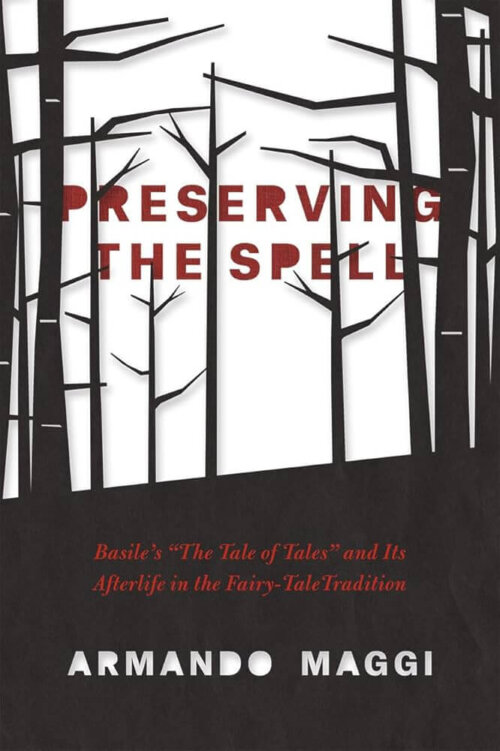
Preserving The Spell is a book by Armando Maggi who is a professor of Romance Languages and Literatures at the University of Chicago. From Maggi’s perspective the modern love for changing of known stories has made us forget what fairy tales had truly been about and instead allowed us to treat it as something to be laughed at or scrutinized. In current times stories such as that of Snow White or Briar Rose are treated as nothing more than a joke which contains within it stereotypes of behavior that according to many modern representatives of culture and politics are no longer applicable to our brave new democratic world. Through his work he not only explores the fairy-tale genre at its essence, but also tries to present us with a way in which we can preserve it during the time of numerous deconstructions of classical tales.
The book is divided into an Introduction and three major sections. Section one covers Basile and his interpretation of the myth of Cupid and Psyche, Section two covers the changes made to Basile’s tales by other authors such as the Grimms along with the importance of the essence of transformation in fairy tale stories as expressed in the poetics of Novalis, while Section three explores Postmodern deconstruction and providing examples of storytelling alternatives through which fairy tales can be preserved. Right off the bat the introduction greets us with a bit of irony for the first words that it greets us with in its title are “Dancing Backward.” This is a reference to a motif present in magical tales in which a musical spell caused masses of people to dance and the only way through which such a spell can be broken is by playing the vile melody backwards. As the author himself explains in the first few opening paragraphs this is an act that we must do to get a better understanding not only of the fairy-tale genre itself, but also the modern problem of current deconstruction that is plaguing it at the current moment. In other words, before we can reunite ourselves with our beloved Beatrice named Story, first like Dante before us we must venture into the deep and terrifying woods of Hell itself.
One of the major components and source of reference present throughout the book is the Tale of Tales collection by Basile. According to Maggi, his work and its latter transformations that took place over various periods of time are a perfect demonstration of the change that led the fair-tale fiction genre to its present fate. A major focus of attention is going to be given to the Grimm brothers and their focus on trying to preserve the “poetry of nature” (page 3) through emphasis on morality and removal of the dirt that was present in the original writings of Basile. Additionally, Maggi goes on to explore the depths of American postmodernism and brings from its depth’s examples of stories which despite their format still contain within themselves the true essence of a fairy-tale story which is the process of transformation or metamorphosis that aids the return of the world to a state of harmonious balance.
The first section and chapters focus primarily on Basile and his retelling of the classical myth Cupid and Psyche. In them Maggi examines Basile’s treatment of the myth that serves as a major pillar in the foundation of Western culture and how it became as Armando himself said “one of the first modern interpretations of the classical tale.” In addition to the analysis of Basile’s work Armando does a comparison of it with the Sicilian Fairy Tales collection written by Laura Gozenbach which within it has rewritings of the tales that were present in Basile’s Tale of Tales. This comparison of the two collections plays a crucial role in exploring the two fundamental aspects of fairy-tale structure which are the beginning and end of a story.
The most crucial element of a story (especially if it is a fairy tale) is the ending and according to Maggi Basile was an author who was able to accomplish it quite well, even though from the perspective of the reader it might come off as quite shocking. This is demonstrated quite well in the last scene of his Tale of Tales collection which after a very natural description of how the wicked slave that tried to take the place of the princess is being punished by being buried alive and having her head sticking out while the real princess is happily dancing with her love. The story ends with Basile as the narrator saying “and I left, one foot after the other, with a little spoonful of honey.” Through these words Basile was referencing the process of mellification and how he as an author was able to accomplish a similar feat by finishing the tale that he has been telling his dedicated audience. Such an ending, along with the last lines following it certainly portrays a scene of contrast at its core in which two aspects of the universe life and death come together to reveal the truth about the world and how it functions. However, as Armando himself points out the way in which truth is revealed at the end of Basile’s collection of tales is less like the happy conclusions of the Grimm’s along with the numerous retellings that followed and more like the episode from the Revelation 10:79 in which the angel says that the consumed scroll “will turn your stomach sour, but it will also taste as sweet as honey.”
The second part of the book along with the following chapters explores another of Basile’s stories from the Tale of Tales collection known as “The Myrtle” along with how the Grimm Brothers and Clemens Brentano used this tale along with the entire Tale of Tales collection to justify their idealistic perception of what a magical or fairy-tale story should be. As previously mentioned, one of the main things that the Grimms did to promote what they believed was the initial spirit of nature and culture of which stories served as a kind of vessel, was by sanitizing or removing anything that might muck it or leave an unpleasant mark on the person consuming it. In chapter seven Maggi goes over this in detail and provides interesting observations on how the dirty, wild, and unique in terms of their dualistic aspects’ tales become tamer and more akin to German romantic tales of magic and whimsy. This section was quite ironically to me personally for the same thing that the Grimms did with Basile’s collection is being done currently by modern authors and deconstructionists who think that the classics must be sanitized and instead serve as embodiments of current pseudo-liberal values instead of the traditional values that have been present in human history from the day that the Lord had created us in his image and likeness.
Another important aspect addressed in chapter eight of part two in Maggi’s book is the well-known tale of Beauty and the Beast and its connection with Georg Novalis’ poetics. In it he does a detailed analysis of the connection that this fairy-tale has with the Cupid and Psyche myth along with how it continues its legacy by being a story that contains the essence of transformation inside of itself. A major point that Maggi brings up in his analysis is that according to Novalis a fairy tale story is not just a silly tale told by adults to their children as many interpret them today but instead a place where nature and history converge to create what he calls a “future world” or reasonable chaos. This to me serves as a perfect embodiment of what is missing in many modern stories, for instead of trying to show us a potential future in which we can become whole again through the process of natural transformation, they present us with a gruesome spectacle in which all the natural values become obsolete and must give way to the values of history which in the current climate are unclear and are known only by those who sit at the top of present day Olympus.
The third and last section of the book looks at American postmodernism and some of the hidden truths that positive examples of this genre reveal about the current state of storytelling in the fairy tale genre. One example of such is Robert Coover’s interpretations of classical stories which do a wonderful job in exploring the evolution of said stories and the state that they embody in modern times because of their evolution. It is quite interesting to note that in his version of Sleeping Beauty Coover portrays a battle of opposites between the tale as it was told by Basile in his Tale of Tales collection and the conventional version of the story that was created through the works of such creators as the Grimms, Perrault, and Walt Disney. From this we see that not all postmodern authors are the same and that some have a degree of understanding and respect for tales in their original form instead of the one which in current times we are keeping alive in a zombie-like state through numerous parodies each more pathetic and gruesome than the last.
In addition to the material covered above, the third section has a detailed, and fascinating coverage of what Walt Disney’s corporate approach had done to our perception of fairy tales. Maggi rightfully points out that through his business strategy of conquering the foreign/mystical and then making it a standard by selling it to the public that has a natural craving for it, Disney has killed the transformative magic of fairy stories by trapping it inside of his multi-million empire which is made up of countless movies, amusement parks, cruise lines, and merchandise stands. In other words, the myths and stories that once fascinated us and served as a guide in helping us become better people in the process have been turned into a tool through which those that sit in power use against us to fulfill their selfish desires and make their personal fantasies of eternal dominion come to fruition. However, despite this unfortunate and bitter truth there is still a glimmer of hope which according to Maggi can be found in the exposed dirty oral roots of the fairy tale tradition which are slowly making their way through the cracks of the flawed foundations of Disney’s or rather the modern American/Western cultural standard empire. In fact, we can already see some good examples of this in certain modern movies such as Puss and Boots: The Last Wish which despite using elements of parody to make fun of cliche fairy tale tropes which is a standard for Dreamworks who well known for their numerous jabs at Disney and their formulaic approach regarding classical stories, is able to tell a modern tale that not only gives us the courage to face on Death (who by the way is a major antagonist of the film) but also reminds us of what a gift our mortality truly is.
Preserving The Spell is informative and engaging reading of fairy tales and the importance of their role in our culture. Many of the questions and issues that are brought up in it are quite relevant today and might provide a good understanding of our culture’s current state to those who are trying to find answers on matters regarding stories and their treatment. For those who love literature, folklore and are interested in storytelling traditions of other cultures this book might provide you with interesting information on classical authors such as the previously mentioned Grimms, along with Giambattista Basile whose collection serves as the point of reference throughout the entirety of the book. If you are interested about the state of modern culture and are looking for alternate positions to that of the “Message” whose poisonous tendrils are everywhere these days, then Preserving The Spell by Armando Maggi is the right choice of literature for you.


Related Posts