The State of English Nature: The Origins of Rights and Liberty in Locke and Burke
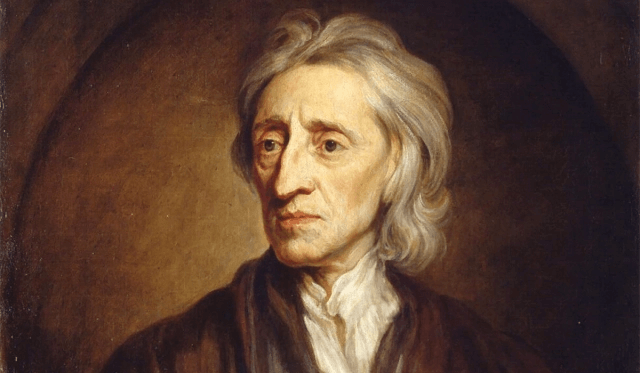
Published a year after the Glorious Revolution of 1688, John Locke’s Second Treatise of Government laid out a conceptual defense of individual rights, legislative supremacy, and limited government. Relying on a political thought experiment to uphold notions of self-preservation, rule of law, and consent of the governed, Locke sketched a liberal framework that derived rights from the premise of man’s innate freedom and equality. In the Lockean analysis, the inviolability of political liberty served as a justification to wage war against any form of absolute power that threatened life, liberty, or estate. A century later in 1790, Edmund Burke undertook his own defense of the Glorious Revolution in his Reflections on the Revolution in France. For Burke, political rights did not spring from an abstract state of nature but from the gradual development of English laws and customs. The blessings of liberty flowed from a hard-earned historical inheritance and a time-tested legal tradition rather than from philosophical first principles. Discounting a Lockian-style theory, which stressed political representation and the protection of property as the foundations of a free society, Burke pointed to England’s cultural habits and institutions as essential to sustaining and ordering liberty.
In response to contemporary defenses of absolute monarchy and the divine right of kings, Locke held that a legitimate society was founded upon individual rights and robust legal protections. To make his case, Locke traced an ahistorical path from the state of nature and the unqualified enjoyment of natural rights to political society where government existed for the preservation of property. In the state of nature, or in the absence of a political state, God endowed individuals with the freedom to live their lives apart from the constraining influence of anyone else. This condition of natural freedom rested upon the assumption that no one had the right to encroach upon a person’s liberty or private goods. Locke drew this assumption from the belief that humankind is God’s creation and property. As God’s workmanship, all individuals shared a common humanity and equality that precluded them from subjugating one another or invading their natural rights of life, health, and possessions. To the contrary, all were bound by reason and the God-given law of nature to preserve oneself and others. “The law of nature,” Locke proclaimed, “willeth the peace and preservation of all mankind” (emphasis in the original).
Locke’s state of nature and principle of self-preservation immediately ran into the obvious difficulty that some will not respect the rights of others. In cases where rights are violated in the state of nature, Locke asserted that everyone wielded the right to punish and restrain offenders of the natural law. Self-preservation dictated a forceful response when a violator of the law of nature threatened to inflict harm on another human being. Because legal jurisdiction did not exist in the state of nature, anyone could make use of the right to be judge and executioner of the natural law against the offending party. Those who committed unjust violence in the state of nature had become less than human and forfeited their natural rights. By infringing upon the rights of others, the transgressor of natural law had declared war on humanity and become like a wild beast that society is collectively obligated to destroy.
Locke observed that the state of nature was never far from devolving into a state of war. Individuals who were willing to impinge upon the rights of others were not likely to peacefully submit to just punishment. The one who sought retribution for the wrongs committed against himself or his friends also was naturally predisposed to mete out a disproportionate penalty that invited a vicious cycle of revenge and injustice. Such a scenario could further deteriorate into a full-on war characterized by the endless attempts of some to exercise absolute power over others, with no higher authority to appeal to other than heaven itself. Given the constant uncertainty inherent to the state of nature, Locke thought it both perfectly logical and God-ordained that people would look to a more stable mode of existence found within a political community. Locke declared “that civil government is the proper remedy for the inconveniencies of the state of nature, which must certainly be great, where men may be judges in their own case.”
Individuals left the state of nature when they mutually agreed to form a civil government. Locke insisted that this process was done by the voluntary consent of all the members of a political society. For Locke, the foundation of all legitimate governments lay in the consent of the people. By freely agreeing to the form of government and answering the question of who would govern, one ensured how property—one’s life, liberty, and estate—would be protected outside of the state of nature. Under a civil government, individuals exchanged their natural liberty, the right to be free from any human authority, for political liberty. Within a commonwealth, liberty now entailed the right to submit to no other political authority than what had consensually been established. Like in the state of nature, individuals were free from any arbitrary power or will and now submitted only to the laws enacted by the government to which they had voluntarily given their consent.
The great improvement of political government over the state of nature was the promulgation of common laws and an unbiased authority who would uphold them. Unlike in the state of nature, victims of injustice now had recourse to standing laws and a magistrate who could settle controversies and impartially restrain offenders. In leaving behind the state of nature, individuals also left behind the right to punish offenses directly and surrendered that right to the community. Since laws safeguarded individual rights, the first act of a commonwealth was to establish a legislative or law-making power. The legislative power was the mechanism by which consent was conveyed in a political society. Because the people had accepted the form of government and the process of selecting their governors, it followed that they also authorized and consented to the decrees of that government, so long as those decrees did not infringe upon one’s property.
Burke, by contrast, began his account of political rights not in a state of nature, but in the aftermath of the Glorious Revolution. In responding to contemporaries who claimed that the Glorious Revolution implied the right to elect and dismiss monarchs, Burke went to great lengths to demonstrate that the Revolution, far from being truly revolutionary, had secured ancient English liberties and fulfilled the spirit of the English constitution. Instead of granting the right to elect kings, Burke argued that the Revolution clearly established a hereditary succession in line with English history and political tradition. Rather than being antiquated and contrary to individual rights, Burke considered hereditary succession, as a part of England’s ancient constitution, an essential bulwark of political liberty and security. For Burke, the origin of rights was intimately connected to a country’s historical inheritance and legal tradition. To reject that inheritance, as the French had done and English radicals proposed to do, endangered the very source of political rights and liberties.
Unlike Locke, who posited universal natural rights, Burke spoke mainly of the rights of Englishmen. Burke derived rights not from Genesis or rational inferences from the state of nature, but from England’s unique historical and constitutional inheritance. From Magna Carta to the Petition of Right to the legal giants of Coke and Blackstone, Burke could boast of England’s track record of preserving and enlarging basic political freedoms. Praising England’s common law tradition, Burke spoke of England’s “pedigree of liberties” and collected reason of the ages. Burke observed that it was the natural tendency of English lawyers and legislators to look to historical precedent, example, and authority. It was the English habit to value and preserve political rights and liberties because they were seen as a sacred inheritance. Englishmen, Burke argued, saw their political privileges as a “patrimony derived from their forefathers.” For Burke, rights were not abstract principles that one passively received by mere virtue of being human. To the contrary, they were acutely historical and had been won only after long struggle and deliberation between men of flesh and bone.
Rather than base rights in some vague speculative notion such as natural equality, Burke identified specific rights laid out in an English constitutional tradition that stretched from Magna Carta to the Declaration of Right. In this sense, the Glorious Revolution had merely preserved an ancient English custom of respect for religion, laws, and liberties. Burke claimed this respect for political rights as England’s patrimony, an inheritance handed down generation by generation and so transmitted to posterity. Apparently overlooking Locke, Burke maintained that it was the English practice to reference no other more general or prior basis for rights and privileges than those which had been handed down from a long line of ancestors. Burke remarked that “it has been the uniform policy of our constitution to claim and assert our liberties, as an entailed inheritance derived to us from our forefathers, and to be transmitted to our posterity; as an estate especially belong to the people of this kingdom without any reference whatever to any other more general or prior right.” Expressing contempt for the idea that government should be based solely on choice or consent, Burke found more comfort in fixed English laws and constitutional peculiarities than in fictitious rights.
For Locke, political liberty was inextricably tied up with law. Locke considered law not as limitation but as direction for individuals to pursue their own welfare. Understood rightly, law served to enlarge rather than restrain liberty. This proper understanding of liberty depended upon Locke’s distinction between liberty and license. Even in the state of nature where individuals enjoyed unrestricted liberty, no one possessed the license to fulfill every whim or desire. While not bound by civil law, denizens of the state of nature were still obligated to abide by natural law, which restricted them from intruding upon the liberty of others. Rather than anarchic lawlessness, liberty implied self-government and the ability to freely order one’s life and possessions within the allowances of natural and civil law. Liberty, for Locke, meant the freedom to follow one’s own will, and not the arbitrary will of another. Liberty, in other words, implied freedom from the state of war.
Locke’s essential claim was that the absence of law resulted in the absence of freedom. Only where law existed could individuals truly be secure from arbitrary violence. It had been the inability of the state of nature to provide a satisfactory hedge against the state of war that had motivated individuals to seek shelter under the established laws of civil government. Locke pointed out that no rational person would choose to leave the state of nature for a different state where liberty and property were less protected; but rather than altogether disappearing, the danger of absolute power increased with political society. Locke noted that it was far worse to face the arbitrary power of one who had the command of 100,000 than the arbitrary power of 100,000 disunited individuals in the state of nature.
A legitimate political society thus sought to diffuse power wherever it was in danger of being misused. The balancing of the powers of government provided one check on arbitrary power. By placing different constitutional powers in different hands, the threat of absolute power was diluted and liberty better secured. Besides a balanced constitution, Locke argued that positive law should reflect the natural law. Rather than replacing the laws of nature, civil laws made them explicit and ensured their observance. Because human laws had to conform to the laws of nature, absolute power could never be tolerated within a commonwealth. Under no circumstance could the legislative power order the violation of one’s fundamental right to life and liberty without just cause. Constrained by its ultimate purpose of preserving property and preventing arbitrary violence, the legislative was barred from carrying out the capricious acts of a tyrannical power.
Describing the legislative as a fiduciary power, Locke proclaimed that civil government was entrusted with its authority. Government derived its power to execute laws through the consent of the governed, who had judged political society a better guarantor of their life, liberty, and property than the state of nature. Since legislative authority ultimately derived from consent, it was the people that had the final say over their own government. If the powers of government were ever arbitrarily used to invade one’s property and liberty, the people reserved the right to alter or dissolve that government. In such an instance where government repeatedly misuses its authority and unlawfully infringes upon the lives, liberties, and fortunes of the people, that society has entered into a state of war and each individual possesses the right to take back their natural liberty and form a new government that better provides for their security and liberty.
When confronted with a Lockean analysis of the Glorious Revolution as the people taking back their natural liberty and installing a new government, Burke expressed disgust at the idea that such an event had occurred. Besides showing the compatibility of the Glorious Revolution with English legal tradition, Burke deemed it absurd that a society could ever truly dissolve itself and then reconstitute itself for the better. Because Burke asserted that rights arose out of a political tradition and cultural context, he believed that liberty would not be so easily reestablished as Locke imagined. Rights and liberties could not simply be taken up as natural possessions, but depended upon political traditions and legal customs. In the event that society was dissolved due to revolution, so was the basis for individual rights and protections. Where Locke asserted the right to rebel, Burke questioned how a new government would ensure the protection of rights and liberty.
Burke maintained that any assessment of liberty had to take into account the circumstances in which it is exercised. Defining liberty more freely than Locke, Burke described the spirit of liberty as a powerful force that could drive individuals to perform both great and wicked acts. Liberty, if it were to become compatible with society, had to be ordered and made rational. Burke observed that “liberty, when men act in bodies, is power.” If not directed, liberty resulted in an unpredictable expression of power that could make freedom a curse rather than a blessing. Burke saw the role of social institutions as regulating liberty such that it became safe for political life. Through the moderating elements of religion, social norms, and civil obedience, liberty became harmonized with free society. If liberty was not regulated by these institutions and habits, Burke thought liberty would devolve into anarchy.
While Locke passed over the importance of long-established institutions and customs for sustaining liberty, Burke considered then indispensable. As opposed to natural rights or individual reason, moral and regulated liberty arose out of ancient social practices and well-paved rules of life. In these “general prejudices,” men slowly discovered “the latent wisdom which prevails in them.” Burke declared that civil institutions should be revered because they were ancient and offered moral direction. Contrary to Locke, Burke held a low view of the power of human reason to both justify political society and employ liberty productively. Because reason was fallible, Burke considered ordered liberty a gift of inheritance. It was only through the latent wisdom of cultural practices and ancient institutions that liberty became moral and meaningful.


Related Posts