Father of the Nocturne: On the Music of John Field
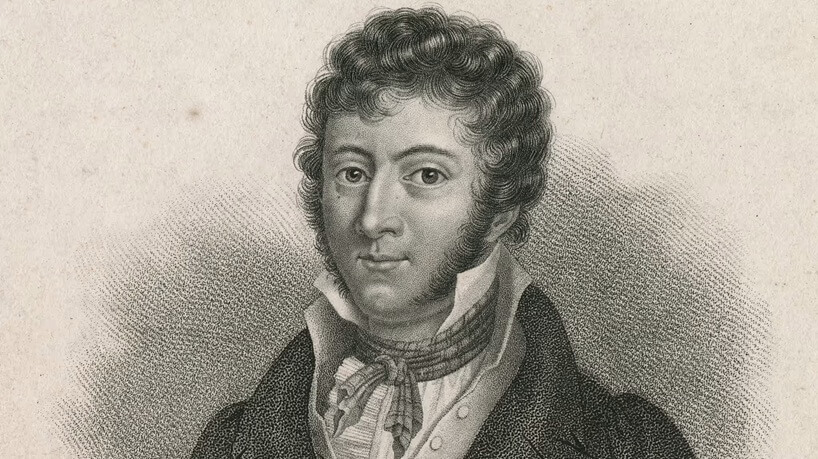
Say the word “nocturne” to anyone remotely familiar with classical music and they’ll probably answer with one word: “Chopin.” This is an understandable response, given that Chopin’s nineteen nocturnes arguably established the nocturne as a type of music. But Chopin was not, in fact, the founder of the nocturne. He built on a foundation established by the Irish composer John Field (1782 – 1837), who wrote seventeen nocturnes beginning in 1814 that ultimately provided a template for Chopin and others to follow. A recent album released on the Deutche Grammaphone label presents these nocturnes for the first time, performed by the award-winning German pianist Alice Sara Ott.
What is a nocturne? As the word suggests, it is a piece of music usually associated with night or evening. Nocturnes evoke a pensive, elegant mood, a kind of delicacy that is reminiscent of a lullaby. Perhaps the best example of a typical nocturne is Field’s Nocturne No. 1, the first track on the album. Field’s melodic sensibility is smooth and lyrical, and Ott presents the right-hand line with exquisite touch and delicacy. Ott has said in public statements about the album that she felt, upon discovering Field’s nocturnes in adulthood, that she had known them forever. Her playing, which offers each note with pristine clarity and just the right amount of weight, made me feel as if I, too, had known these pieces forever.
Field is a master of melody, but he is also a master of accompaniment. Each nocturne has its own unique secondary texture, whether in the form of a running line or a series of perfectly placed chords. Ott highlights these secondary textures with remarkable clarity and balance. Nocturne No. 3 in A-flat major, for example, features a charming accompaniment line that brightens, rather than overshadows, the vocal line in the right hand. And the Nocturne No. 9, while overall a darker and more resigned piece than the other nocturnes, nonetheless flows easily through Field’s elegant and energetic accompaniment voice.
Some of the nocturnes have titles, and Ott is careful to embody them in her playing. Nocturne No. 15 in D Minor, for instance, is titled “Song Without Words,” and Nocturne No. 6 in F Major is titled “Cradle Song.” For this piece, Ott evokes the tender image of an infant in a cradle by sustaining a whispering pianissimo with remarkable clarity. Nocturne No. 10 is titled “Pastorale,” and although it contains some of the more difficult and virtuosic material in the set (“playful cascades,” Ott calls them), Ott captures the tender playfulness of the music with ease and placidity. Perhaps the best example of Ott’s efforts to embody Field’s titles is Nocturne No. 12, which is titled “Noontide.” The end of the nocturne contains a note that is struck twelve times in succession; over that note, Field writes “Like a bell.” To achieve this effect in the recording, Ott removed the piano lid, muted the appropriate string with her left thumb, and played the note three octaves higher than written with her right hand. The result is, indeed, like a bell.
I’ve written before in these pages about “bridge” composers: composers who arrive between eras, who bridge the gap between the musical has-been and the musical will-be. I believe John Field is one such composer. One can hear the past and the present in his music. There is an unquestionable Beethovenian influence (which is not surprising given that he studied with Beethoven’s teacher), but is also a strong hint of Chopin, Liszt, and Scriabin. In this way, Field’s music is like a puzzle piece that fits neatly into a space that has lain empty too long. And while the name John Field may never reach the stratospheric heights of Chopin or Liszt, Ott has done us a great favor by sharing the music of this overlooked Irish master.


Related Posts