Revolt in José Ortega y Gasset’s “The Revolt of the Masses”
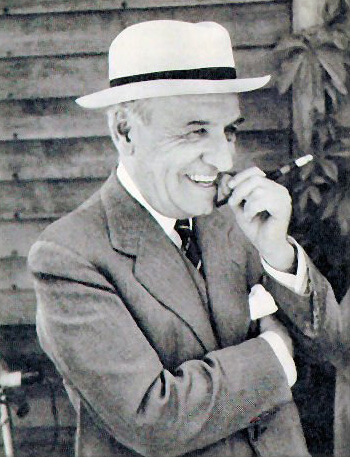
There are no longer protagonists; there is only the chorus. ~ José Ortega y Gasset
Revolt.
In a reductionist and censorial age, as is the current state of thought, reason and values in postmodernity, revolt is afforded an alleged progressive connotation, flair and chic appeal that blinds unsuspecting, unthoughtful people, as if under the effects of a perpetual rabbit punch.
The Spanish philosopher José Ortega y Gasset published his now classic book The Revolt of the Masses (La Rebelíon de las Masas) in 1930. While Ortega addresses the metaphysical and existential crisis of man at the height of modernity, the words ‘revolt,’ ‘mass’ and ‘noble’ man have often been subjugated to serve the ideological whim of people who have a Marxist ideation of human nature and history, critics who have never read The Revolt of the Masses, and academics who ignore Ortega’s metaphysical/existential proclamations in the book, turning Ortega’s metaphysical/existential concerns into what the Madrileño thinker views as superficial life: timely social/political platitudes.
The Revolt of the Masses is a book of philosophy that uses ‘on the ground’ examples of the state of the human condition, circa the 1920s, to explain the plight of free will and the hierarchy of values in modernity.
Why the apparent confusion over what Ortega means by revolt (rebelíon), mass and noble man? Ortega is meticulous in his explanation of these terms in the first eight pages of The Revolt of the Masses. A proper understanding and appropriation of his terms sets the stage for a comprehensive and intellectually honest concurrence of what the Spanish thinker sets out to accomplish in the book.
One problem that some misguided readers encounter in The Revolt of the Masses is that, as a free thinker and classical liberal who places the onus of free will, duty and responsibility on the individual, Ortega does not write for the graduate seminar fraternity.
Considered one of the greatest essayists in the Spanish language, Ortega explores the topics of his essays as only essayists can: he thinks along with the reader in an exploratory form of ‘show them, don’t tell them.’ This demands perspicuity, vision and intellectual responsibility on the part of the reader.
Revolt, Mass and Noble Man
From the start of The Revolt of the Masses Ortega ties the book to his first book, Meditations on Quixote (Meditaciones Del Quijote, 1914) and his essay “Adam in Paradise” (“Adan en el Paraíso,” 1910). Possessing knowledge of these two texts is crucial for understanding Ortega’s program of philosophy throughout his complete works.
Meditations on Quixote is the cornerstone that establishes the trajectory-to-be of Ortega’s philosophy of Vital Reason. Ortega achieves at least three important philosophical tasks in Meditations on Quixote, all which point to man as a metaphysical/existential being who must reflect on his own existence, not as a luxury, but for survival.
The first of Ortega’s tasks in Meditations on Quixote that he accomplishes is the idea that life, human activity, especially theory, must be justified. The justification of human existence that Ortega presents readers with in this seminal book predates Jean-Paul Sartre’s same idea by more than three decades.
The second task of Ortega’s in Meditations on Quixote is the suggestion that individual human existence requires a ‘life-plan.’ That is, human existence is a solitary task that introduces singular circumstances that must be addressed by the individual. This is why Ortega says that life is a ‘heroic act.’ This is crucial in order to understand the role of mass and noble man in The Revolt of the Masses.
Ortega’s third achievement in Meditations on Quixote points out another of the staple characteristics of existential philosophy, philosophy of existence and existentialism: noble man’s reflection, introspection, and cultivation and respect for authenticity. The authentic life embraces the demands of objective reality and strife. To take the road less travelled and address human contingencies head on are staples of living an authentic existence – what Socrates calls the good life.
Meditations on Quixote is an existential reflection on the nature of the differentiated person in lieu of noninterchangeable personal circumstances. Meditations on Quixote utilizes the image of Don Quijote as a form of being to understand destiny, as this informs the lives of individuals. Quijote’s destiny is a singular occurrence. For this reason, reflection on existential inquietude garners engagement and respect for human reality.
Meditations on Quixote explores man’s responsibility in separating truth from appearance. Ortega uses the forest that surrounds the Spanish Monasterio del Escorial, about 36 miles from Madrid, as a vehicle to showcase man’s need for existential reflection. Reason, Ortega writes, must distinguish the forest from the trees, thus allotting truth the unifying power to locate the human condition and its proper role in reality, especially as this pertains to self-reflective, differentiated persons.
In “Adam in Paradise” Ortega cites the biblical Adam as the proto-first man. The significance of this is that, existentially speaking, everyone, Ortega contends, is a proto-first man, just like Adam. Human existence does not come with a manual. “Adam in Paradise” is a significant work, where Ortega analyses the importance of the circumstance as the ‘cross,’ as it were, that everyone must bear. Lacking a manual for life, living and the world, the proto-first man, that is, everyone, must save, (Ortega uses the word ‘salvar’) their circumstances.
Revolt (Rebelíon)
In the first pages of The Revolt of the Masses Ortega explains that the crisis of mass man has occurred before in history. Agglomeration is not new. Yet, at the time of the book’s publication, 1930, this crisis had taken on unprecedented existential qualities, mainly that it is a rebellion against the demands and contingencies made on individuals by life itself. As such, modern man ‘turns against’ (rebelíon) existential demands by forsaking free will, which Ortega suggests has become a burden in modernity.
The existential context of The Revolt of the Mases has modern man initiating an unprecedented existential tantrum, a turning against strife and the alleged weight of free will. Thus, in this context revolt (rebelíon) is best conveyed as ‘contempt for’ and ‘defiance’ for having to make choices, the weight of consciousness, and hollow defiance of conformists in a self-conscious era. This performative contempt for free will is what French existentialism later referred to as ‘existential ennui.’ But existential exhaustion or fatigue is only the tip of the spear of what Ortega defines as mass man.
Ortega tells readers, “In order to understand this formidable fact, it is important from the start to avoid giving to the words “rebellion,” “masses,” and “social power” a meaning exclusively or primarily political.”
Some Characteristics of Mass Man
An accurate understanding of mass man, which Ortega describes in fine detail throughout The Revolt of the Masses, and which informs the entire body of his work, will afford conscientious readers of Ortega a sounder appreciation for his thought.
Civilization, Ortega maintains, comes about through the toil, strife and visionary sacrifice of noble man. Ortega’s philosophical anthropology is grounded in moral/spiritual aristocratic values. Like Nietzsche and a slew of other philosophers, Ortega argues that a noble aristocracy of merit offers man the best chance to establish stable societies. That is, Ortega understands the hierarchy of values – objective values – as the well that must be tapped in order for man to create and, most importantly, maintain the height of civilization: “We see the multitude, as such, in possession of the places and the instruments created by civilization.”
Ortega breaks down the existential crisis of mass man in The Revolt of the Masses. However, he does not conceive this crisis in terms of agglomeration. The ‘multitude’ has always existed, he tells readers. The problem of the multitude (muchedumbre) in modernity, as Ortega explains this, is that multitude becomes a concern for the stability of society once the multitude becomes self-conscious: “The individuals who made up these multitudes existed, but not qua multitude. Scattered about the world in small groups, or solitary, they lived a life, to all appearances, divergent, dissociate, apart.”
The question of the multitude is conceived in Ortegan terms, not as a problem of quantification, as this sociological platitude has presented us with for a long time, but rather one of quality that turns the multitude into a ‘social mass.’ Why is this the case?
For Ortega, “society is always a dynamic unity of two component factors: minorities and masses. The minorities are individuals which are specially qualified. By masses, then, is not to be understood, solely or mainly, ‘the working masses. The mass is the average man.’”
Ortega’s concern for qualitative values, in lieu of the masses, is existential in nature: “it becomes the common social quality, man as undifferentiated from other men, but as repeating in himself a generic type.”
Thus, mass man becomes a self-conscious imitator of others. Shedding the skin of individuality for a collective identity, mass man is able to establish a realm of social/political dominance over noble man. Safety in numbers. Ortega is clear on this point: “To form a minority, of whatever kind, it is necessary beforehand that each member separate himself from the multitude for special, relatively personal, reasons. Their coincidence with others who form the minority is, then, secondary, posterior to their having each adopted an attitude of singularity, and is consequently, to a large extent, a coincidence in not coinciding.”
The characteristics of mass man are so well defined, Ortega argues, that, “in the presence of one individual we can decide whether he is ‘mass’ or not. The mass is all that which sets no value on itself – good or ill – based on specific grounds, but which feels itself ‘just like everybody,’ and nevertheless is not concerned about it; is, in fact, quite happy to feel itself as one with everybody else.”
After having established that there are no valid reasons to confuse or misconstrue what Ortega means by mass and noble man, it remains the responsibility of thoughtful, intellectually honest and non-ideological readers to properly appropriate the meaning of these terms as explained by Ortega.
To conclude this essay, it is best to let Ortega speak for himself, and present old and new readers of his work, a general readership, and academics alike, with some apt, however unexhaustive, staple characteristics of mass man:
Mass man: “Those who demand nothing special of themselves, but for whom to live is to be every moment what they already are, without imposing on themselves any effort towards perfection; mere buoys that float on the waves.”
Mass man is an existential, moral, spiritual malaise that infects the ‘lower’ and ‘upper’ classes alike: “But, strictly speaking, with both these social classes, there are to be found mass and genuine minority. As we shall see, a characteristic of our times is the predominance, even in groups traditionally selective, of the mass and vulgar.”
Ortega has choice words for what he considers the most dangerous type of mass man to society – intellectual mass man: “Thus, in intellectual life, which of its essence requires and presupposes qualification, one can note the progressive triumph of the pseudo-intellectual, unqualified, unqualifiable, and, by their very mental texture, disqualified.”
“The mass, without ceasing to be mass, is supplanting the minorities.”
“Thus – to anticipate what we shall see later – I believe that the political innovations of recent times signify nothing less than the political domination of the masses.”
“To day we are witnessing the triumphs of a hyperdemocracy in which the mass acts directly, outside the law, imposing its aspirations and its desires by means of material pressure.”
“Now, on the other hand, the mass believes that it has the right to impose and to give force of law to notions born in the café.”
“The characteristic of the hour is that the commonplace mind, knowing itself to be commonplace, has the assurance to proclaim the rights of the commonplace and to impose them wherever it will.”
“The mass crushes beneath it everything that is different, everything that is excellent, individual, qualified and select.”
“Nowadays, ‘everybody’ is the mass alone.”
And so on Ortega contends.


Related Posts