T.S. Eliot on “Tradition and Individual Talent”
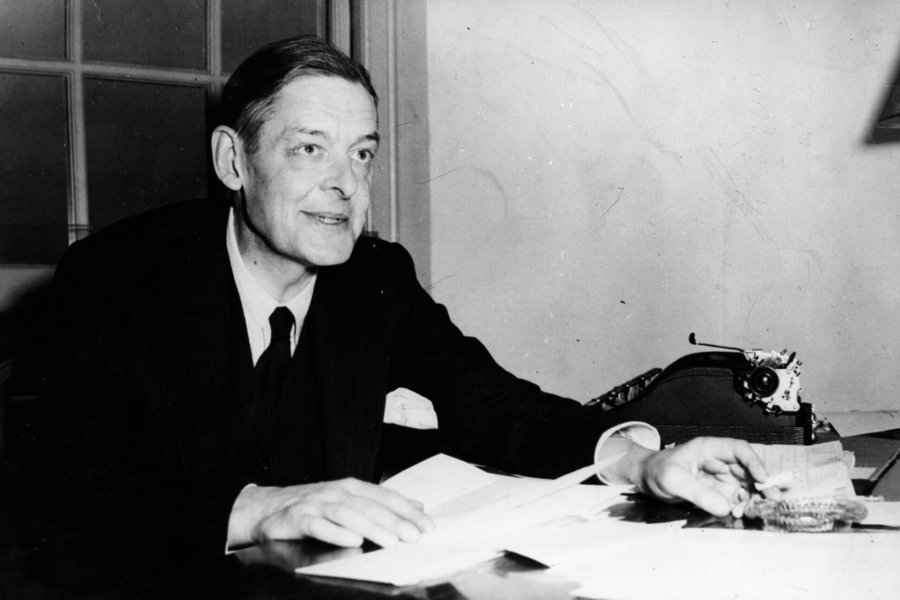
Published in 1920 in a literary magazine called The Egoist, “Tradition and the Individual Talent” is one of T. S. Eliot’s seminal essays. Eliot was recognized as one of the spokesmen of New Criticism upon the publication of this essay. The essay probes into the necessary relationship between tradition, as a point of departure, and the individual talent of the poet as an ultimate telos or end. It also discusses how art, in general, and poetry, in particular, are not created separately or in a vacuum but through an unrelenting engagement with the continuum of literary and cultural tradition. This is what Eliot calls “the pastness of the past.” In this vein, Eliot suggests that Individual Talent is but a corollary of a thorough engagement with tradition. Therefore, this article expatiates the ideas inherent in Eliot’s essay and how he draws on the relationship between the poet and tradition.
In considering “Tradition and the Individual Talent,” it is necessary to remark at the outset that when T. S. Eliot is referring to Tradition, he is not simply referring to tradition as a blind way of following, adhering to, and imitating the success of our predecessors. He declares: “Yet if the only form of tradition, of handing down, consisted in following the ways of the immediate generation before us in a blind or timid adherence to its successes, “tradition” should positively be discouraged.” Eliot asserts that the contemporary use of “tradition” has immediate negative connotations, namely when we apply it to denounce a particular poet as “too traditional.” Hence, tradition, in this context, aligns with a kind of opprobrium.
Accordingly, the tradition that Eliot espouses is a tradition that is more profound and significant in the sense that it requires and consists of what he calls: “the Historical Sense.” This latter is altogether ineluctable to any poet who seeks to surmount the limitations of the present time. It is through this “Historical Sense” that the poet becomes interminable. That is to say, it allows the poet to persist over time and escape a state of ephemerality. This “historical sense” calls for a deep awareness and profound perception of the literary tradition that precedes the poet. This “historical sense” also involves, in the second place, that the writer should not be confined only to his own generation while they are writing; they should not write with the idea that they are living at the pinnacle of what humanity has ever achieved. Instead, the writer should draw on the tradition of his country and regard it as a point of departure that will help them to be innovative and resourceful:
the historical sense involves a perception, not only of the pastness of the past, but of its presence; the historical sense compels a man to write not merely with his own generation in his bones, but with a feeling that the whole of the literature of Europe from Homer and within it the whole of the literature of his own country has a simultaneous existence and composes a simultaneous order.
Tradition in this context is not just the sense of the old, but the sense of the ongoing effect and relevance of the old in the modern period. Hence, the historical sense is both timeless and temporal. Moreover, Eliot notes that our evaluation of poets cannot happen in isolation, for the poet cannot have his meaning alone. He needs to be set, either for contrast or for comparison, among dead writers. “No poet, no artist of any art, has his complete meaning alone. His significance, his appreciation is the appreciation of his relation to the dead poets and artists.”
Upon delving into Eliot’s argument on tradition and the historical sense, it becomes evident that his argument extends beyond this juncture, advancing into the realm of “depersonalization” or, more properly, “impersonal theory of art.” The poet must sacrifice themselves on the altar of something more invaluable and laudable than themselves. Therefore, this “impersonal theory” involves, in the first place, a perpetual sacrifice and an extinction of personality on the part of the poet. Through “depersonalization,” poetry takes on an approach analogous to science. In other words, the locus of honest criticism, as Eliot calls it, shifts from the poet to the poetry itself, emphasizing the significance of the artistic creation over its creator. This also underscores the importance of the remoteness that must exist between the poet and his poetry, meaning the hermeneutic autonomy of the text. This further emphasizes the significance of maintaining a necessary remoteness between the poet and their poetry, highlighting the hermeneutic autonomy of the text.
Therefore, Eliot suggests that cognizance, appreciation, and apprehension of the past and present will help the poet develop a consciousness wider than their own. Accordingly, the poet will surrender their limited individuality and attain a more significant, perceptive, and astute individuality. Thus, the poet will become a cogent medium rather than a mere personality that yields a catharsis of visceral ideas and feelings. Eliot also seems to hold the view that for a people to have great poetry, the preliminary step is the symbolic death of the poet. This is writ large in the second part of the essay when he declares that: “the poet has, not a “personality” to express, but a particular medium, which is only a medium and not a personality, in which impressions and experiences combine in peculiar and unexpected ways.
In the second part of the essay, Eliot explicates the theory of “impersonality” more meticulously. As delineated in the preceding discussion, he argues that poetry ought to serve solely as a medium of expression bereft of overt feelings and emotions. Nevertheless, while feelings and emotions permeate the artistic process, they remain notably absent in the ultimate product. In so doing, Eliot draws on the analogy of the catalyst, which essentially refers to a chemical procedure in which two gases are intermingled in the presence of a fibre of platinum. These two gases eventually form sulphurous acid. This combination only takes place when platinum is present. However, in the final result, there is no trace of platinum. This analogy seems to point out that the poet’s mind should function like a catalyst agent in the creative process; it affects but does not get affected. The poet draws on the literary tradition of their country, yet in this artistic process, their sense of innovation and resourcefulness does not get demoted or eroded. By drawing on this analogy, T. S. Eliot suggests that the process of engaging with tradition does not in any way diminish the poet’s literary abilities. Rather, it serves as a recourse that enables the poet to whet and hone their creativity. In this regard, tradition determines the individual talent: This process allows the poet the chance to construct or reconstruct incidents in a realm in which he maintains absolute control. This idealized created world can provide the poet with many of the things his actual circumstances deny him.
The “impersonal theory of art” espoused by Eliot seems to be diametrically opposed to the premises of the Romantic poetics of self-expression. Eliot’s perception of poetry is markedly different from that of Wordsworth, who asserts that poetry is “the overflow of powerful feelings: it takes its origin from emotion recollected in tranquillity.” On the other hand, Eliot argues that: “Poetry is not a turning loose of emotion, but an escape from emotion; it is not the expression of personality, but an escape from personality. But, of course, only those who have personality and emotions know what it means to want to escape from these things.” Thus, we can safely infer that although he is not altogether critical of the Romantics, Eliot repudiates their view of poetry as a means of self-expression. Nevertheless, this repudiation of the Romantics’ view of poetry, namely Wordsworth’s view, becomes more acute when Eliot declares at the end of the second part of the essay that what Wordsworth calls “emotion recollected in tranquillity” is an “inexact formula.” Therefore, in his critique of the Romantics, Eliot suggests that great poetry always seeks to be impersonal.
In the third and last part of his essay, Eliot declares that “Tradition and the Individual Talent” refrains from delving into the metaphysical orbit, steering instead toward practical and plausible conclusions. He concludes his argument by pointing the reader toward the notion that the redirection of focus from the poet to poetry should permeate literary criticism. This redirection will eventually prove salutary and edifying as it will create a rather objective approach to literary works. It will also buttress a profound understanding of the continuum of poetry and literature.


Related Posts