
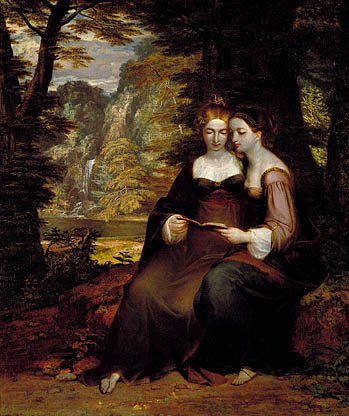
I have always loved Shakespeare’s A Midsummer Night’s Dream, ever since I first read it in my high school drama class. Perhaps I was drawn to it initially because it is considerably shorter and more easily understood than many of his other works; perhaps it was the magical and other-worldly…
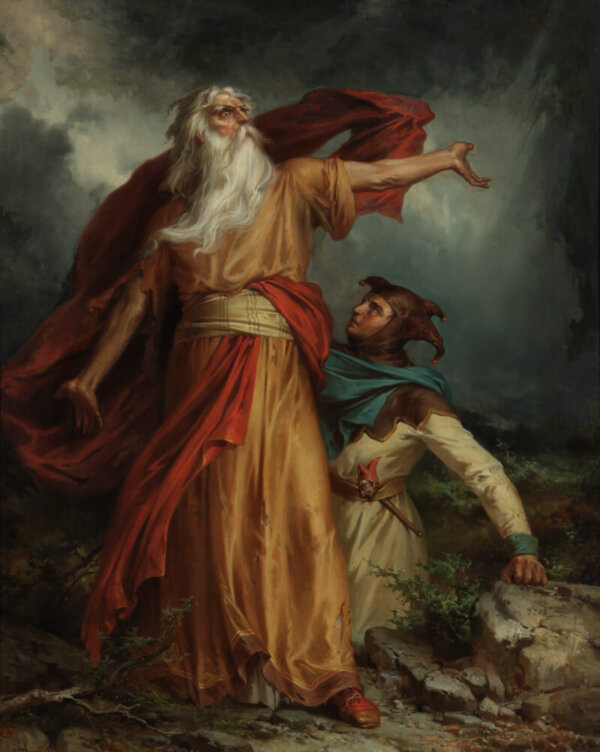
Return to Zero: Lear and Gloucester After raving through suffering and storm, King Lear is seared by an insight, one as dramatic as the lightning flashing in the sky. Led by the disguised Kent to the barest of shelters, a hutch or “hovel,” Lear hesitates before the entrance. To use…
Featured Content
Shakespeare is widely recognized as one of the preeminent poets of the English language. Throughout his poetry, readers encounter both the lighter and…
It has no meaning in itself, but may offer one: To the incidence that Shakespeare was born In the year Michelangelo died, it’s…
Not to be known of senators, Or ediles, spreading out their hands To Rome’s observant mob; to wars We struggle, nor in foreign…
I have spent several weeks preparing to lead a weekly after-school club on Shakespeare. In the process of doing so, I have returned…
The Comedy of Errors is a play about a Syracusan man named Antipholus who wanders in Ephesus with his servant Dromio in search…
William Shakespeare is widely considered the “greatest” of England’s many poets and writers, a dramatist whose works stir the heart and mind in…
William Shakespeare is the immortal bard of the English language, the great dramatist of the human soul on the human stage. Shakespeare is…
Alexander Pushkin (1799-1837), the “Father of Russian Literature,” is most famous for his poetry, but later in his life he increasingly published prose.…
A Review of Art, Culture, Politics, Science, and Divine Ground
VOEGELINVIEW is the online arts and humanities journal of the Eric Voegelin Society and is dedicated to humanistic renewal and learning in art, culture, and criticism. The journal is also devoted to the preservation and promotion of the life and work of our namesake, Eric Voegelin, who was, in his life, a living embodiment of the interdisciplinary intellectual ethos that this journal honors. In the words of the Eric Voegelin Society, we exist as “an educational organization devoted to the revitalization of teaching and understanding of Eric Voegelin’s work and fundamental expressions of human civilization in art, literature, science, and politics.”
The Eric Voegelin Society publishes VOEGELINVIEW. The journal also has partnerships with Louisiana State University’s Eric Voegelin Institute and the University of Wisconsin’s Center for the Study of Liberal Democracy. Potential contributors should consult our submissions guidelines and our policy on questions of copyright and publication for possible concerns and questions regarding to the content published here. VOEGELINVIEW welcomes unsolicited submissions on a rolling basis.
If you have questions, you can email our editor-in-chief, Paul Krause, at [email protected].
Announcements



I have always loved Shakespeare’s A Midsummer Night’s…
Return to Zero: Lear and Gloucester After raving…

Shakespeare is widely recognized as one of the…

In The Australian, July 22-23, 2023, there was…
For most scholars, the texts of Plato’s dialogues…



In ancient Japanese mythology the Golden Kite, one…

In August of 2019, The New York Times…
Abraham Lincoln is America’s greatest and most important…
“Most thought-provoking for our thought-provoking times is that…
*Note: This was originally a paper presented at…
Hannah Arendt and Eric Voegelin are two of…

Throughout the Christian world, except in Germanic-language countries,…

Robert Sapolsky’s, Behave, published in 2017, provides evidence…

To any software engineers out there pondering this…
Through technology, humans enhance their natural abilities. Consider…
William Shakespeare is widely considered the “greatest” of…
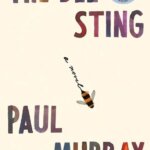
Paul Murray’s The Bee Sting is an intense,…


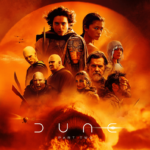
Several years ago, Hollywood briefly released a slate…
VOEGELINVIEW depends upon the generosity of readers like you, gifts that are tax deductible to the fullest extent of the law. The Eric Voegelin Society is also a 501(c)(3) organization (Tax ID 45-5508836). The Eric Voegelin Society, which publishes VOEGELINVIEW, can be supported through Nicholls State University by going here. Make sure to write “Eric Voegelin Society” in the comments when providing a donation by credit card.
Please contact David Whitney at [email protected] for instructions of how to make a contribution to VOEGELINVIEW or the Eric Voegelin Society by check if that is your preferred method of donation.
William Shakespeare is widely considered the “greatest” of…
Paul Murray’s The Bee Sting is an intense,…

In his Autobiographical Reflections, Eric Voegelin recounted the…
Owen Barfield was a member of the Inklings,…
In his Autobiographical Reflections, Eric Voegelin recounted the…
Martin Heidegger (1889-1976) is, without question, the greatest…

In an age of canon destruction, definition confusion,…