A Tale of Two Buildings and Two Types of ‘Intelligence’ – Reflecting on Magnifica Humanitas
Long before the publication of Magnifica Humanitas, many believed Pope Leo XIV’s inaugural encyclical document would address artificial intelligence; those hopes were not in vain. Long before Leo issued this groundbreaking foray into AI and the ethics its use demands, he was an outspoken proponent of reclaiming critical thinking and sound judgment. Long before the cardinals elected Leo as the new pontiff, the Catholic Church has defended the rights of the human person.
AI is all the rage right now as countless businesses and employees have to come to terms with implementing AI into their workflows or else evaluating how to market products in a digital frontier where generative engines are the web-scouring apps of the future. It’s also tied to numerous real-world ethical concerns and has served as fodder for the plots of many a sci-fi movie – from the 1968 classic 2001: A Space Odyssey to last year’s Mission: Impossible – The Final Reckoning. Far removed from dystopian fantasies, the pope takes a more sobering, balanced approach that comes from a place of discretion and deep concern for the welfare of mankind.
The days leading up to the encyclical’s release saw many Catholics in the blogosphere weigh in on AI – some more prophetically than others. An essay in First Things, for example, aptly blamed humans, not AI, as the source of our underlying moral dilemmas, a sentiment I believe the Holy Father would agree with. Unfortunately, the piece also seems to favor delegating the human task of discerning truth and morality, together with their communication to those around us, to AI writers and curators, rather than college professors and human commentators. (The writer insinuates that such a move would do no great harm to academia, which he deems was long ago corrupted.) But the pope makes it abundantly clear in his encyclical that the gift and responsibility of decision-making (which necessarily entails some understanding of what is real and what is right) should be made by a person, not outsourced to an automaton. Does that open up the possibility for human error, even in ethical matters? Yes. But human beings still have the right and duty to be alert, involved members of society and of creation.
The theme of being more intentional with our decisions, and our lives as a whole, was reflected in an essay by Prof. Bill Schmitt from the Magis Center published just days before the release of Magnifica Humanitas. Schmitt suggests one way of countering the growing lack of discernment that our culture makes us susceptible to: The examen, a spiritual habit that brings the conscience to bear on the decisions made throughout the day. It is a sort of self-reflective exercise that appeals to the divine.
Pope Leo XIV said something similar in his encyclical. He called the Church’s “Social Doctrine” (also known as Catholic Social Teaching) an “examen for the Church.” The leading principle of this doctrine is the common good propounded by Christ, and its focal point is always the human person. Thus, Catholic Social Teaching is concerned with the rights and goods that are natural to individuals, among which are the upholding of human dignity, the just treatment of workers, and a healthy relationship between citizens and the state which respects the rights of the people. According to Leo XIV’s new encyclical, this doctrine is not merely a nice message but “also an examination of conscience for the Church — a home and school of communion that is always called to ensure that the principles outlined [here] are applied, especially within its own structures.”
The Social Doctrine of the Church, though its traces date back into antiquity, has another encyclical, Rerum Novarum (1891), to thank for its enduring impact on Catholic thought and its intercourse with public opinion. The late Pope Leo XIII penned the document in response to the “new things” of the industrial age which threatened people’s well-being. In particular, he addressed the need for fair compensation for labor and heralded the unwavering truth of the dignity of the human person, that all-important dictum that is brought to bear on our moral decisions.
Leo XIII voiced concern that workers were being exploited for mere efficiency and monetary gain. Now, Leo XIV expresses similar concern over human beings being viewed as valuable only insofar as they optimize the society in which they live, add to workflow efficiency, or are otherwise useful in some way. This narrow conception of the worth of the person that the pope wants to avoid would reduce the individual to a lowly component.
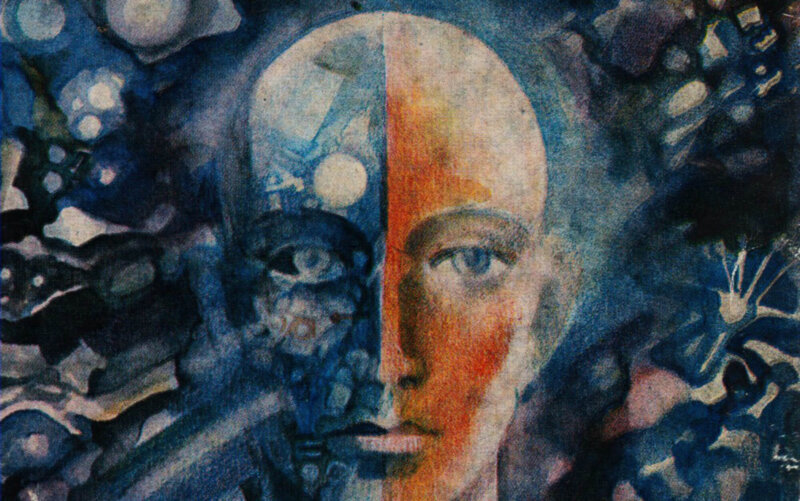
In this topsy-turvy world of ours, the popular culture puts a premium on our tools rather than on our fellow human beings. We ought to seek efficiency from technology and charity from humanity. However, these values have been inverted. Presently, it is all too common to catch ourselves eyeing the efficiency (or lack thereof) in our peers and to seek advice, not from a person, but from a mechanical process. In some more severe cases, AI has even superseded another self as users opt to have a relationship with a chatbot rather than another human being. (Obviously, not everyone who uses this tool succumbs to such dire straits, but the temptation remains.) Or, even if we do not go so far as to mistakenly swap these characteristics, we often judge both persons and tools on the same basis – that of their efficiency. The comparison between an AI and a person, along with the danger of conflating the two, has been greatly influenced by applying the word “intelligence” to both entities.
The pope makes emphatically clear that these two kinds of “intelligence” are wildly different:
So-called artificial intelligences do not undergo experiences, do not possess a body, do not feel joy or pain, do not mature through relationships and do not know from within what love, work, friendship or responsibility mean. Nor do they have a moral conscience, since they do not judge good and evil, grasp the ultimate meaning of situations, or bear responsibility for consequences.
This sentiment echoes earlier Catholic thought on the understanding of AI and its distinctness from personhood. Two priests/philosophy professors, Jose Angel Lombo and Francesco Russo, weigh in on this issue in their book Philosophical Anthropology: An Introduction (Fifth Printing, 2024). They write:
This fact marks a radical difference between artificial intelligence and human intelligence because the latter is never just the mere execution of operations comparable to those of a computer. As we have said, the human being exercises his cognitive faculty in association with the senses and with his affective, or emotional, states as well as interacting with the surrounding environment.
The human organism differs from any technological device, since the latter, by its very nature, is man-made. This brings us to the role of technology, particularly the new kid on the block, AI. And what is technology? In rudimentary terms, it is a tool. The humble wheel, which has morphed many times throughout history, can be seen as a form of technology. It is a tool that makes work easier. Such is the case with AI. But the pope is quick to note another critical aspect of technology. He says that “technology is not simply a tool. When it becomes the standard by which everything is judged, it begins to dictate what matters and what can be discarded, reducing creation to an object of exploitation and human beings to mere cogs in a system driven toward ever greater efficiency.”
This nuance is profound. Notice the pope does not deny that tech serves as a tool, yet it is not merely a tool. This sets AI a bit apart from the wheel, or even from tech we consider advanced by modern standards – such as the engine or the transducer. AI is much more than a chatbot; that is only one of a plethora of possibilities for this new tool. It is a form of technology so pervasive and dynamic that it becomes a standard by which to judge things – and people. In fact, many use AI to help them make judgments and decisions – for example, in their personal lives or even in choosing future employees.
Nevertheless, there are multiple facets to the ethical use of technology. Elsewhere in the document, Pope Leo XIV writes:
Technology has the power to heal, connect, educate and protect our common home; but it can also divide, exclude and generate new forms of injustice. In the abstract, technology in and of itself is not a solution to humanity’s problems, just as it is not inherently evil. In practice, however, technology is never neutral, because it takes on the characteristics of those who devise, finance, regulate and use it. Therefore, the primary choice is not between a “yes” or “no” to technology, but rather between constructing Babel or rebuilding Jerusalem; between a power that claims to dominate the heavens and a people who work together in the presence of God to rebuild the walls of fraternal coexistence.
Technology is never neutral. This note takes a different ethical tone than many educated Catholics have heard in recent years regarding various technologies and applications (most prominently social media). The pontiff senses that powerful technologies are wielded by people with either virtuous or devious moral compasses, thus affecting the thoughts and actions of many people for either good or ill.
The complimentary but opposing images of Babel and Jerusalem are ones the pope revisits throughout Magnifica Humanitas. As rational animals, we have the potency to choose what to do next, where we use this nascent technology, and how we shape it and allow it to shape us – as Pope Leo reminds us, “[E]very technology shapes those who use it.”
The pope is convinced that how we interact with these systems that search, synthesize, and shape vast amounts of data matters. The fact that technology is not always neutral in its application, and that “those who control AI will impose their own moral vision,” makes the intentional use of this tool for the common good a moral imperative. Using our intellect and our will, we must discern the value of and decide how to respond to an array of scenarios that involve using AI.
A subtle danger lurking beneath the surface of chatbot interfaces is the fact that the answers they deliver are based on corpora of specific data that could contain misinformation, or even disinformation. Thus, this tool can shape the thoughts and opinions of the populace based upon inputs comprised of bent truths and blatant falsehoods. The use of chatbots always warrants discretion and seeking additional evidence, beyond what the chatbot discloses, to support its findings.
There are some concrete situations in which AI is used that the pope flatly deems as immoral. Such is the case when this technology remains in the hands of those in power, not allowing for equal access to all people but only reinforcing the structure of power and exploitation. Another example of immoral use is the all-too-real possibility of employing an AI in the choosing of targets for military strikes. The need to address this scenario was heightened by the recent confirmation of “AI-assisted targeting” in Iran in 2024; the targeting resulted in killing a student – Abdul-Rahman al-Rawi, age 20.
AI might be able to inform a decision, but it should never take the place of the decision maker, the human person. This protocol informs much of the pope’s commentary regarding this developing tool. This isn’t to say that all human actions will be morally good (such as any instance of military bombardment), but it does call each of us to take responsibility for our actions as opposed to ceding that faculty to an impersonal entity devoid of a soul.
We cannot build up the civilization of love which the Church hopes to see flourish by distancing ourselves from those around us or from the inescapable human condition. Instead, we should seek that which is authentic and true and, as the pope has urged before, think critically. As Schmitt observed, we should strive for a fuller understanding of the world around us and of our own selves. Part of that growth shall stem from building real relationships, which involves people communicating (sharing something of themselves) with others.
As Pope Leo XIV wisely observes, “When words are simulated, they do not build genuine relationships, but only their appearance.” (Or, as Jonathan Church frames it in relation to the communicative art of the scribe, “Writing is an experience. Like food, water, or even religious worship, it nourishes the mind and soul in a way that no one else, or no other thing, can.”) Words convey meaning, but they also carry a part of us with them.
The contrast between the building of a Babel and of a Jerusalem is relevant once more. The pope explains the selfish egotism that contributed to erecting the Tower of Babel. Standing opposed to this is the reconstruction of the towering walls of Jerusalem orchestrated by Nehemiah, which was not the labor of ego but a whole community’s re-establishment of their home. The pontiff relates how, before acting, Nehemiah prayed – grounding himself in God and his faith – then organized the building efforts of the people, and all the while he “listened to their concerns.” This building was one rooted in the people’s relationship with God and with one another. The disciple Jude later advised his readers in the New Testament, “Build yourselves up in your most holy faith” (Jude 1:20, emphasis added). And Nehemiah did exactly that in the Old Testament. Together, the Israelites rebuilt Jerusalem via their shared responsibility in a very synodal fashion.
From such a foundation as the one laid by Nehemiah and his neighbors, a civilization of love can blossom. This idealized (but too often unrealized) civilization is not simply one in which the human person is not totally forgotten but one in which the human person is safeguarded and championed as a brother or sister and as a child of God made in God’s image and likeness, from whence comes humanity’s awesome dignity. A civilization of love is one that fosters a culture of life that is other-focused.
It isn’t only Catholics who have heeded the pope’s words. Columnists for major national outlets across the U.S. have commented, mostly positively, on the encyclical. They have lauded the “human-centered” vision offered by Leo XIV. Meanwhile, many within the Church have sought to parse out the highlights of the pope’s teaching. The Hank Center of Loyola University Chicago hosted a webinar in the wake of the encyclical’s publication. Several Catholic thinkers participated, including Loyola professor Joseph Vukov, author of Staying Human in an Era of Artificial Intelligence (2024). One of the points Vukov has made previously is the tendency for AI to compound biases and misinformation, an occupational hazard given the data that training models are provided.
Another guest speaker for the Hank Center webinar was Fr. Matt Dunch, SJ, an assistant philosophy professor at Loyola University. Something that piqued Fr. Dunch’s interest, and that of many American Catholics, in the encyclical was the pope’s decision to include a quote from the fictional character Gandalf from J.R.R. Tolkien’s The Lord of the Rings.* The quote lifted and utilized by the pope is as follows:
It is not our part to master all the tides of the world, but to do what is in us for the succour of those years wherein we are set, uprooting the evil in the fields that we know, so that those who live after may have clean earth to till.
The line comes from the sagacious wizard’s counsel given in The Return of the King, Book V, Chapter IX, “The Last Debate.” The pope references this wisdom and relates it to the ongoing labors that build up a civilization of love – everyday deeds of kindness performed by ordinary people that keep the darkness at bay. Fr. Dunch points out that the context in which the quote is found in The Return of the King complements the discussion on AI. Gandalf makes this statement after discussing the use of the palantíri or “Seeing Stones.” These stones are, like our AI interfaces, a tool that can be useful but that comes with risks. Fr. Dunch, channeling Gandalf, notes that caution should accompany the use of these powerful stones as they have the tendency to cause their users to misinterpret “the meaning of what they see.” Analogously, AI has the potential to misrepresent data and misguide us. AI, like a palantír, is not neutral; using it comes with potential pitfalls.
Nevertheless, we are more than capable of shaping this technology, just as it may shape us. Perhaps our descendants will use AI so frequently and fundamentally that they will give it as little thought as we currently give to the wheel, that basic tool which has taken us so very far. The problem is not that AI become commonplace. The danger lies in using it unintentionally, failing to shape it and use it to further the common good. We decide whether we build another Babel or whether we reconstruct and deepen our comprehension of and admiration for what is authentically human. With the former comes building up our own kingdoms of ego and isolation. With the latter, we grow outward and upward by loving those around us in their unique personhood and overall diversity. We have the ability to choose and, what is more, we have a responsibility to do so.
In the final analysis, at least from the Catholic perspective, we are not meant to be Babel builders. The individual is not meant to build up his own little empire at the expense of others. He is called to build up the Kingdom of God for the betterment of all. He is at his neighbor’s disposal and stands in solidarity with him. For we all share one nature, one dignity, one common call to greatness.
* This is not the first time a pope has referenced J.R.R. Tolkien or his fiction. Pope Francis quoted one of Tolkien’s letters to his son in a 2023 Christmas Eve homily, and he quoted Tolkien (via Frodo) in an afterward he wrote for an Italian book titled Weaving the World. (Francis also quoted the work of C.S. Lewis in his Letter on the Role of Literature in Formation.) But this appears to be the first quotation from Tolkien to appear in a magisterial document from the Church.


Related Posts